


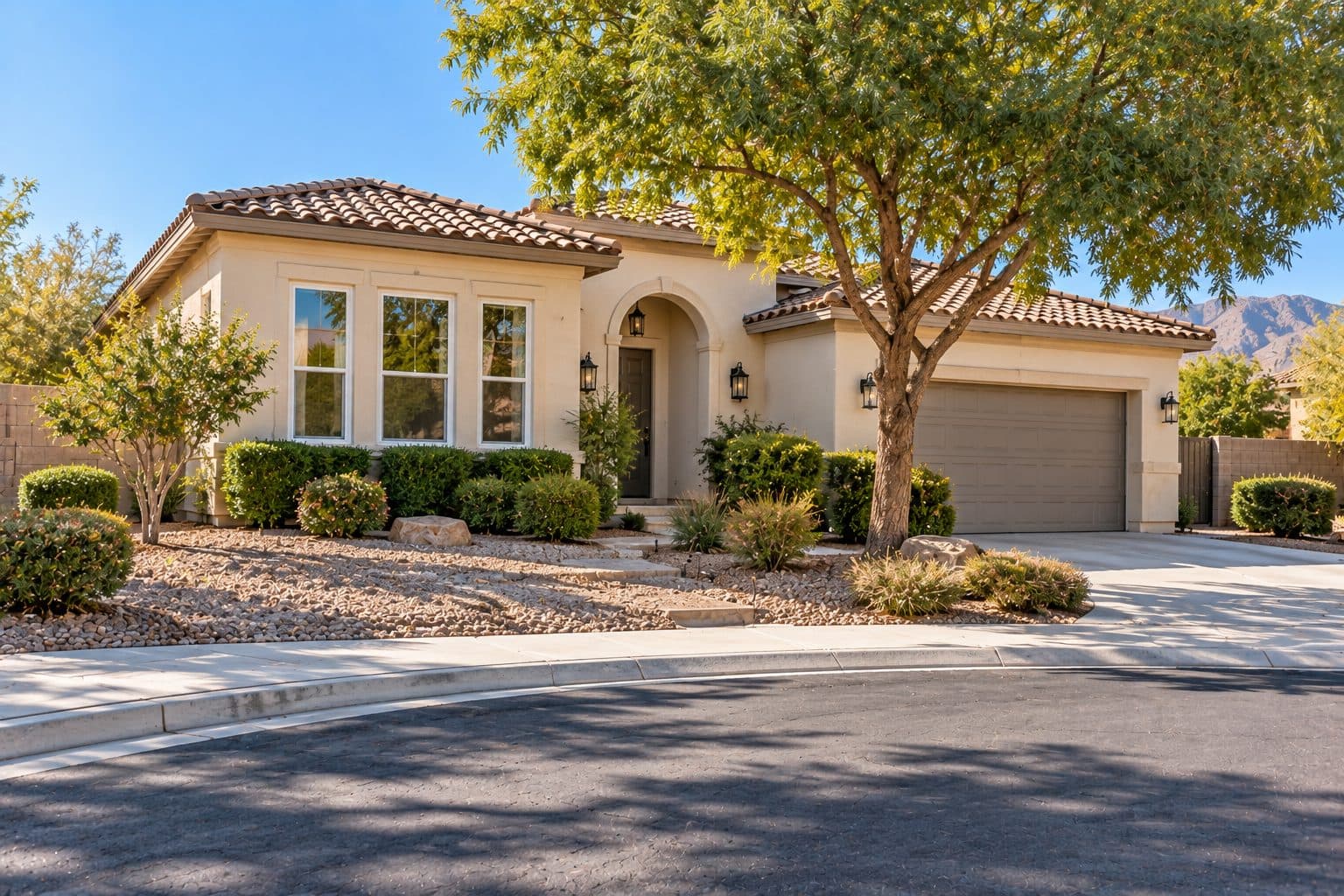
Fiberglass Entry Doors in Las Vegas
Fiberglass entry doors offer several ways to shape the appearance of a front entrance, from a smooth painted surface to a textured wood-look design. The useful choice is the complete door system that fits your opening, exposure, and everyday use, not simply the material name on a product card.
Agave Windows helps Las Vegas homeowners plan fiberglass front-door selection and installation with attention to the surface you see, the components around it, and the work needed at the entrance. Start with your preferred look and the parts of the current door you want to improve. The front entry door replacement page covers the wider project.
- Licensed, insured, bonded
- Written scope before ordering
- Las Vegas valley
The short version
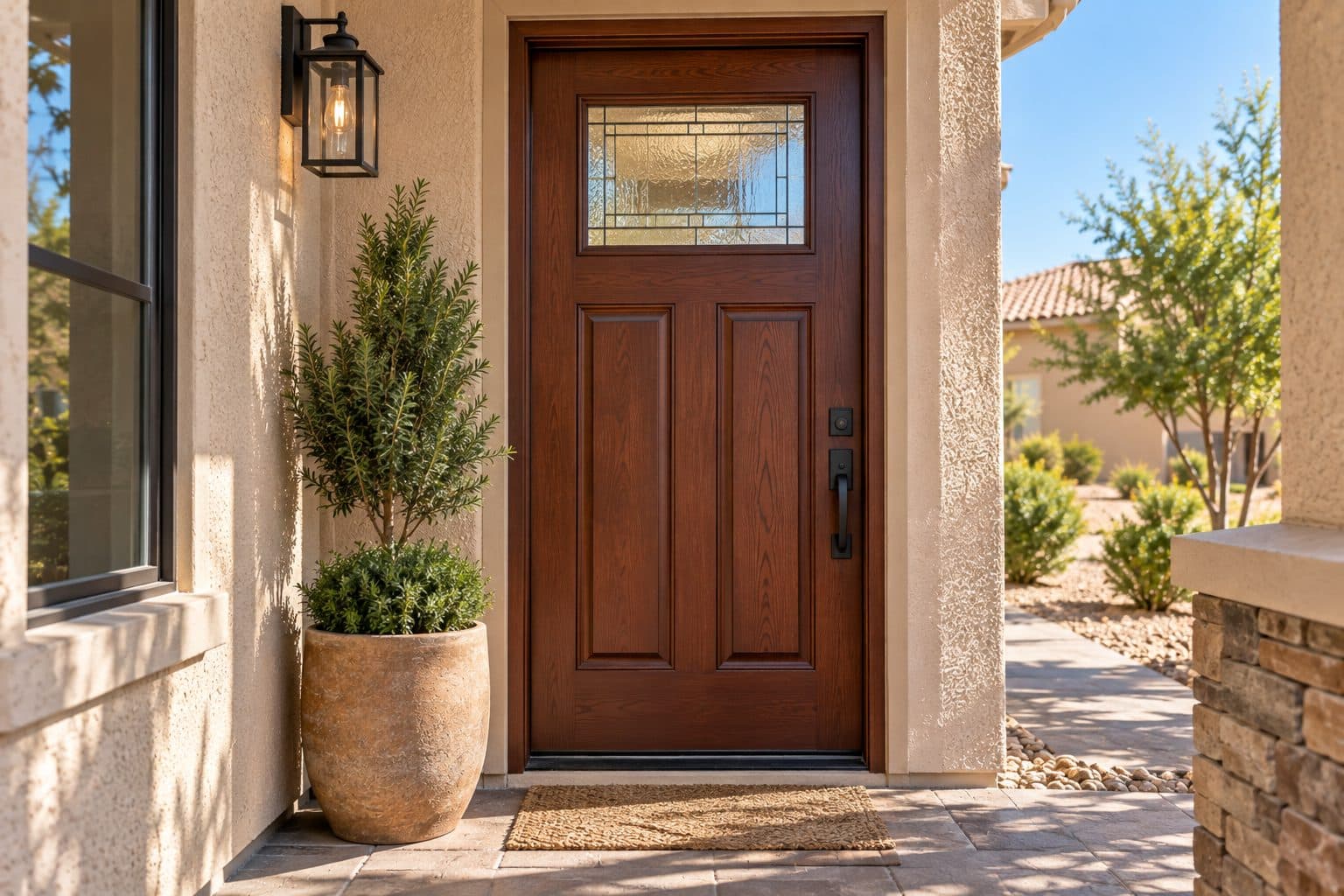
Fiberglass entry doors come with smooth paintable faces or textured wood-look surfaces. They still need care for the finish, seals and hardware, and should be painted or stained only as the manufacturer allows.
01 of 13
Choose the surface before narrowing the color
Smooth and textured fiberglass faces create different results even when they share a similar color. A smooth surface can suit a painted design with clear panel lines, a look also offered by steel entry doors. A molded wood-grain texture creates a different visual character and may use a finish system intended to emphasize that texture.
View the actual surface rather than judging only a digital rendering. Grain depth, panel edges, and sheen become more noticeable at the distance where someone stands to use the door. If the entrance is a focal point from the street, also consider how the overall composition reads from farther away.
Do not assume every textured surface can be finished in the same way. Confirm the finish choices approved for the specific product. Some designs are intended for painting, while other surfaces support a particular stain-like finish. The desired appearance should be matched to the correct substrate and instructions.
how it works
Hinged door in a prehung frame
- 1
The slab hangs on hinges in its own frame with a sill and weatherstrip
- 2
Sidelites and transoms are separate glazed frames beside or above it
- 3
Handle, deadbolt and strike are set to the frame, not just the slab
Illustration of the operating principle, not a drawing of a specific product.

at a glance
Fiberglass Entry Doors
Fiberglass entry doors come with smooth paintable faces or textured wood-look surfaces. They still need care for the finish, seals and hardware, and should be painted or stained only as the manufacturer allows.
- Measured on site before ordering
- Written scope with product and finish details
- Installed, sealed and reviewed with you
02 of 13
Read the construction from the skin inward
Fiberglass commonly describes the molded door faces. Behind and around those faces, the product may use an insulating core, stiles, top and bottom rails, reinforcement for hardware and a separate frame system. Those components do different jobs. The surface material alone does not describe how the handle is anchored or how the bottom edge is protected.
Therma-Tru's Smooth-Star construction description is one specific example: it identifies a foam core, separate edge construction and lock reinforcement. The details demonstrate why a complete specification is needed; they should not be assumed for a different product.
Use the actual cutaway or technical drawing to identify the materials in the quoted assembly. Ask which frame, sill and glass frame are included, because those may have different finish and care requirements from the door face. A claim that a fiberglass skin does not rust is not a claim that every hinge, fastener or frame component needs no attention.
If an existing frame will remain, compare its hinge and latch locations, depth, seals and threshold relationship with the new slab. A suitable-looking face does not overcome incompatible preparation. If the frame condition or configuration needs to change, compare a complete assembly scope before narrowing the surface design.
four steps, in order
How a Project Runs
- 1
Tell us about the project
Send your location, the approximate number of openings, and what you want to improve.
- 2
Review the openings and options
We discuss your priorities and assess the details that affect product selection and installation.
- 3
Define the work in writing
The proposal identifies the products and agreed installation scope so you can understand what the project includes.
- 4
Install and review the result
At completion, we review the installed products, operation, visible finish, and care information with you.

03 of 13
Select a panel pattern that fits the entrance
Panel arrangement affects how substantial, formal, or simple the door appears. Compare the proportions with nearby windows and the scale of the porch. A small catalog image can hide the relationship between a large glass insert, narrow rails, and a prominent handle.
For an entrance with sidelights, review the door and glazing as one composition. Check whether panel lines or glass patterns align in a way you like. Matching the nominal height does not guarantee that separate components have matching visible details.
If a paired-door design is under consideration, identify the active leaf and the normal daily passage. The appearance may be symmetrical while the operation is not. Confirm how the secondary leaf is used and secured before approving a configuration for its visual balance alone.
04 of 13
Decide where glass adds value
A fiberglass door may be solid or include a selected glazed area, depending on the assembly. Begin with the amount and location of daylight you want. A glass opening near eye level changes the view and privacy differently from a smaller upper insert or adjacent sidelight.
Compare clear, textured, and decorative samples under realistic lighting. Privacy is not established by the word obscure alone. Ask what remains visible from the approach, especially when the foyer is lit after dark. Decorative patterns can contain areas with different levels of transparency.
Confirm the exact glass package and its supporting documentation. Safety glazing, thermal performance, and visual privacy answer different questions. A decorative insert should not be described as a security feature or energy solution without evidence for the actual assembly. The glass entry doors page treats each question separately.
how we install
The Part Behind the Glass

Measured before anything is ordered

Hung, aligned and latched
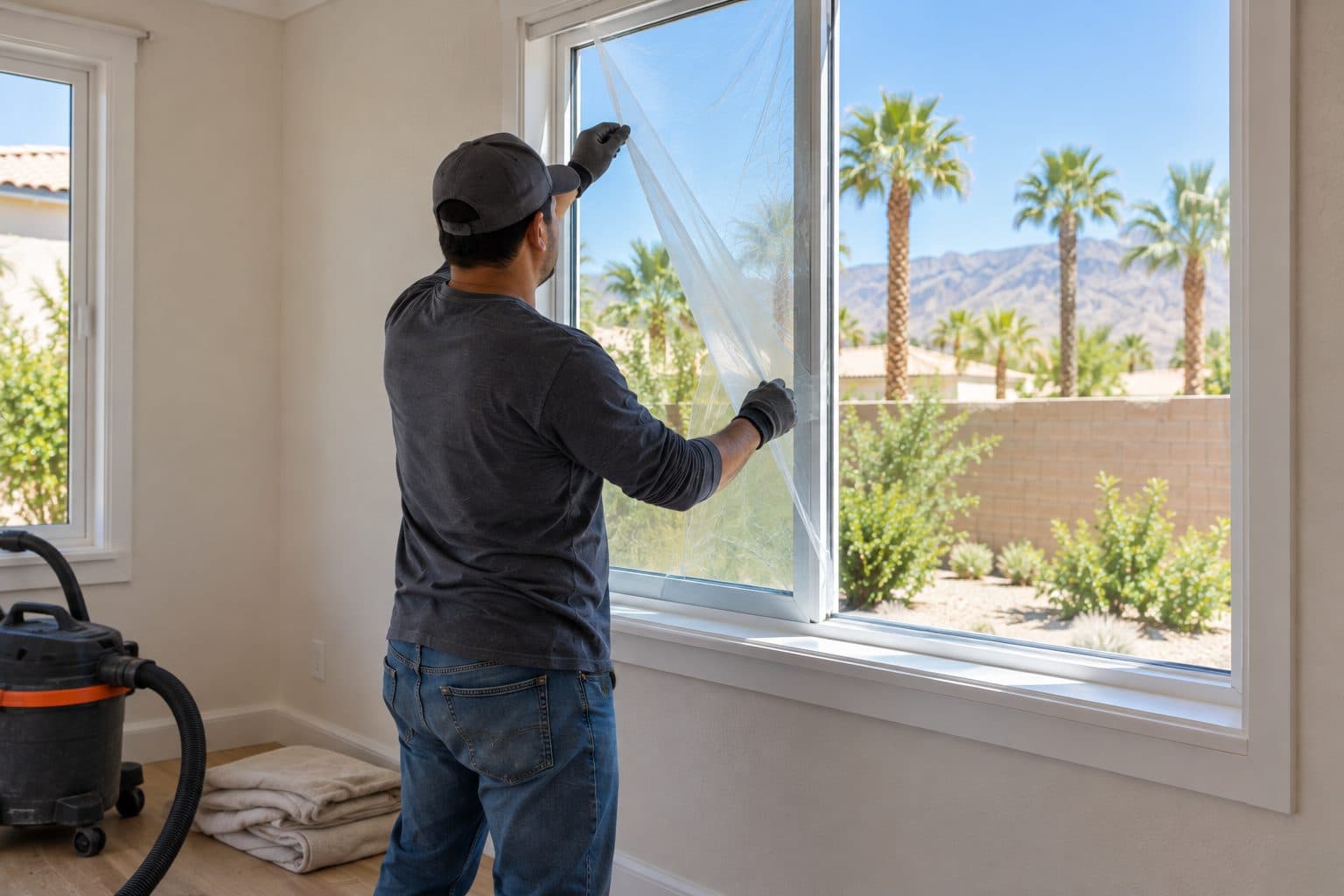
Cleaned up and reviewed with you
05 of 13
Compare thermal performance without shortcuts
An insulated core can be part of a fiberglass door design, but the complete assembly may include glass, framing, and other heat-transfer paths. Use whole-product ratings for the exact configuration when comparing options. Do not compare a solid-door core claim with a glazed entrance rating as though they measure the same thing.
U-factor
How easily heat passes through the whole window. Lower keeps more heat out in summer and in during winter.
SHGC
Solar heat gain coefficient: how much of the sun's heat comes through. Lower means less heat from direct sun.
VT
Visible transmittance: how much daylight comes through. Higher means a brighter room.
U-factor describes heat transfer, while solar heat gain coefficient concerns solar energy admitted through the product. For a glazed entrance in Las Vegas, the relevant balance also depends on exposure and existing shade. Explain whether the concern is a warm foyer, glare, or comfort close to the door.
Ask whether changing the glass size, sidelights, or glazing package changes the documented performance. A broad efficiency label for a collection is not enough to identify what is being quoted. Keep the actual specification with the proposal so different options can be compared consistently. The entry door buying guide organizes those decisions.
06 of 13
Choose a finish suited to the actual exposure
The entrance may receive direct sun, reflected heat, weather at the threshold, or protection from a porch. Describe those conditions when choosing a finish. Confirm the approved exterior color and finish system for the selected product rather than assuming every paint or stain is suitable.
Ask whether the door arrives factory finished, primed, or ready for a specified site finish. Those are different delivery conditions. If finishing occurs after installation, identify who completes it, what surfaces are included, and how the schedule follows the product requirements.
Retain finish information for later care or touch-up. A color name by itself may not identify the coating system or sheen. If the door and frame use different materials, make sure the agreed finish plan accounts for both rather than treating them as one surface.
07 of 13
Specify hardware and modifications early
Confirm handles, locks, and any electronic access device before the door is prepared, using the door hardware options as a starting point. The selected hardware must fit the assembly and its reinforcement or preparation requirements. Provide exact model information when reusing an existing device is important.
Later additions such as a viewer, pet opening, mail slot, or different lock can affect the door construction and written coverage. Ask about compatibility before drilling or cutting. A fiberglass face should not be treated as an invitation to modify the leaf without checking the relevant instructions.
At selection, consider the ease of grasping the handle and operating the lock. An attractive finish does not settle whether the motion is comfortable for everyone in the household. For multipoint hardware or paired leaves, understand the complete closing and locking sequence.
08 of 13
Choose a wood-look surface for the effect it can actually create
Molded texture reproduces a pattern in the face; stain-like finishing adds color and emphasizes that relief. That is a different visual process from a natural wood entry door, whose grain varies through the material. Neither needs to imitate the other's ownership experience to be a useful choice.
Review a finished sample from the actual collection and coating system. Look at the recessed panels, raised edges and flat areas as well as the main grain. The finish can collect or read differently across those details. A small flat color chip may not show the character of the finished molded panel.
Where two leaves or sidelights sit together, ask how patterns repeat and how finishes will be coordinated. A homeowner seeking perfectly continuous natural grain across multiple components has a different requirement from one seeking a consistent wood-look color. State which result matters before approving a product photo as the target.
09 of 13
Distinguish ready-to-finish from ready-for-exposure
Factory finished, primed and ready to paint describe different delivery conditions. A product can have a durable face and still require a specific coating before it is treated as complete. Therma-Tru's finishing FAQs show that finishing obligations remain relevant to fiberglass systems and surrounding wood components.
Put responsibility into the scope: who prepares and coats the slab, who finishes the frame and exposed edges, and who provides the finish record. The timeline should follow the selected manufacturer's requirements. Do not transfer a deadline from another collection or assume installation day completes a separate site-finishing contract.
If the entrance is part of a larger repainting project, coordinate products and sequencing. A painter's preferred exterior coating may not be the approved system for the door surface. The appearance target and the substrate requirements need to agree before material is applied.
10 of 13
Evaluate modifications as changes to the internal construction
A viewer, new lock bore, mail slot or pet opening can cut through more than the fiberglass skin. The location may involve reinforcement, core material, rails or the glazing surround. The manufacturer's modification limits therefore matter even when drilling the visible face seems straightforward.
Specify likely future needs before ordering. If exterior keyed access or a particular electronic lock is essential, choose compatible preparation now. If a pet opening is being considered, treat it as a separate supported design decision; do not assume there is an empty space behind any convenient part of the panel.
A hypothetical homeowner may like a heavily glazed fiberglass leaf and also want a long pull whose lower fixing lands near the insert. The attractive combination needs a confirmed fastening location and sufficient compatible construction. Moving the handle on a rendering is not evidence that the selected leaf can be prepared that way.
11 of 13
Use the glass choice to compare complete options
When evaluating two fiberglass doors, keep the glazing configuration visible. A solid slab and a large-lite version may share a collection name while presenting different privacy and thermal decisions. A core insulation claim does not describe the heat flow through a substantial glass area or surrounding frame.
List the exact glass, door size, frame and whole-product rating together. If one alternative changes the glass package, identify that change before attributing a performance difference to a finish or panel design. This is especially useful when the goal is a brighter foyer without an unwanted increase in direct sun.
12 of 13
Make the replacement details visible
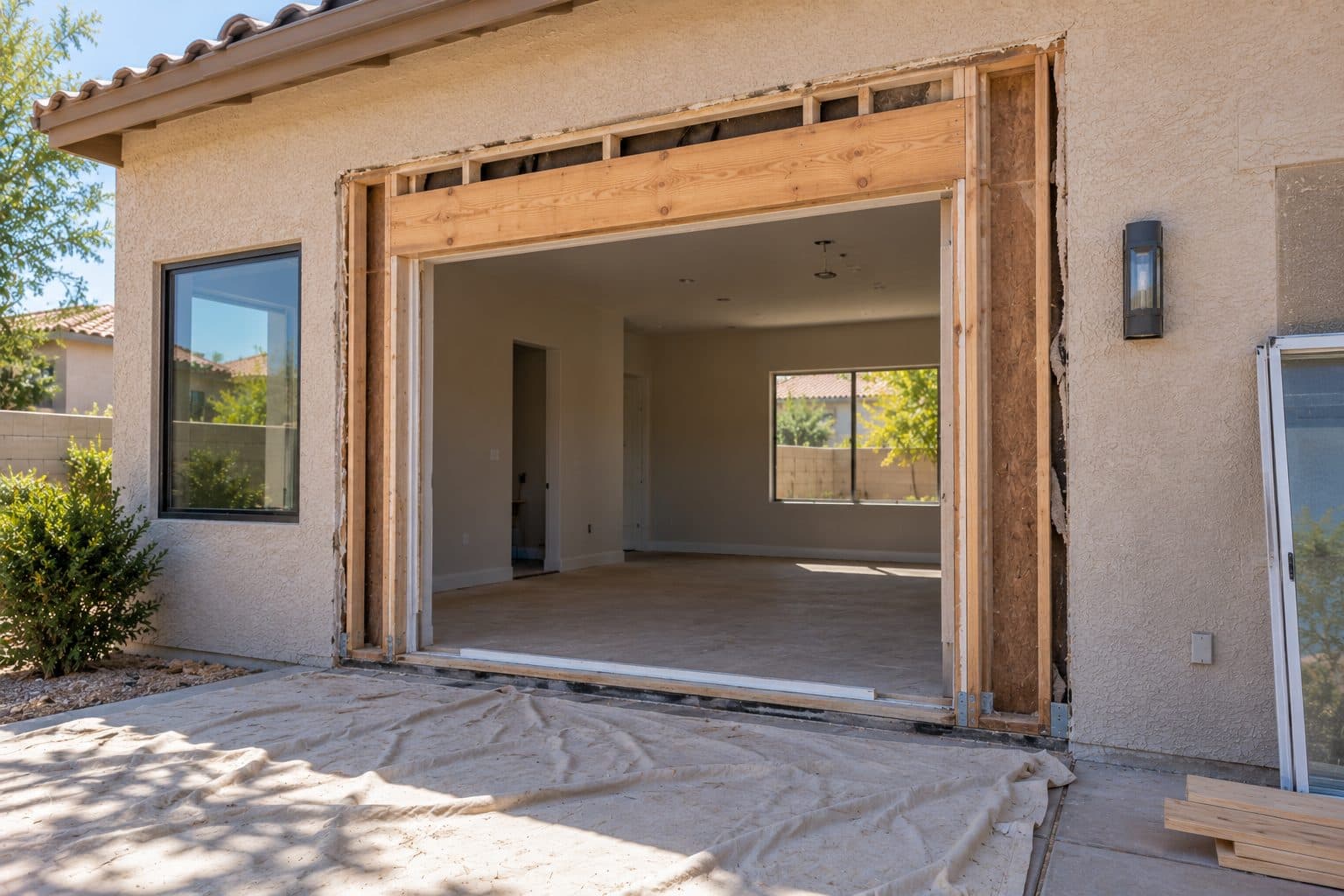
The opening assessment should address the condition and alignment of the frame and supporting surfaces. The new assembly must meet the wall with appropriate sealing, flashing, and drainage details. Product selection and installation need to describe the same project.
Review interior casing, exterior trim, stucco, paint, and floor edges. A new frame may cover or reveal different areas than the old one. The proposal should identify the intended finish result and which repairs are included, especially where a sidelight or transom is also being replaced.
If removal exposes concealed damage, understand how it will be documented and addressed. A clear process for additional work helps keep the homeowner involved without pretending that every hidden condition can be known in advance. Changes to the opening size require a separate construction and approval discussion.
13 of 13
Understand ongoing care for the entrance
Fiberglass selection can reduce some material concerns, as the front door materials comparison explains, but the complete door still needs care appropriate to its finish, glass, seals, and hardware. Follow the actual manufacturer guidance for cleaning and maintenance products. Avoid assuming that an all-purpose cleaner is suitable for every surface.
Watch for changes in operation, damaged seals, loose hardware, or deteriorating joints around the opening. The location of a symptom matters: a finish issue, latch issue, and water path require different assessments. Product identification makes later support more precise.
When the door is installed, practice normal operation and keep the care and coverage documents. When you request a fiberglass door estimate, bring your preferred surface, glazing priorities, and photographs of the existing entrance to begin selecting a fiberglass system that suits the whole project.
things people ask us
Frequently Asked Questions
Do fiberglass front doors all have a wood-grain appearance?
No. Available fiberglass designs can include smooth paintable faces and textured wood-look surfaces. The exact options depend on the product. Review a physical sample and the approved finishing method before choosing. Surface texture, panel details, and sheen affect the appearance as much as the color shown in a catalog.
Does a fiberglass door eliminate maintenance?
No. The face material is only one part of the entrance. The finish, glass, frame, seals, threshold, and hardware still require appropriate care and inspection. Ask for the selected product instructions and keep them with the door identification. A general low-maintenance description should not replace the actual cleaning and finish requirements.
Can I paint a fiberglass door any color?
Use only the finish approach and exterior colors permitted for the specific product and exposure. A door may arrive finished, primed, or ready for a prescribed coating, and those conditions are different. Confirm preparation, compatible products, and responsibility for completing the finish before ordering. Do not assume a color seen on another assembly has the same approval.
What should I confirm about finishing before delivery?
Confirm whether the leaf, frame and trim arrive finished, primed or unfinished, and identify who completes each required surface. Obtain the selected product's preparation and coating instructions, including treatment after permitted fitting work. Fiberglass skin does not remove the need to protect other components or to complete the specified finish before exposure.
Still have a question about your home?
Ask us directly. A quick description of the opening is enough.
keep going
Related Pages
- Plan front entry replacement
Front door replacement in Las Vegas: decide between a new door slab or a full frame, pick glass and hardware, and know what to check when it is installed.
- Compare front door materials
Fiberglass vs steel vs wood entry doors: how the three materials compare on looks, upkeep, sun exposure and security, and how to choose for your entrance.
- Explore steel entry doors
Steel entry doors in Las Vegas: how they are built, what affects security and insulation, and how to handle scratches, dents, glass and lock options.
- Explore wood entry doors
Wood entry doors in Las Vegas bring natural grain to your entrance. Learn how sun exposure, porch cover, finish and upkeep should shape your choice.
- Organize your front-door decisions
An entry door buying guide and checklist: rank your must-haves, shortlist two front door options, compare quotes fairly and confirm details before ordering.
Sources referenced on this page
Independent references linked in the text above. A manufacturer source explains a product concept; it does not mean Agave Windows supplies that brand.
- Smooth-Star construction description (thermatru.com)
- Therma-Tru's finishing FAQs (thermatru.com)

ready when you are
Request a Fiberglass Entry Door Estimate
Tell us your location, the approximate number of openings, and what matters most to you. You do not need to arrive with a product already selected.
- Photos can follow once we reply; no measurements needed
- A written scope before anything is ordered
- Licensed, insured, and bonded
Request an Estimate