


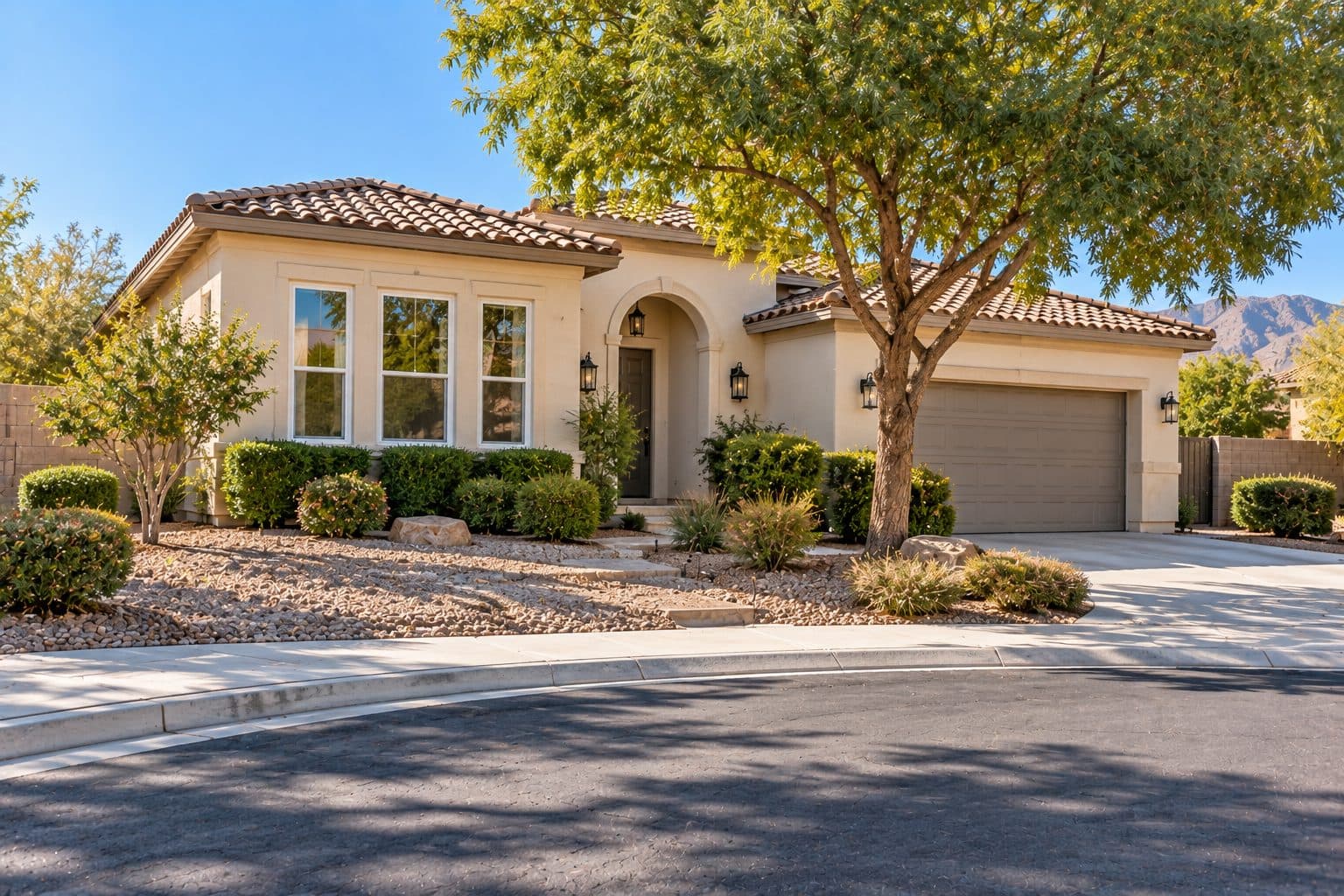
Window Colors and Frame Finishes
Window color changes how an opening relates to the rest of the home. A frame can blend into the surrounding wall, echo another exterior detail or create a deliberate outline around the view. The best starting point is the effect you want, followed by the finishes actually available on a suitable product.
Compare the interior and exterior separately, then bring them together in one selection record with the other choices in our window and door design center. An online swatch can help narrow a direction, but it should not be the only reference used to approve an order.
- Licensed, insured, bonded
- Written scope before ordering
- Las Vegas valley

The short version
Choose a window frame color from a physical sample viewed at your home, not an online swatch. Interior and exterior colors can differ on some product lines, and available finishes depend on the product.
01 of 10
Decide what the frames should do visually
A low-contrast frame tends to share attention with the wall and view. A higher-contrast frame makes the geometry of the opening more noticeable. Neither direction is automatically right for every house. Look at the size and spacing of the windows, the surrounding trim and the other permanent materials before deciding.
If you are replacing only some windows, include the retained frames in the comparison. A small difference between two similar whites can be more obvious than an intentional contrast. Consider how the first phase will look by itself as well as how it could relate to future work.
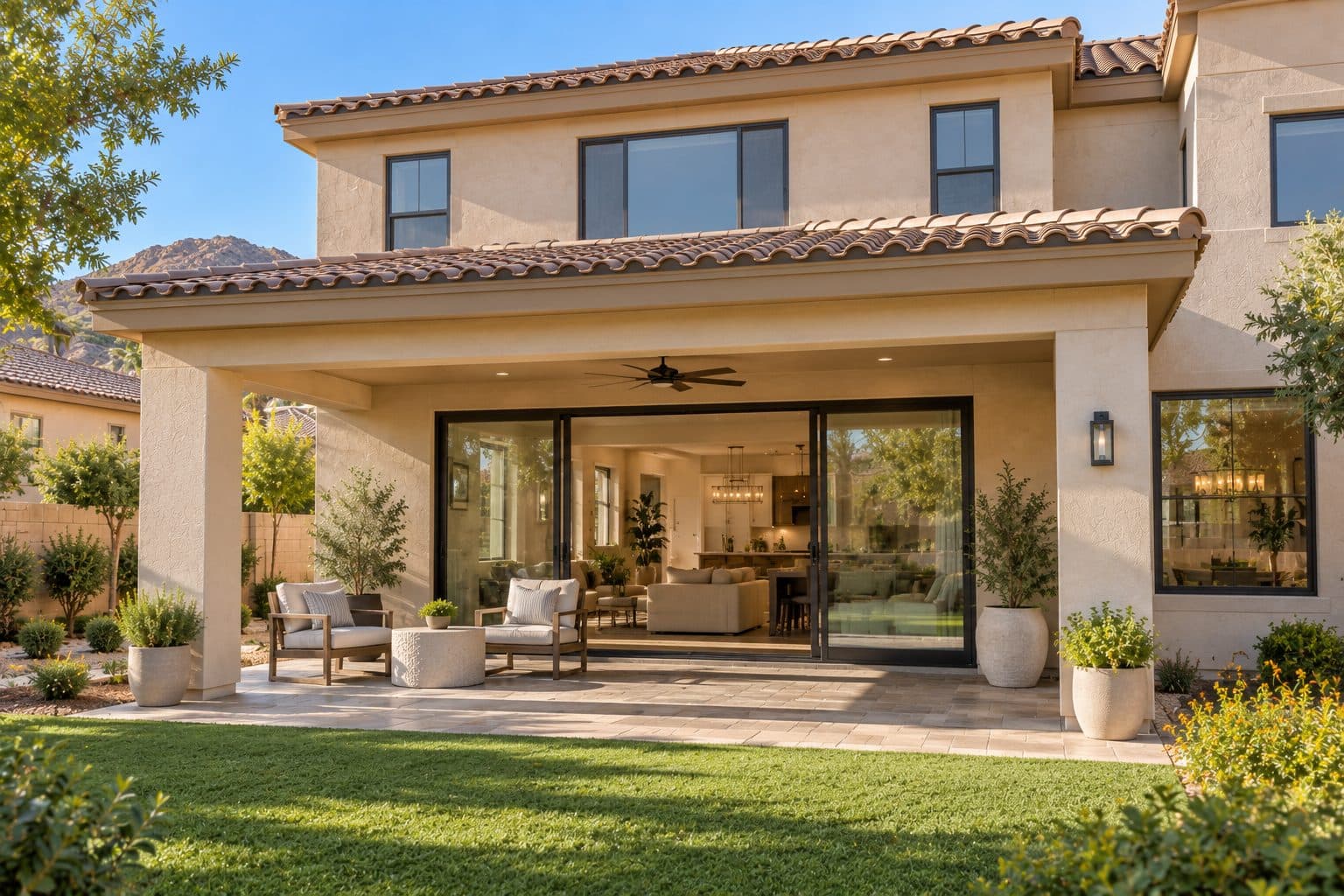
Take a photo from a distance where the whole elevation is visible. Then look at a closer view. A color that seems attractive in a hand sample may have a different visual weight when repeated across several large openings.
02 of 10
Coordinate the exterior with permanent surfaces
Roofing, stucco, masonry, doors and exterior trim establish the context for the window finish. Start with materials you expect to keep. If repainting is also planned, distinguish the current appearance from the proposed one so the window selection does not chase two different palettes.
Review samples near the actual wall in sunlight and shade. Surrounding colors and lighting can change your perception of the same finish. Photographs and phone screens also vary, so avoid using one edited image as an exact color specification.
A useful decision note might say: preserve a quiet relationship with the stucco, or create a consistent dark outline across the front elevation. That goal is easier to discuss than a broad request for a modern look.
four steps, in order
How a Project Runs
- 1
Tell us about the project
Send your location, the approximate number of openings, and what you want to improve.
- 2
Review the openings and options
We discuss your priorities and assess the details that affect product selection and installation.
- 3
Define the work in writing
The proposal identifies the products and agreed installation scope so you can understand what the project includes.
- 4
Install and review the result
At completion, we review the installed products, operation, visible finish, and care information with you.

03 of 10
Treat the interior as its own selection
Inside, the frame sits beside wall paint, flooring, cabinets, window coverings and furnishings. Decide whether you want it to recede or become part of the room's detailing. Check the finish in the rooms you use most rather than reviewing only an exterior sample.
Some product lines permit different interior and exterior finishes; others have a more limited combination. Confirm availability for the exact material, series and operating style. Finishes on aluminum window frames, for example, are produced differently from vinyl colors. A finish available on a patio door does not automatically appear on every matching window type.
If the project spans several rooms, record intentional differences. Interior consistency can still work when one room has privacy glass or a different operating arrangement. The selection should reflect those uses without leaving the final order ambiguous.
04 of 10
Color name and finish construction are different details
The color describes what you see; the finish system describes how that appearance is produced. A color carried through a material, a factory-applied coating, a film or laminate, and a clad exterior are different constructions. The actual product documentation establishes which is used. The distinction matters for edges, touch-up, cleaning and any later alteration.
A common name such as bronze or white is not a cross-brand specification. Hue, gloss and texture can differ, and the same color on a smooth frame may appear different on textured trim. Record the manufacturer's code and the finish construction together so the order does not depend on a general color description.
Factory coloring on vinyl window frames or any other material should not be confused with repainting a finished product at the home. Milgard's vinyl-finish information describes its offered finishes, while its FAQ restricts painting its vinyl windows. Those are that manufacturer's terms, not a universal warranty rule. For the selected product, confirm the written alteration and care instructions before relying on future repainting.
If a finish is damaged later, the appropriate response may depend on the material, coating and severity. Do not choose a color on the assumption that ordinary wall paint will create an invisible repair. Ask for the product's documented repair route and keep the identifier needed to obtain correct advice.
Interior and exterior surfaces may use different systems or availability rules. A dual-color combination should be confirmed as one supported configuration. Check the operating sash, meeting rails, screen frame and any grille visible through the glass; a photograph of the outer frame may not show every surface you will see.
how we install
The Part Behind the Glass

Measured before anything is ordered
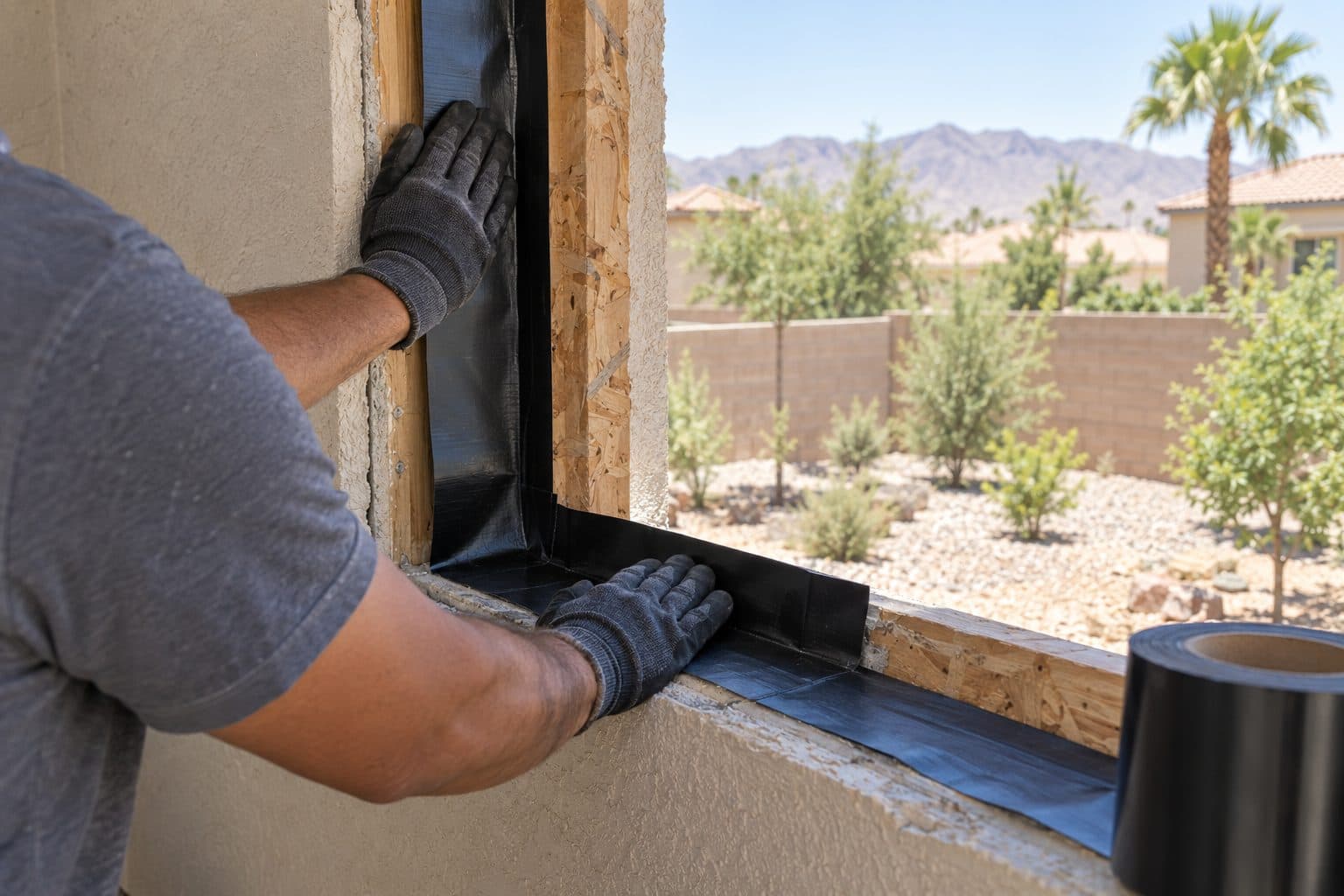
Flashed so water has a way out

Set level, plumb and shimmed
05 of 10
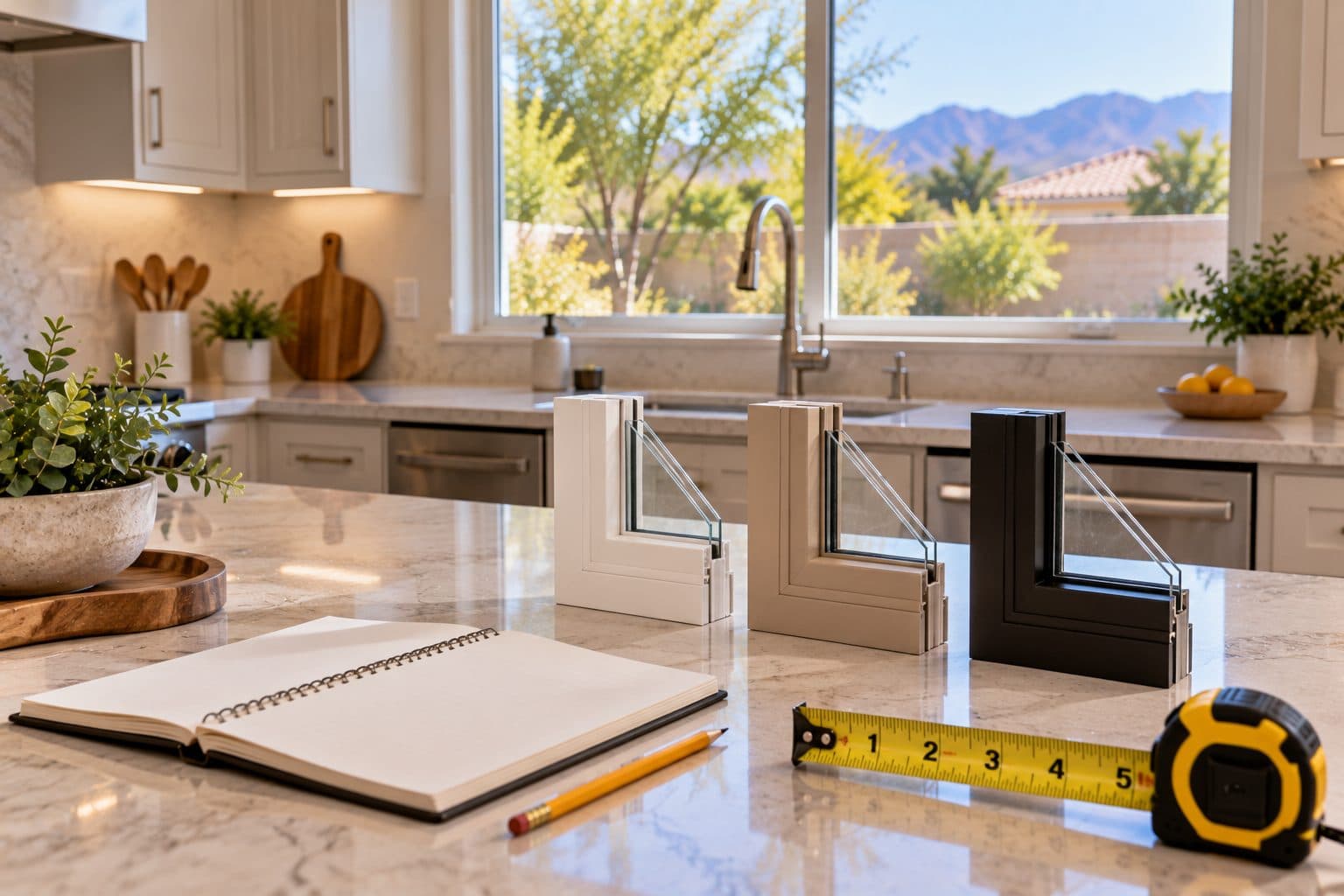
Run a controlled sample comparison
Start with two or three plausible finishes on products that already meet the opening's functional needs. Comparing an unlimited palette before product compatibility is known adds choices that may disappear later. Give each sample a name, code and product reference. You can discuss a finish selection with us as part of an estimate.
Place the samples beside the permanent material they need to relate to, such as the actual stucco or stone. View them under similar conditions rather than compare one in sunlight with another in shade. Then deliberately review both in sun and shade, because the installed frame will be seen in more than one condition.
Check from two distances. At arm's length, compare undertone, gloss and texture. From the normal street or room viewpoint, judge the contrast and repetition across the elevation. A subtle near-match can look agreeable close up but become visibly inconsistent when repeated beside retained windows.
Keep photographs as discussion records, with the samples in the same image when possible. Automatic exposure, white balance and display settings can change their apparent color, so the image should not replace the identified physical sample. Do not use an edited rendering as the manufacturing color reference.
Finally record the decision in a short sentence: the selected frame should blend with the light stucco, or the selected exterior should repeat the darker entrance detail. That stated purpose helps evaluate a later substitution. If the replacement sample creates a different effect, the shared color name alone does not make it acceptable.
06 of 10
Use a finish selection worksheet
| Selection item | What to record |
|---|---|
| Product identity | Manufacturer, series, material and operating style |
| Exterior finish | Official name, code and surface treatment |
| Interior finish | Official name, code and supported relationship to exterior |
| Visible accessories | Screen, grille and hardware finish identifiers |
| Sample reference | Physical sample identifier and date reviewed |
| Installation surrounds | Trim, sealant and adjacent finish responsibilities |
| Care documents | Applicable cleaning, alteration and coverage guidance |
Ask for a revised record if a product substitution occurs. A different series with a similarly named finish should not silently replace the approved selection. Review what changed before ordering or accepting the alternative.
07 of 10
Include grids, screens and surrounding trim
A frame is not the only colored element in the opening. Window grid patterns can repeat its color across the glass, while a screen may change the visual impression from outside. Handles and locks introduce smaller contrasting details inside.
Look at these elements together when possible. A finish sample by itself cannot show the pattern created by a grille or the appearance of a full screen. If an exact assembled sample is unavailable, use current manufacturer images and a labeled selection drawing to clarify the intended combination.
The installation may also add or expose trim. Ask what color and finishing treatment are included for that surrounding work. Matching the product does not automatically mean every patch, casing or sealant joint is supplied in the same factory finish.
08 of 10
Resolve conflicts between priorities
When two preferences conflict, rank them before adding more samples. A homeowner may want an exact match to retained windows and a split interior/exterior finish, while the closest matching product offers only one color. The useful comparison is between two complete supported configurations, with the visible difference recorded.
Use three categories: essential, preferred and flexible. An association-approved exterior requirement may be essential; matching a movable interior furnishing may be flexible. This does not mean one aesthetic preference is universally more important. It means the proposal should preserve the requirement that actually governs the project.
If no supported finish meets an essential condition, stop that selection and investigate an alternative product or a revised design decision. Do not label an unavailable combination custom unless the supplier has confirmed it. A clear limitation now prevents a later order from substituting a finish you did not choose.
09 of 10
Consider exposure and care before approval
Las Vegas sunlight makes exposure a relevant product-selection question. Ask whether the proposed finish is approved for the selected product and installation conditions, and review the manufacturer's care and warranty information. Color alone does not establish the thermal behavior of the entire window.
U-factor
How easily heat passes through the whole window. Lower keeps more heat out in summer and in during winter.
SHGC
Solar heat gain coefficient: how much of the sun's heat comes through. Lower means less heat from direct sun.
VT
Visible transmittance: how much daylight comes through. Higher means a brighter room.
If your main concern is the performance of black frames in heat, our guide to black frames and sun exposure explores that question. Here, keep the decision focused on the actual appearance, compatibility and maintenance of the finish being proposed.
For routine care, follow the instructions for the specific frame and surface. Avoid assuming that a cleaner suitable for glass is suitable for every coating, gasket or accessory. Keep the finish code and care document with the project records for future questions.
10 of 10
Make the final comparison at the home
Consider a hypothetical partial replacement where the remaining windows are a warm white. A new cool white may appear almost identical on separate screens but noticeably different beside the retained frame. Compare a verified close match with an intentional contrast on the same elevation drawing. The decision is whether the first phase looks coherent, not whether one product's name sounds closer.
Now consider a whole-elevation change coordinated with future exterior painting. Create separate current and proposed palette records. Confirm which work is actually committed and which is only a future preference. A window order should not depend on an unapproved paint change that may never occur.
Review the accessories and installation surrounds before approval. If the screen is a different finish or the new trim uses site-applied paint, show that difference in the record. A coordinated design can contain different materials without pretending they share one factory surface.
If HOA review of replacement windows applies, use the exact proposed finish and configuration in the submission. Compare any approval conditions with the final selection before order release. A change in product series should trigger a review of the actual finish sample and compatible accessories, even when the color name remains familiar.
things people ask us
Frequently Asked Questions
Can I choose one finish outside and another inside?
That depends on the product line and configuration. Ask for the supported interior/exterior combinations for the exact series. Do not infer availability from a different material or another product in the same brand.
Will an online swatch match the installed frame exactly?
Screens, lighting and adjacent colors affect appearance. Use a physical identified sample when possible and record the official finish code. Online images are useful for narrowing choices but should not serve as an exact color guarantee.
Can I repaint the frames later?
Check the actual manufacturer instructions and warranty before assuming field painting is permitted. Some products restrict alterations. The safe selection process establishes the finish you want and its maintenance conditions before the order is placed.
Should a color substitution be accepted by name alone?
No. Compare the actual manufacturer code, finish construction, gloss, sample and accessory compatibility. A similar name can conceal a visible difference. The substitution should preserve the purpose of the approved selection and any applicable design conditions.
Still have a question about your home?
Ask us directly. A quick description of the opening is enough.
keep going
Related Pages
- Design center
Plan the look of your new windows and doors in one place: frame colors, glass, grid patterns and door hardware, and the order in which to choose them.
- Black frames and sun exposure
Thinking about black windows in Las Vegas heat? Learn how dark frame finishes handle sun exposure, what to ask about the finish, and how glass affects heat.
- Coordinate window grids
Window grid patterns explained: common grille layouts, how the bars are built, and how to line up a pattern across the whole front of the house.
- Vinyl window options
Vinyl windows in Las Vegas need little upkeep and come in many styles. Learn how frame thickness, glass and color options differ before you compare quotes.
- Aluminum window options
Aluminum windows in Las Vegas offer slim, modern frame lines. Learn why a thermal break matters in desert heat and what to compare before you order.
Sources referenced on this page
Independent references linked in the text above. A manufacturer source explains a product concept; it does not mean Agave Windows supplies that brand.
- Vinyl-finish information (milgard.com)
- FAQ (milgard.com)

ready when you are
Request a Window Design Discussion
Tell us your location, the approximate number of openings, and what matters most to you. You do not need to arrive with a product already selected.
- Photos can follow once we reply; no measurements needed
- A written scope before anything is ordered
- Licensed, insured, and bonded
Request an Estimate