






- 8 min read
- Updated
- Supports: Energy-Efficient Windows
Window Energy Ratings: U-Factor and SHGC
Two windows can look similar and manage heat differently. Energy ratings give you a more useful way to compare them than phrases such as premium glass or high performance. The key, when comparing energy-efficient window options, is to understand what each rating measures and confirm that it belongs to the window actually being quoted.
Start with U-factor and solar heat gain coefficient, or SHGC. They answer different questions. Then consider visible transmittance and any other available information alongside room exposure, operation and installation. No single number describes every quality of a window.
The short version
U-factor shows how easily heat passes through a window, and SHGC shows how much of the sun's heat gets in. Lower means less heat for both, but compare whole-window label numbers, not glass-only figures.
On this page
U-factor describes heat transfer
U-factor
How easily heat passes through the whole window. Lower keeps more heat out in summer and in during winter.
SHGC
Solar heat gain coefficient: how much of the sun's heat comes through. Lower means less heat from direct sun.
VT
Visible transmittance: how much daylight comes through. Higher means a brighter room.
U-factor measures the rate of heat transfer through an assembly. A lower value means less heat transfer under the rating conditions. For a window comparison, use the whole-product value, which reflects the complete rated assembly rather than only the center of the glass.
That distinction matters because the frame, glass and other components contribute to performance. A brochure may discuss a coating or glass unit separately. Ask whether the figure shown in the proposal is for the complete window in the selected configuration.
U-factor is useful when thinking about insulation performance. It does not tell you how much direct solar heat the window admits, whether the handle is comfortable or whether an existing wall connection has been air sealed well. Those require other evidence.
SHGC describes admitted solar energy
Solar heat gain coefficient expresses the fraction of solar energy admitted through the window, including energy transmitted directly and absorbed energy that flows inward. A lower SHGC means less solar heat gain under the rating conditions.
For a cooling-focused application, limiting unwanted solar gain can be useful, as our guide to windows for Las Vegas heat explains. The appropriate choice still depends on exposure, shading, desired daylight and the overall project. Do not select a value solely because it is the lowest number available on a sales sheet.
A north-side shaded opening and an exposed west-facing room may present different priorities (see west-facing room planning). If different glazing packages are proposed, ask why, record the ratings by opening and compare their visible appearance where the windows are viewed together.
Visible transmittance describes daylight
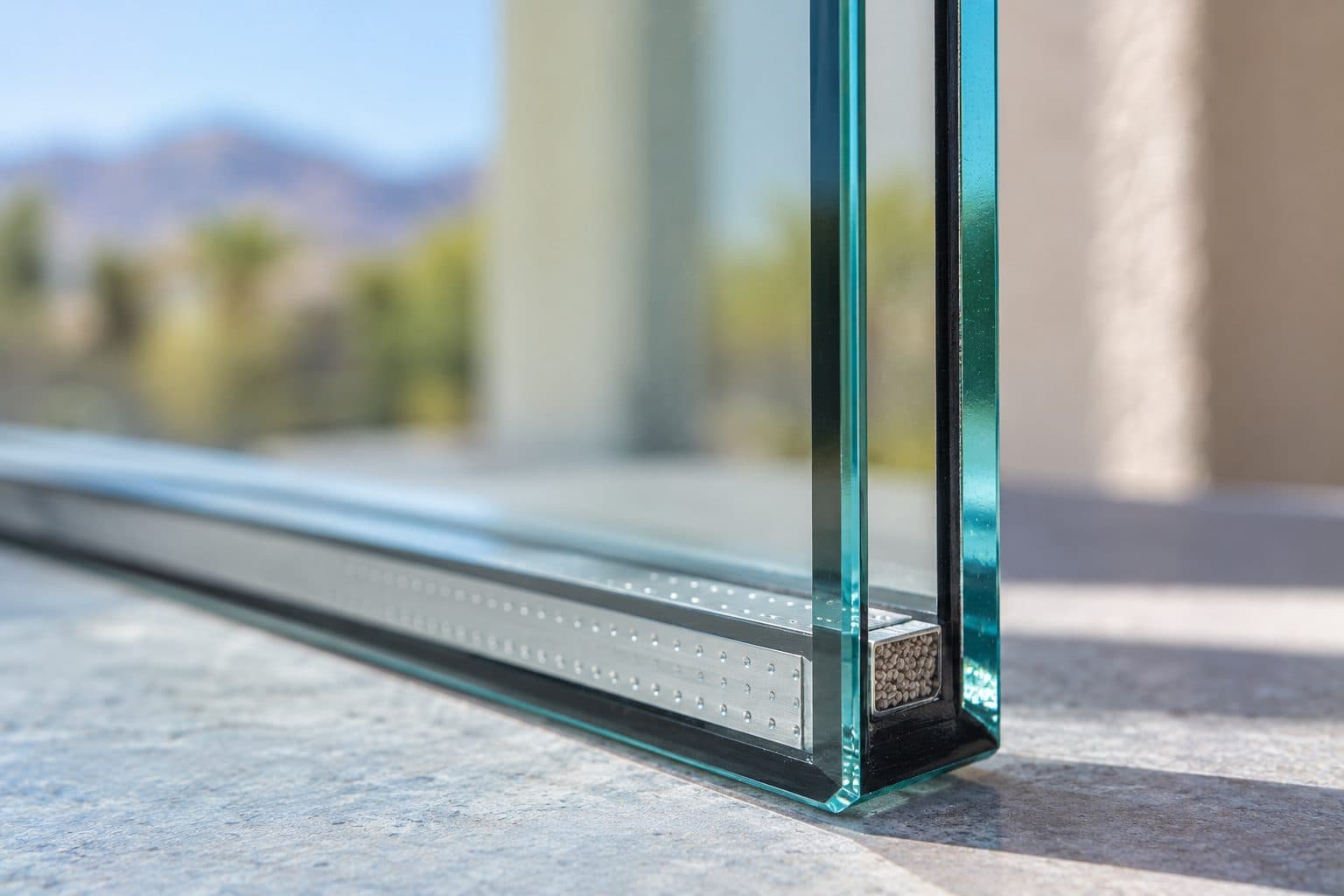
Visible transmittance, often shortened to VT, describes the amount of visible light passing through the product. A higher value admits more visible light under the rating conditions. It is a separate measure from SHGC.
This separation is useful when you want solar control while retaining daylight. Suitable coatings can treat portions of the solar spectrum differently, which our comparison of Low-E glass and film explains. “Darker” is not a complete description of thermal performance, and a low SHGC does not on its own tell you how a room will look.
Compare samples where possible and discuss the actual room. Wall colors, nearby shade, window area and interior finishes also affect perceived brightness. A rating helps compare products; it is not a rendering of your finished space.
Read the three numbers together
| Rating | Main question | Direction to understand |
|---|---|---|
| U-factor | How readily does heat pass through the rated assembly? | Lower means less heat transfer |
| SHGC | How much solar energy is admitted? | Lower means less solar heat gain |
| VT | How much visible light passes through? | Higher means more visible light |
Work through an illustrative comparison
The following values are invented solely to demonstrate the arithmetic. They are not Agave products, code targets or recommended specifications.
| Educational example | U-factor | SHGC | VT |
|---|---|---|---|
| A | 0.30 | 0.40 | 0.50 |
| B | 0.25 | 0.30 | 0.45 |
With equal area and the same temperature difference, the simple heat-transfer term is proportional to U-factor. Moving from 0.30 to 0.25 reduces that term by (0.30 − 0.25) ÷ 0.30, about 16.7%. With equal incident sunlight and a comparable rating basis, moving SHGC from 0.40 to 0.30 reduces the solar-gain term by 25%. VT is 10% lower relative to A.
Those are three separate comparisons. They cannot be added to produce a 41.7% energy saving, and VT is not a percentage reduction in room brightness. Actual heating and cooling involve changing weather, other building surfaces, equipment and use. The example shows how B trades lower thermal and solar transfer for lower visible transmission; the household still has to decide whether that balance suits the room.
Keep units and rating basis consistent
U-factor is not a percentage. U.S. product literature commonly expresses it in Btu per hour per square foot per degree Fahrenheit; other documents may use SI units. Never compare two U-factor numbers without confirming the units. SHGC and VT are dimensionless fractions.
NFRC's official label explanation states that ratings use fixed environmental conditions and a specific product size. They provide a controlled comparison, not a measurement of that window in your home. The DOE explanation of heat flow supports keeping area and temperature difference visible in the reasoning.
how we install
The Part Behind the Glass

Measured before anything is ordered
Flashed so water has a way out
Keep optional ratings in context
Air-leakage information concerns air passing through the tested product’s joints under specified conditions. Lower rated leakage can be useful, but it does not measure every possible path around an installed frame or through the surrounding wall.
Condensation resistance, where reported, is a comparative measure under defined conditions. It is not a promise that condensation can never appear. Indoor humidity, outdoor conditions and local surface temperatures also matter.
Not every label displays every optional field. A missing field is a reason to ask what information is available, not to substitute a guessed number or conclude that the product has failed a test. Keep energy, air, water and acoustic claims in their proper categories.
NFRC labels
Read the identity and numbers as one record. Start with the manufacturer and product/configuration description, then record U-factor, SHGC and VT together. Photograph the complete label rather than cropping away the information that identifies what was rated.
Use the NFRC Certified Products Directory to check the relevant certified product record. The documentation should explain how that record corresponds to the quoted series, operator, frame and glazing configuration. Do not assume a family name covers every option or that a rating was individually measured at your custom opening size.
Next, compare the record with the final order. A changed glass package or operating configuration can require a different rating reference. A blank field should remain unknown until documentation resolves it; do not substitute another model's number.
At delivery, use product identifiers and available labels to reconcile what arrived with the approved schedule before labels are discarded. Keep the record by opening when the project uses different packages.
Resolve a mismatch by its source
A mismatch can be a transcription error, a different ordering identifier or a real product change. Those possibilities call for different responses.
If the quote lists one SHGC and the label another, first confirm that both refer to the same configuration and rating basis. If they do, request correction of the inconsistent document. If they refer to different glazing, decide which is actually proposed and have the order or the paperwork corrected. Do not average the numbers or choose the more favorable one.
If the delivered identifier differs from the sales-series name, obtain the manufacturer's or supplier's documented connection between them. Different naming systems are possible, but a verbal assurance that it is equivalent should not replace a traceable explanation.
For a hypothetical mixed project, the living room may have one glass package and the shaded bedroom another. A single label photographed from the delivery does not document both unless it clearly applies to each. Match records by opening group, then investigate exceptions. This is more useful than collecting many labels without knowing where they belong.
Understand certification without overextending it
NFRC provides standardized comparative ratings. ENERGY STAR identifies products meeting its applicable program criteria, with window criteria varying by climate zone. Confirm eligibility for the specific location and product rather than assuming every window from a participating manufacturer qualifies.
Neither a product rating nor a program mark certifies the quality of a particular contractor’s installation. The installed opening still needs appropriate support, air sealing, flashing and integration with the wall according to the selected product and application.
Certification also does not establish a personal utility-bill forecast. Energy use depends on the existing home, weather, equipment and occupant behavior. Use the label to compare product characteristics and request a separate, clearly explained basis for any project-specific modeling.
Rating comparison worksheet
This worksheet is for filling in by hand, on paper or in a spreadsheet of your own. Keep each rating in its own column. For two documented configurations, record the whole-product U-factor with units, SHGC and available visible transmittance. An empty field stays unknown; it is not zero and should not be filled from a different glass option.
To compare a value with a baseline, subtract the baseline from the alternative. If you calculate a relative change, divide that difference by the nonzero baseline. Identify which metric the result describes. A difference in SHGC is not a household energy-saving percentage, and a VT difference is not a measured change in room brightness.
| Check before interpreting a difference | Reason |
|---|---|
| Same metric and compatible units | Unlike quantities cannot be ranked from their numbers alone |
| Same whole-product or component basis | A glass-only value is not a complete-window comparison |
| Positive baseline for a relative calculation | Division by zero has no defined percentage result |
| Each product/configuration identified | The comparison must refer to actual proposed choices |
If a baseline is zero, write down the simple difference and leave the relative percentage blank. Where data is missing or incompatible, note the reason instead of ranking the products. The illustrative comparison above shows why thermal, solar and daylight changes must remain separate.
Turn the ratings into useful quote questions
Ask which values belong to each quoted opening, what problem the glazing selection addresses and what tradeoffs it introduces. Request an explanation if two proposals use different operating types or glass packages. Bring daylight and appearance preferences into the same discussion. Our window buying guide puts these questions in order.
Keep the final documentation after installation, including product identifiers and care instructions. It can help you understand later replacement-part questions without having to reconstruct the original selection.
This guide supports
Energy-Efficient Windows →things people ask us
Frequently Asked Questions
Is U-factor the same as SHGC?
No. U-factor concerns heat transfer through the assembly, while SHGC concerns admitted solar energy. A window can have favorable insulation performance and a different solar-control profile from another window, whether it is double-pane or triple-pane. Read both values and connect them to the room’s exposure and your priorities.
Does the lowest SHGC always make the best window?
It identifies lower admitted solar gain under the rating conditions, not a universal best choice. Consider daylight, shading, appearance and the application. Ask why the proposed combination of U-factor, SHGC and VT is appropriate for the particular opening.
Can I compare a glass-only number with a whole-window number?
They describe different things. For replacement-window selection, request comparable whole-product ratings for the actual assemblies. Glass information can explain a component, but it should not be presented as though it already describes the complete window, frame and configuration.
Do new windows guarantee a specific bill reduction?
A rating alone cannot establish that. The existing windows, other building conditions, weather, equipment and household use affect energy demand. Be cautious with percentages presented without a defined baseline and method. Product ratings remain useful for comparing options even without a savings forecast.
Still have a question about your home?
Ask us directly. A quick description of the opening is enough.
keep going
Related Services and Guides
- Energy-Efficient Windows
Energy-efficient windows for Las Vegas homes: how U-factor, SHGC and sun exposure guide the right glass for each room. Request a window estimate.
- Windows for Las Vegas heat
The best windows for Las Vegas heat depend on sun exposure, glass coating and SHGC, not frame material alone. See what to compare room by room.
- West-facing room planning
West-facing windows take low afternoon sun that overhangs often miss. See how to plan glass, shading and glare control for a hot Las Vegas room.
- Low-E glass and film
Low-E glass vs window tint: how a factory coating differs from film added later, when each makes sense, and what film cannot fix on double-pane windows.
- Window buying guide
How to choose replacement windows in Las Vegas: list what each room needs, pick a style, compare glass ratings and installation, then line up quotes.
- Can Replacement Windows Reduce Noise?
Can replacement windows reduce noise? Yes, within limits. Learn what STC and OITC ratings mean, how laminated glass helps, and where else sound gets in.
- Double-Pane vs Triple-Pane Windows
Double-pane vs triple-pane windows: what a third pane changes for insulation, sun heat, noise and weight, and how to tell if it is worth it for a room.
- Black Windows in Las Vegas Heat
Thinking about black windows in Las Vegas heat? Learn how dark frame finishes handle sun exposure, what to ask about the finish, and how glass affects heat.
Sources referenced on this page
Independent references linked in the text above. A manufacturer source explains a product concept; it does not mean Agave Windows supplies that brand.
- Official label explanation (nfrc.org)
- DOE explanation of heat flow (energy.gov)
- NFRC Certified Products Directory (nfrc.org)

ready when you are
Have a Question About Your Own Home?
A guide can explain the choice. Your openings decide the answer. Tell us what you are seeing and we will help you work out the next step.
- Photos can follow once we reply; no measurements needed
- A written scope before anything is ordered
- Licensed, insured, and bonded
Request an Estimate