


Energy-Efficient Windows in Las Vegas
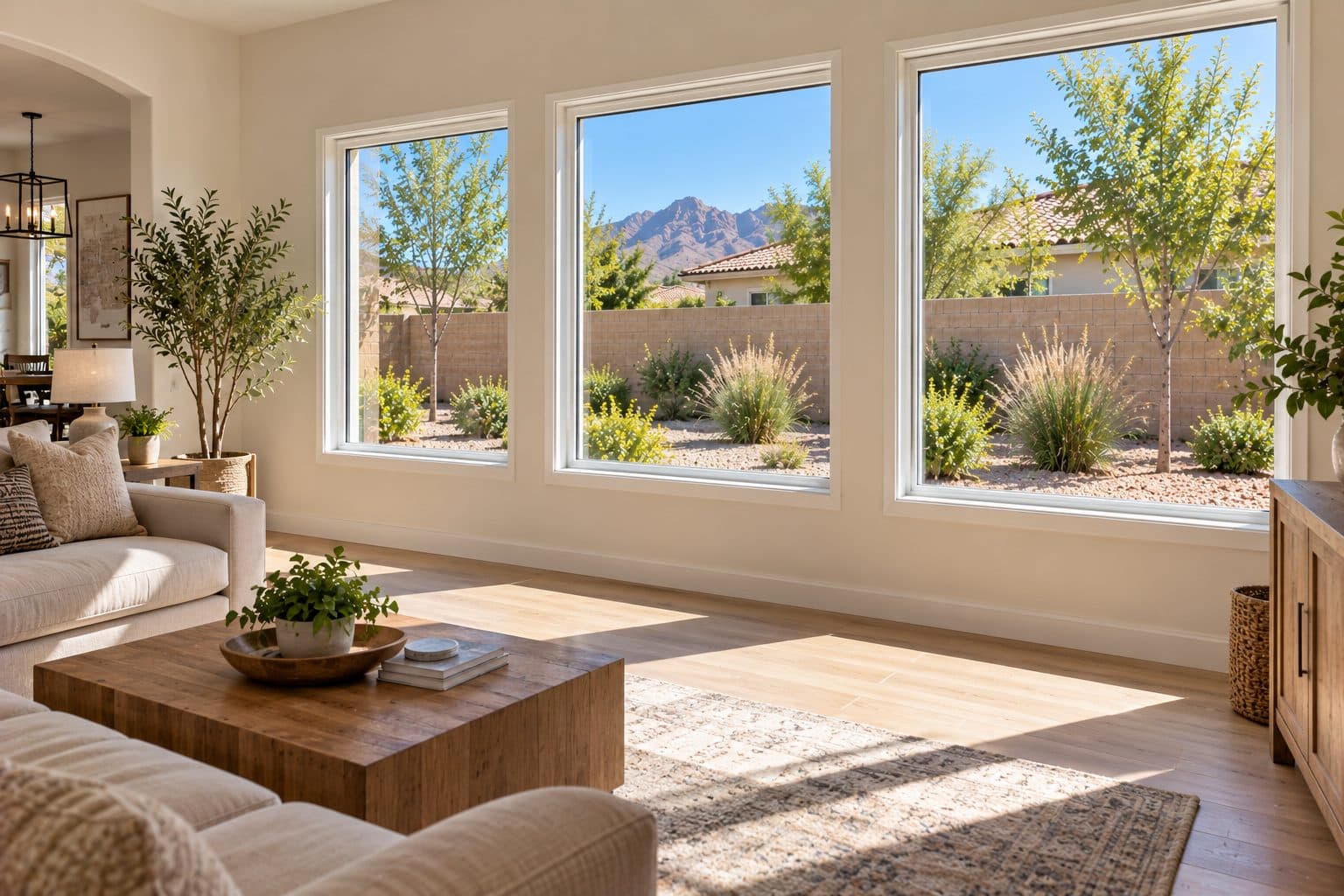
An energy-efficient window should be chosen for the opening it will serve. A sun-exposed living room, a shaded bedroom and a high window above a stair may call for different balances of solar control, daylight and operation. A product label alone cannot make those decisions for your home.
Agave Windows helps Las Vegas homeowners compare replacement window options using the documented performance of the complete assembly. We connect the glass package and frame selection to room exposure, visible appearance and installation conditions, then make those choices clear in the proposed window schedule.
- Licensed, insured, bonded
- Written scope before ordering
- Las Vegas valley
The short version
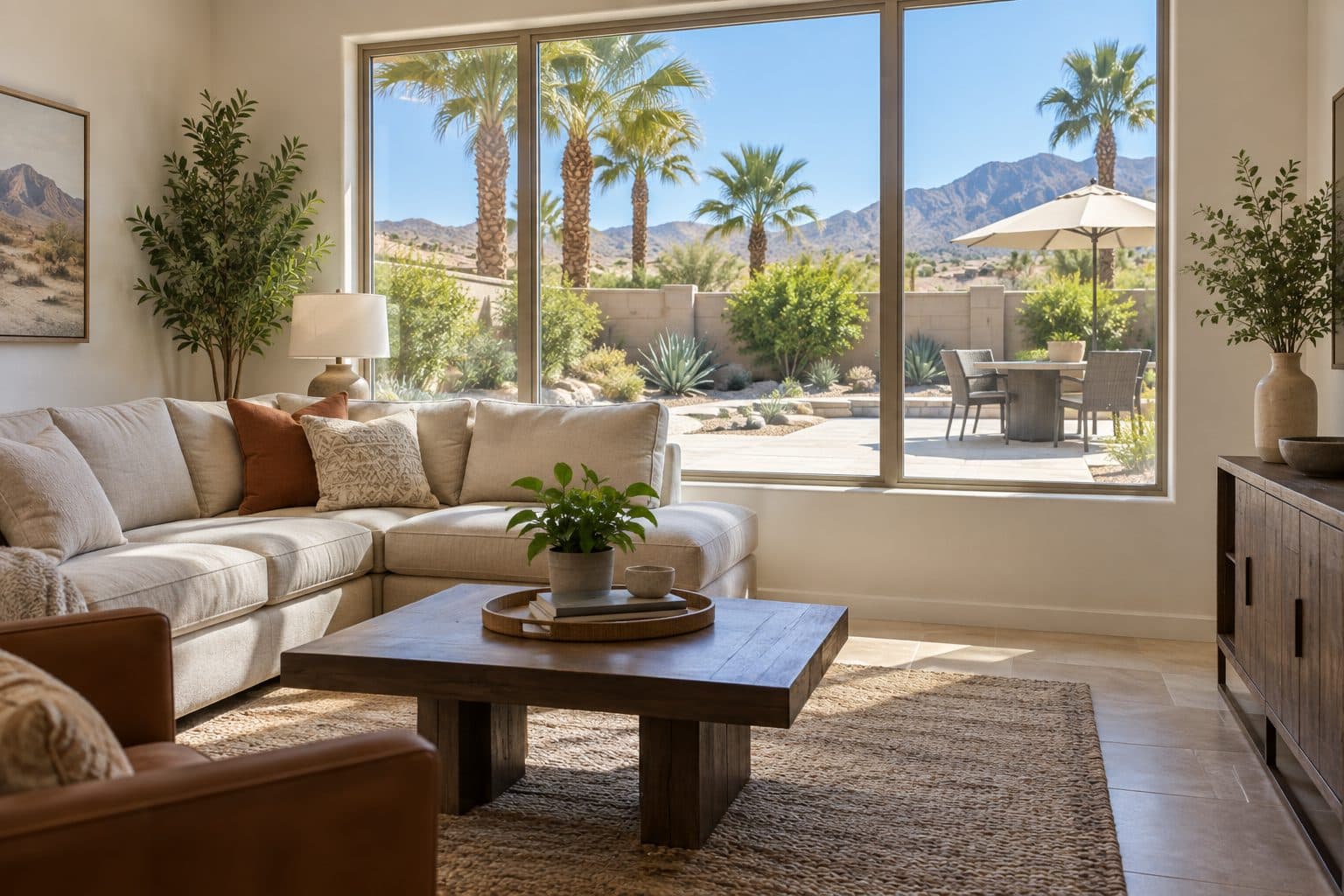
In Las Vegas, an energy-efficient window limits unwanted solar heat while keeping useful daylight. Compare whole-window U-factor and SHGC ratings for the exact product, and choose glass by how much sun each room gets.
01 of 10
Tell us what better comfort would look like
Start with the experience you want to improve. Is the room uncomfortable near the glass during direct sun? Does a chair or desk sit beside a window that feels cold on winter evenings? Is glare the main problem, or do you notice moving air around a closed unit? These observations point to different questions.
Record when the issue occurs and whether shades, shutters or nearby structures are in place. Photos can show the room layout and outside exposure, but your description of how you use the space is equally useful. A window behind a television and a window over a reading area should not automatically receive identical treatment simply because they face the same direction.
We use those priorities to narrow the selection. The final proposal should identify which product feature addresses each goal and what remains outside the window scope, such as roof insulation, duct distribution or exterior shading changes.
at a glance
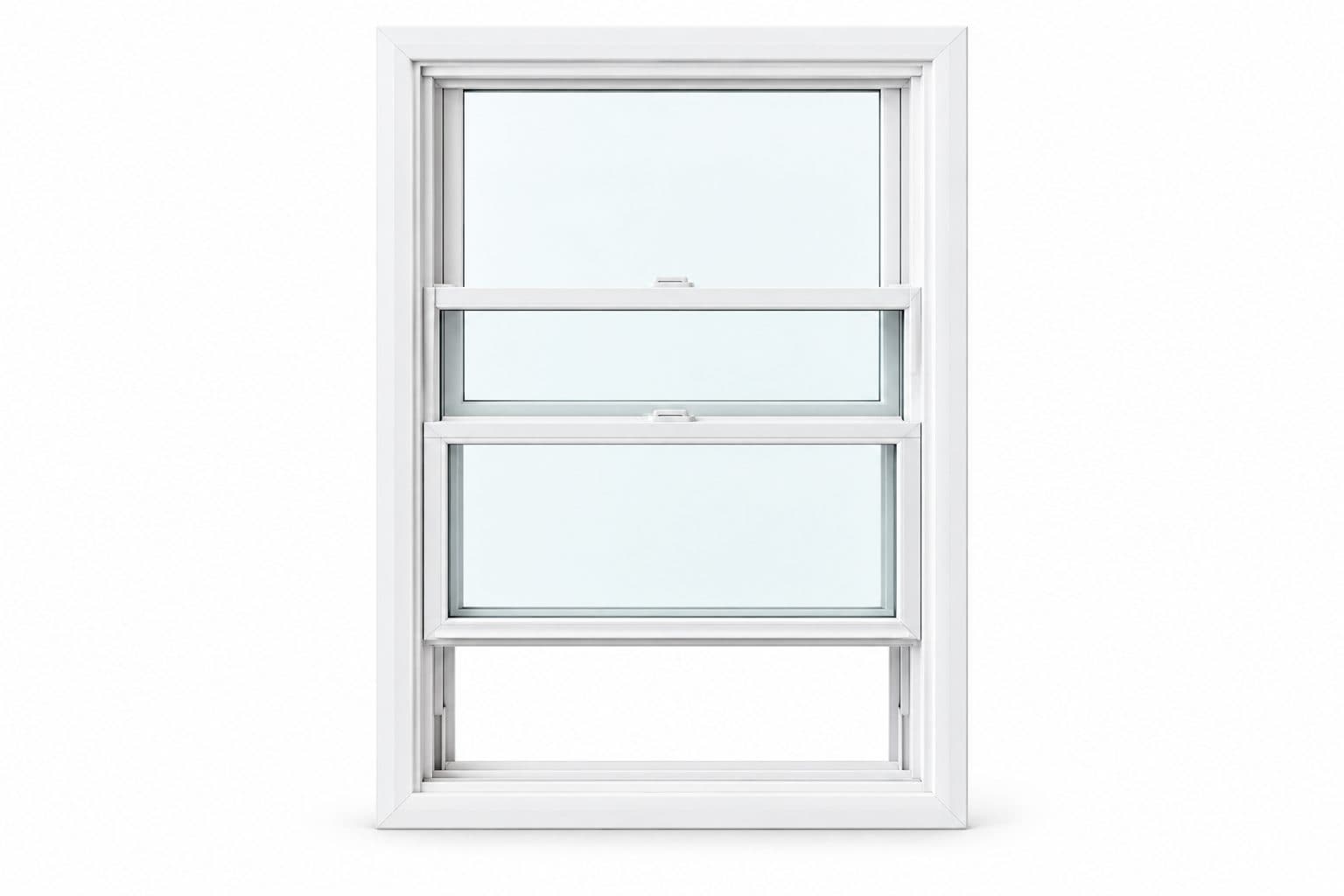
Energy-Efficient Windows
In Las Vegas, an energy-efficient window limits unwanted solar heat while keeping useful daylight. Compare whole-window U-factor and SHGC ratings for the exact product, and choose glass by how much sun each room gets.
- Measured on site before ordering
- Written scope with product and finish details
- Installed, sealed and reviewed with you
02 of 10
Compare complete candidates, not isolated best numbers
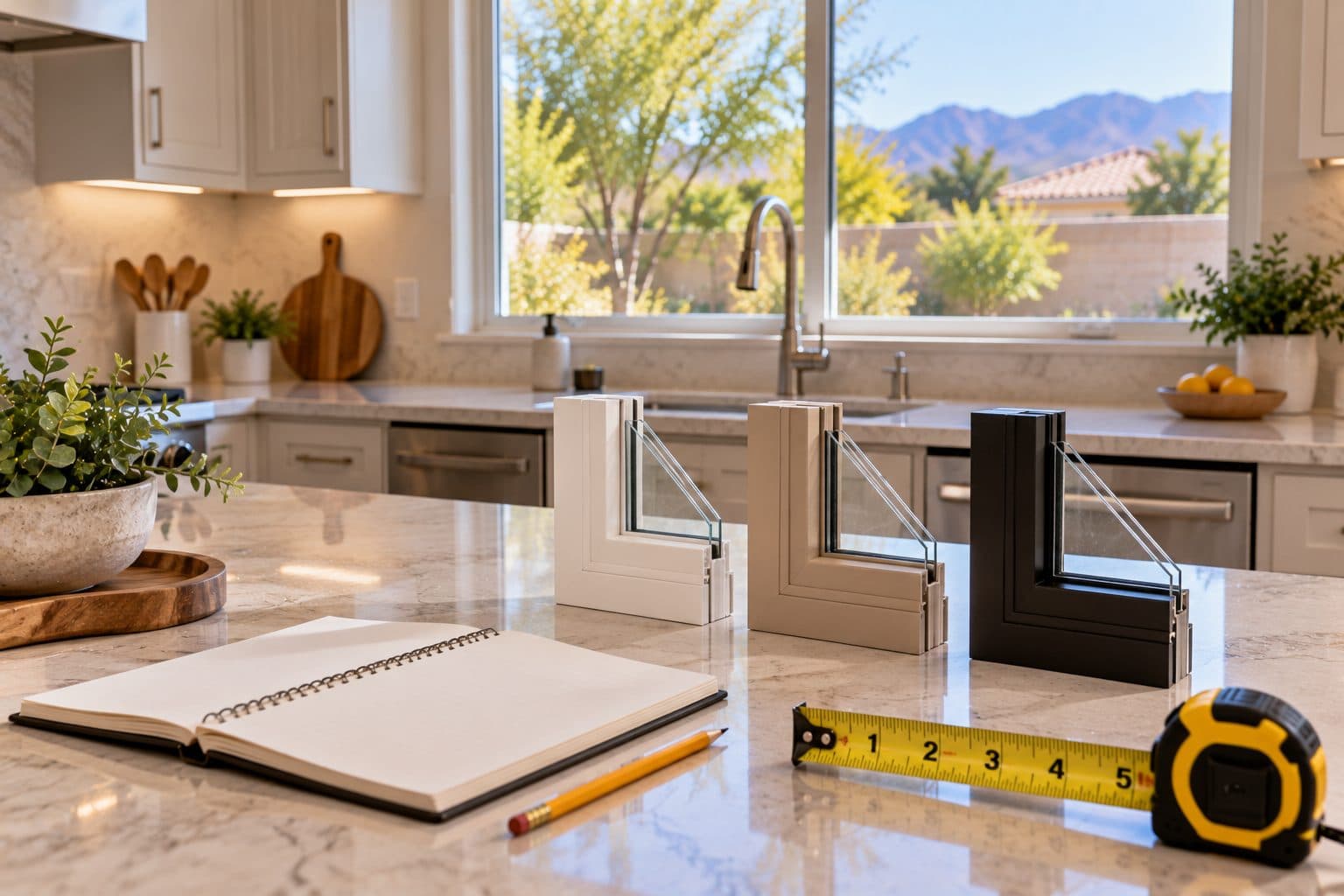
A window combines glass, frame, spacers, seals and any operating sections. Compare the documented complete product so a glass-only claim is not mistaken for the assembly you will receive. The exact configuration and glazing package should remain identifiable throughout the proposal.
U-factor concerns heat transfer, SHGC concerns admitted solar heat, and visible transmittance concerns visible light. ENERGY STAR's measurement explanations distinguish these properties. They describe different outcomes, so choosing the lowest number in every column is not a sensible universal rule. Our guide helps you understand window energy ratings in more depth.
A worked comparison of three hypothetical alternatives
The following values are invented solely to show how a comparison works. They are not purchasing targets.
| Candidate | U-factor | SHGC | Visible transmittance |
|---|---|---|---|
| A | 0.30 | 0.25 | 0.45 |
| B | 0.30 | 0.20 | 0.35 |
| C | 0.25 | 0.28 | 0.50 |
A and B have the same U-factor in this example. B admits less solar heat, but also transmits less visible light. If unwanted sun at a desk is the priority, B deserves examination alongside a sample and the room's shading plan. Its lower SHGC does not establish whether the resulting daylight appearance is acceptable.
C has the lowest U-factor and highest visible transmittance, but also the highest SHGC of the three. It therefore does not dominate the others in every property. A room with a different exposure or priority could justify a different shortlist. The buying decision is to identify the tradeoff you accept, then verify an actual offered assembly.
The comparison also shows why a percentage difference in a rating is not a percentage reduction in the household bill. The rating describes the product under its defined method. The home includes other openings, wall areas, equipment, weather and operating habits. Use the values to compare products, not manufacture a savings forecast.
four steps, in order
How a Project Runs
- 1
Tell us about the project
Send your location, the approximate number of openings, and what you want to improve.
- 2
Review the openings and options
We discuss your priorities and assess the details that affect product selection and installation.
- 3
Define the work in writing
The proposal identifies the products and agreed installation scope so you can understand what the project includes.
- 4
Install and review the result
At completion, we review the installed products, operation, visible finish, and care information with you.

03 of 10
Make solar control a deliberate choice
Limiting unwanted solar heat is a useful consideration for cooling-focused conditions. The U.S. Department of Energy describes the role of low SHGC and suitable glazing in reducing solar gain. The right selection still depends on the room and the available assembly, as our guide to windows for Las Vegas heat explains.
U-factor
How easily heat passes through the whole window. Lower keeps more heat out in summer and in during winter.
SHGC
Solar heat gain coefficient: how much of the sun's heat comes through. Lower means less heat from direct sun.
VT
Visible transmittance: how much daylight comes through. Higher means a brighter room.
Low-E coatings are part of many glass packages, but the term covers different designs. Ask which coating or package is included and request the resulting window ratings. Do not assume two estimates with the words Low-E describe equivalent products. A separate guide compares Low-E glass and window film.
Solar control also interacts with appearance. Some homeowners want to preserve a bright interior; others prioritize reducing glare at a screen or strong sun on a seating area. Review samples when color, reflectivity or the relationship with existing glass matters. A rating table answers performance questions, while a sample answers a different set of visual questions.
04 of 10
Use exposure to refine the window schedule
The same home can contain shaded and exposed openings. Deep patio covers, trees, exterior screens and adjacent structures may change the sunlight reaching the glass. Direction is useful, but it is only part of the exposure picture. Our west-facing window guide looks at the hardest afternoon exposure.
Build the schedule by room and opening. For each location, note direct sun, the time the room is occupied, important views and any need for privacy. This avoids specifying the most aggressive available solar-control choice everywhere without considering whether it suits the view and daylight you want.
A hypothetical home office used in late afternoon may place greater emphasis on solar control and glare management than a shaded dining-room window used in the evening. That does not establish a prescribed numeric target for either room. It gives the selection conversation a practical starting point that can be matched with actual offered products.
how we install
The Part Behind the Glass

Measured before anything is ordered
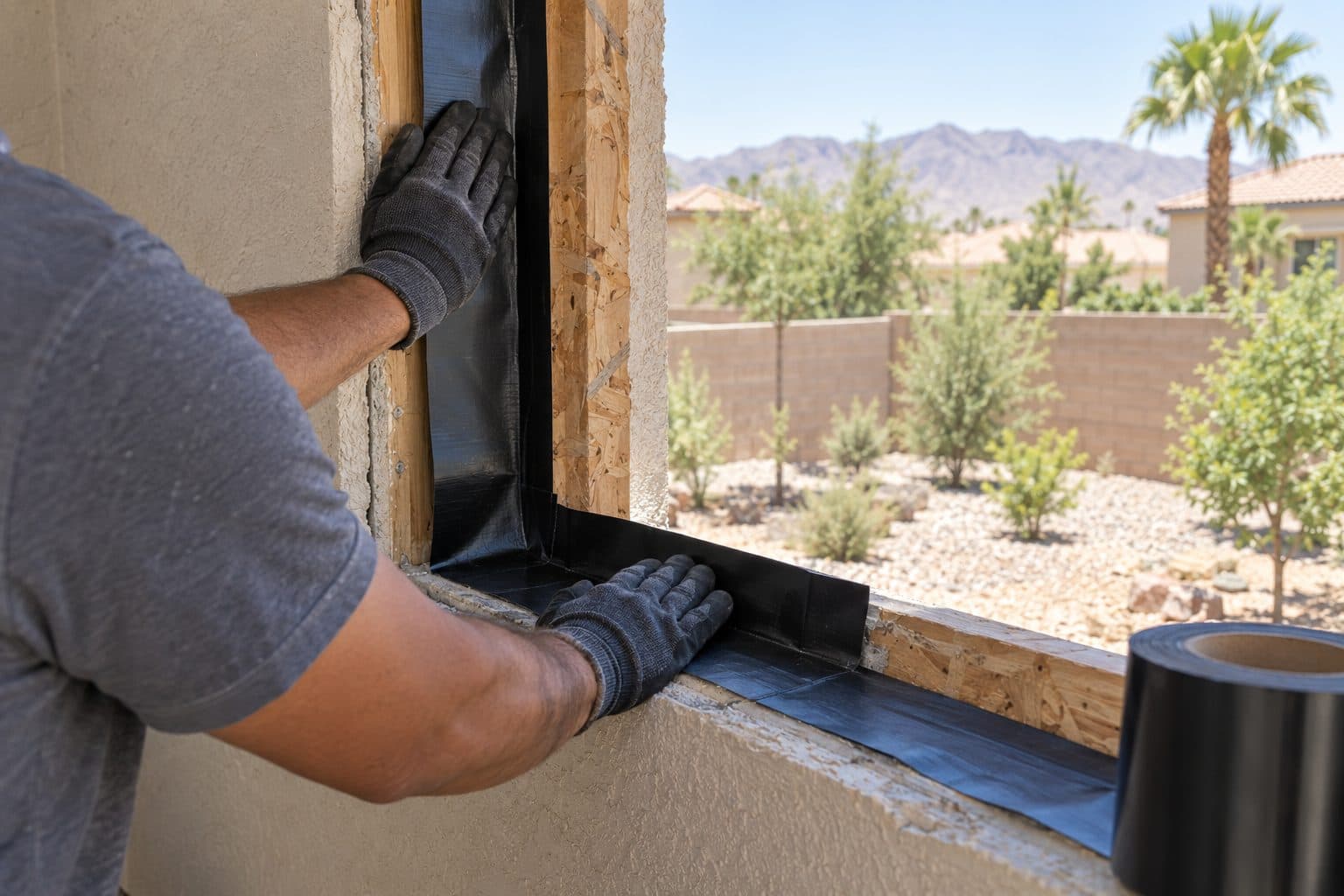
Flashed so water has a way out

Set level, plumb and shimmed
05 of 10
Do not select by pane count alone
Double-pane and triple-pane glazing are construction descriptions. The final performance also depends on coatings, spacing, frame design and the complete configuration. Additional panes may change weight, thickness and cost as well as thermal properties, so they should be evaluated as part of an actual assembly.
Ask what improves in the proposed alternative and what tradeoffs accompany it. If the primary problem is solar gain, compare SHGC instead of assuming more glass layers automatically address that problem best. If sound is also a priority, request acoustic data separately, as our noise-reducing windows page describes; a thermal rating does not establish sound performance.
The same principle applies to frame material. Vinyl, fiberglass and thermally improved aluminum products can differ widely within their own categories. Begin with the whole-window data and the features you need rather than ranking every product from a material label.
06 of 10
Check certification for the exact selection
ENERGY STAR certification applies to qualifying products and relevant criteria. It does not mean every window sold by a participating manufacturer has identical certification or performance. Ask whether the exact proposed configuration qualifies for the applicable location and retain the supporting identification.
The ENERGY STAR product criteria distinguish the certification process from general efficiency marketing. Certification is useful evidence when correctly applied, but it is not a promise about your household's future energy bill, and it does not certify Agave as an installer.
If a rebate or tax incentive influences your decision, verify that the program is current before relying on it. A qualifying product label is not proof of an active rebate or tax benefit, and older promotional material may describe programs that no longer apply to a new installation.
07 of 10
Protect the selection through installation
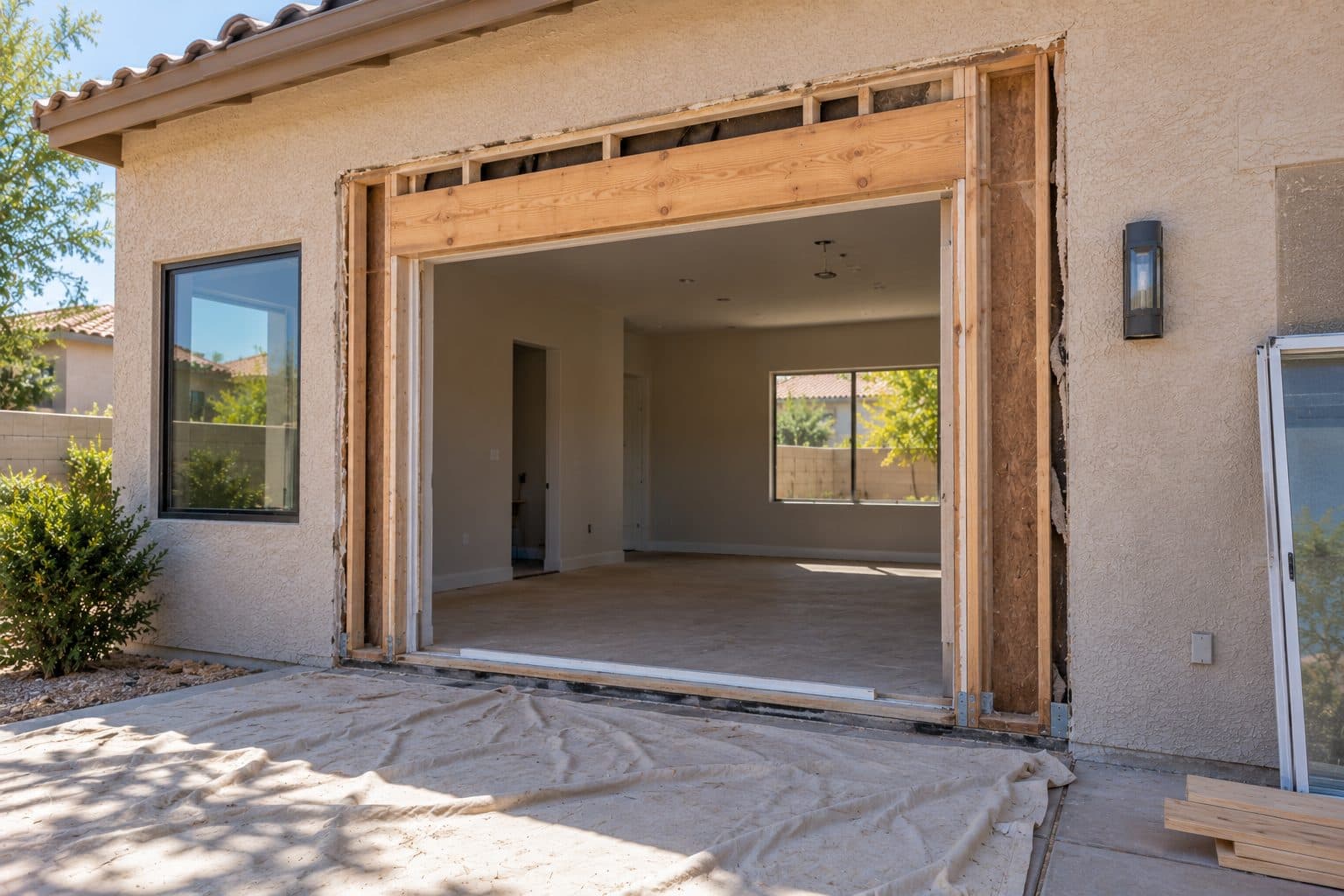
A carefully chosen window still needs an installation approach suited to the existing wall. Air can move around the perimeter of an improperly integrated opening, and water-management details must work with the wall and product. The proposed scope should address those connections directly.
Discuss removal boundaries, opening preparation, manufacturer-directed attachment and perimeter integration. Where the existing frame will remain, clarify why its condition and the proposed system make that appropriate. Where the frame will be removed, identify the interior and exterior finish work that follows.
The finished sash also needs to operate and lock as designed. At completion, review the selected configuration, accessible operation and the care instructions for seals, tracks and drainage paths. Product performance and ordinary ownership depend on using and maintaining the assembly correctly.
08 of 10
Trace each promised feature to the order
An energy-focused proposal needs a chain of identification: opening, product, operating configuration, glazing package and relevant supporting record. If the chain stops at a general collection name, you cannot be sure which assembly the rating describes.
| Record | What should agree |
|---|---|
| Opening schedule | Room and opening identifier, size basis and operation |
| Product selection | Manufacturer, series, frame and exact glass option |
| Performance evidence | The documented configuration and applicable values or certification |
| Approved order | The same options and any agreed exceptions |
| Handoff information | Product identification that can be retained for later questions |
A document can be legitimate yet irrelevant to a proposed substitution. A rating for a fixed unit does not automatically describe a different operating unit. A glass option with a similar marketing name may have a different specification. Ask what has changed and check the supporting information for the replacement selection.
The important test is not whether the new alternative can also be called energy efficient. It is whether it still meets the reason for the original choice, along with appearance, operation and project requirements. If solar control was essential, an improvement in another metric does not automatically compensate for less suitable solar performance.
Keep price and scheduling changes visible as separate decisions. A faster available alternative may be acceptable, but approval should reflect the actual tradeoff rather than an unexplained equivalent-product label.
09 of 10
Build a performance schedule without fragmenting the design
An opening-specific approach does not mean every window needs a different glass package. Start by grouping openings that share useful conditions: similar exposure, shade, room use and appearance requirements. A common package may serve several groups well once actual alternatives are compared.
Then identify the exceptions. A desk receiving direct sun at a particular hour may need a separate glare discussion. An opening behind a deep patio cover may need careful daylight review. An important front elevation may make consistency in reflected appearance a strong design priority even when room uses differ.
For each exception, record the problem, the proposed change and what that change affects. A lower-SHGC option may also change visible transmission or exterior appearance. Adding an interior shade addresses the room differently from changing factory glazing. An installation repair may address a perimeter air path without changing glass specifications at all.
Compare the final elevation and schedule together. This catches the situation where each individual window seems reasonable but the combined glass appearance is inconsistent with the homeowner's goal. It also avoids buying an expensive feature for every opening solely because it helps one room.
The useful result is a short rationale beside each selected group: why it was chosen, the relevant supporting data, and the remaining limitations. That record is far more durable than remembering that one salesperson described a package as the most efficient.
10 of 10
Move from an efficiency goal to a specific selection
When you request an energy-efficient window estimate, bring your room priorities, photos and any existing window labels you can safely locate. Tell us where solar heat, glare, drafts or surface comfort matter most. Agave Windows can help organize the product choices and installation questions around those goals.
Your final decision should connect a named assembly, a clear reason for choosing it and an agreed scope at the opening. That makes energy efficiency something you can examine in the proposal instead of a promise you have to take on faith.
things people ask us
Frequently Asked Questions
What information should an energy-efficient window quote include?
Request the exact series, operating configuration, glass package and relevant whole-product ratings. Ask whether certification applies to that selection and location. Installation scope belongs in the same comparison because the perimeter connection is separate from factory testing. Retain the product documents so a later substitution can be reviewed against the original choice.
Will every room need the same glass package?
Not necessarily. Exposure, shade, daylight, privacy and room use can differ. A consistent package may be appropriate in some projects, while others benefit from an opening-specific selection. Review how different glass will look on the same elevation before combining options, especially when appearance from outside is important.
Can energy-efficient windows eliminate drafts?
The source of the moving air needs to be identified. Leakage through a product and leakage around its installation are different conditions, and surrounding construction can also contribute. Replacement may address relevant window and perimeter issues, but a blanket promise of zero drafts is not a useful substitute for an assessment and a defined installation scope.
Does a lower SHGC always mean the better window?
A lower SHGC admits less solar heat, which can be useful where unwanted solar gain is the concern. It is one selection factor among daylight, appearance, insulation and the specific room exposure. Compare actual alternatives and their tradeoffs instead of treating one lowest number as the universal choice for every opening.
What should happen if the quoted glass package changes?
Recheck the product identity, whole-window ratings, glass appearance and any other evidence used to select it. A similar name or color is not enough. Record the approved change in the order schedule so the delivered units can be checked against the revised choice.
Still have a question about your home?
Ask us directly. A quick description of the opening is enough.
go deeper
Guides for Your Energy-Efficient Windows Decision
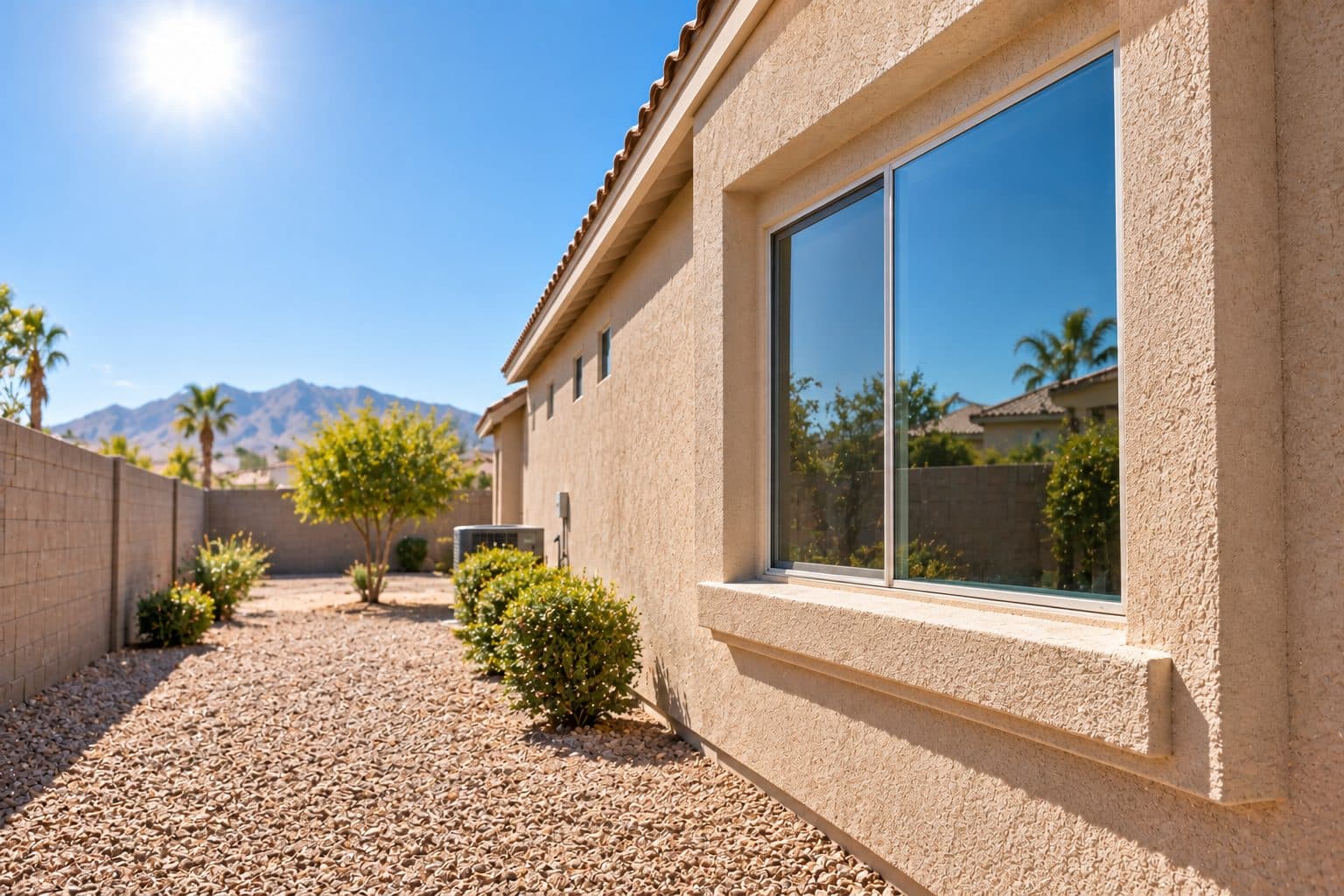
Best Windows for Las Vegas Heat
The best windows for Las Vegas heat depend on sun exposure, glass coating and SHGC, not frame material alone. See what to compare room by room.
Read the guide →
Understanding U-Factor and SHGC
U-factor and SHGC explained in plain terms: what each window energy rating measures, how to read an NFRC label, and which numbers to compare on a quote.
Read the guide →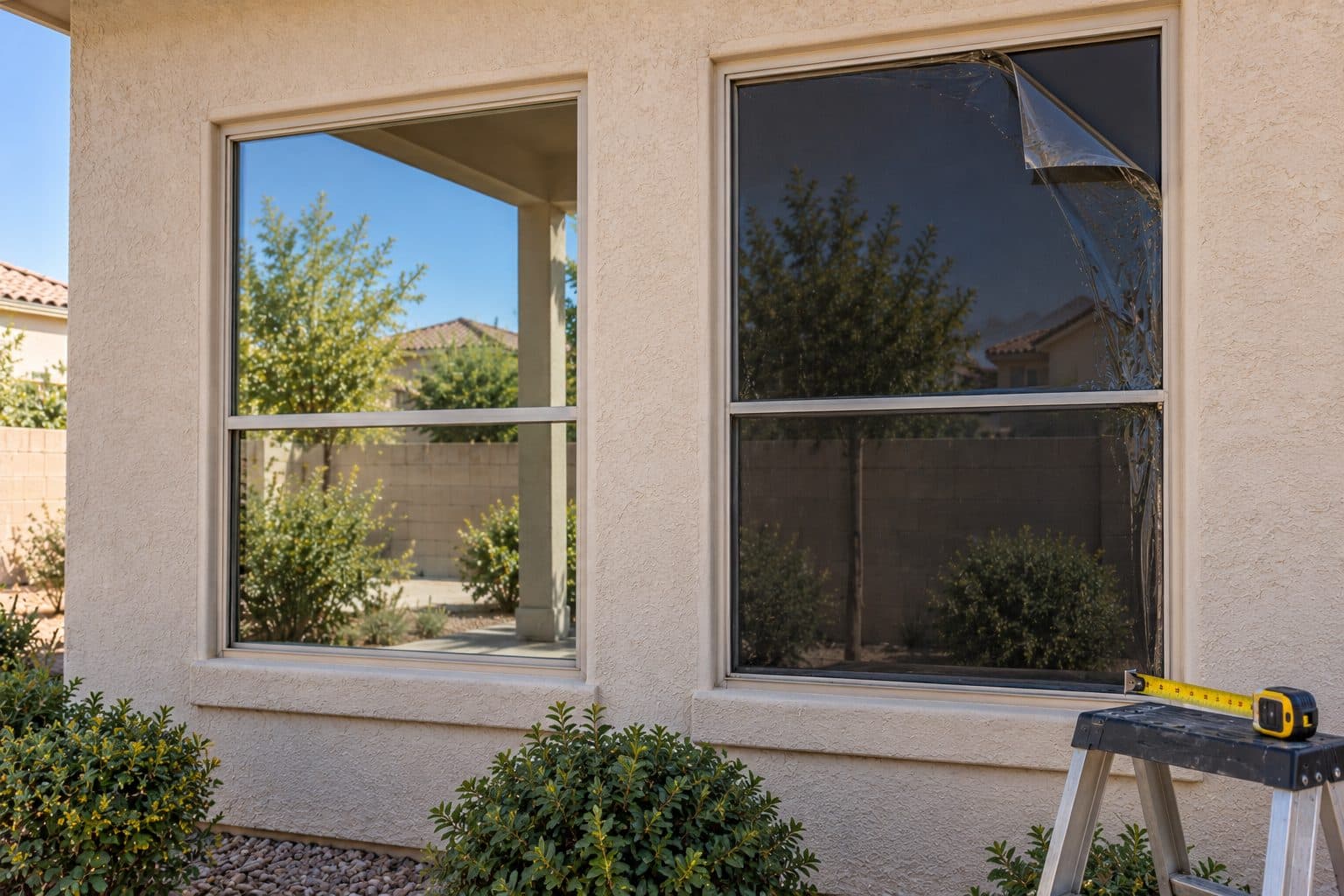
Low-E Glass vs Window Tint
Low-E glass vs window tint: how a factory coating differs from film added later, when each makes sense, and what film cannot fix on double-pane windows.
Read the guide →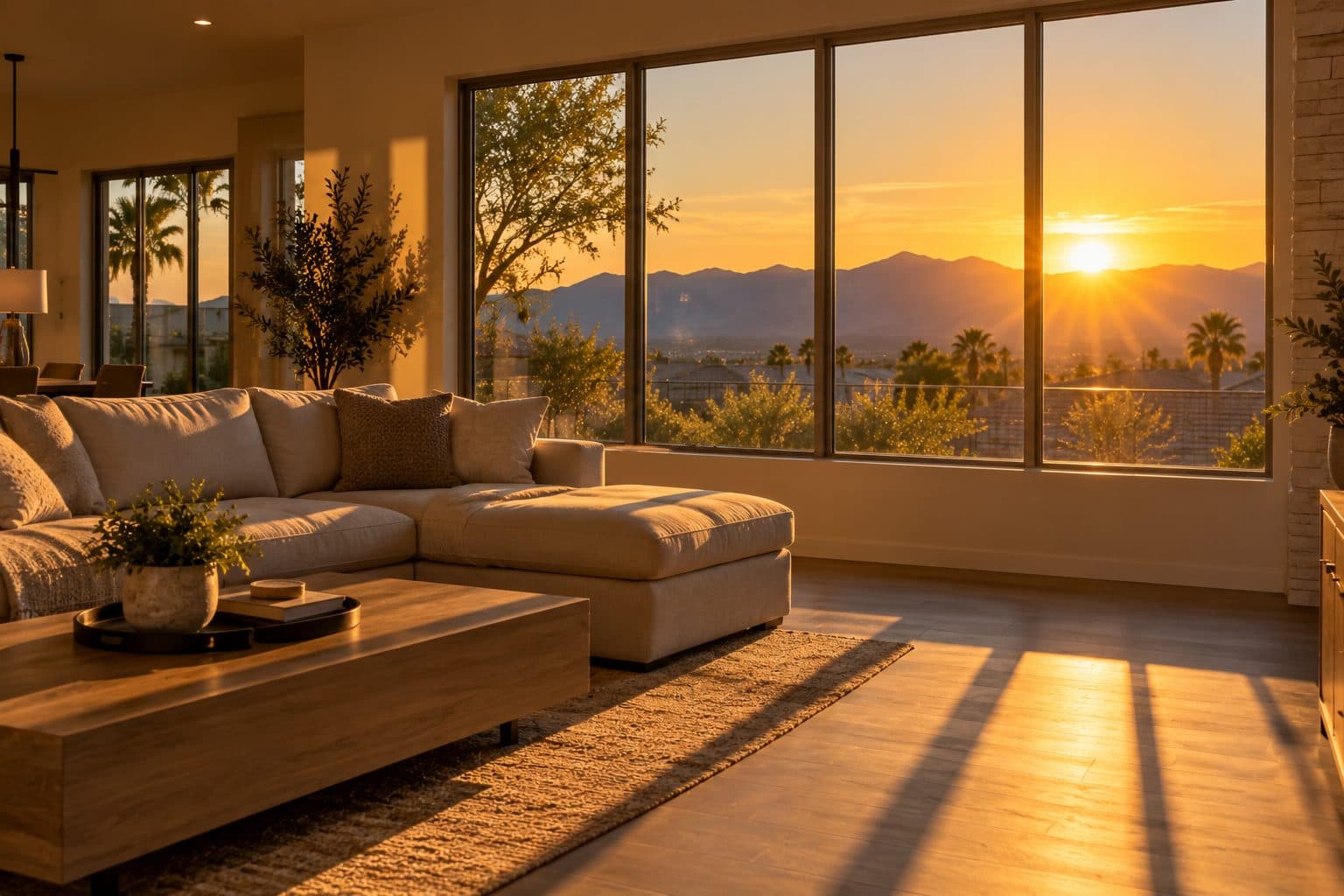
West-Facing Windows
West-facing windows take low afternoon sun that overhangs often miss. See how to plan glass, shading and glare control for a hot Las Vegas room.
Read the guide →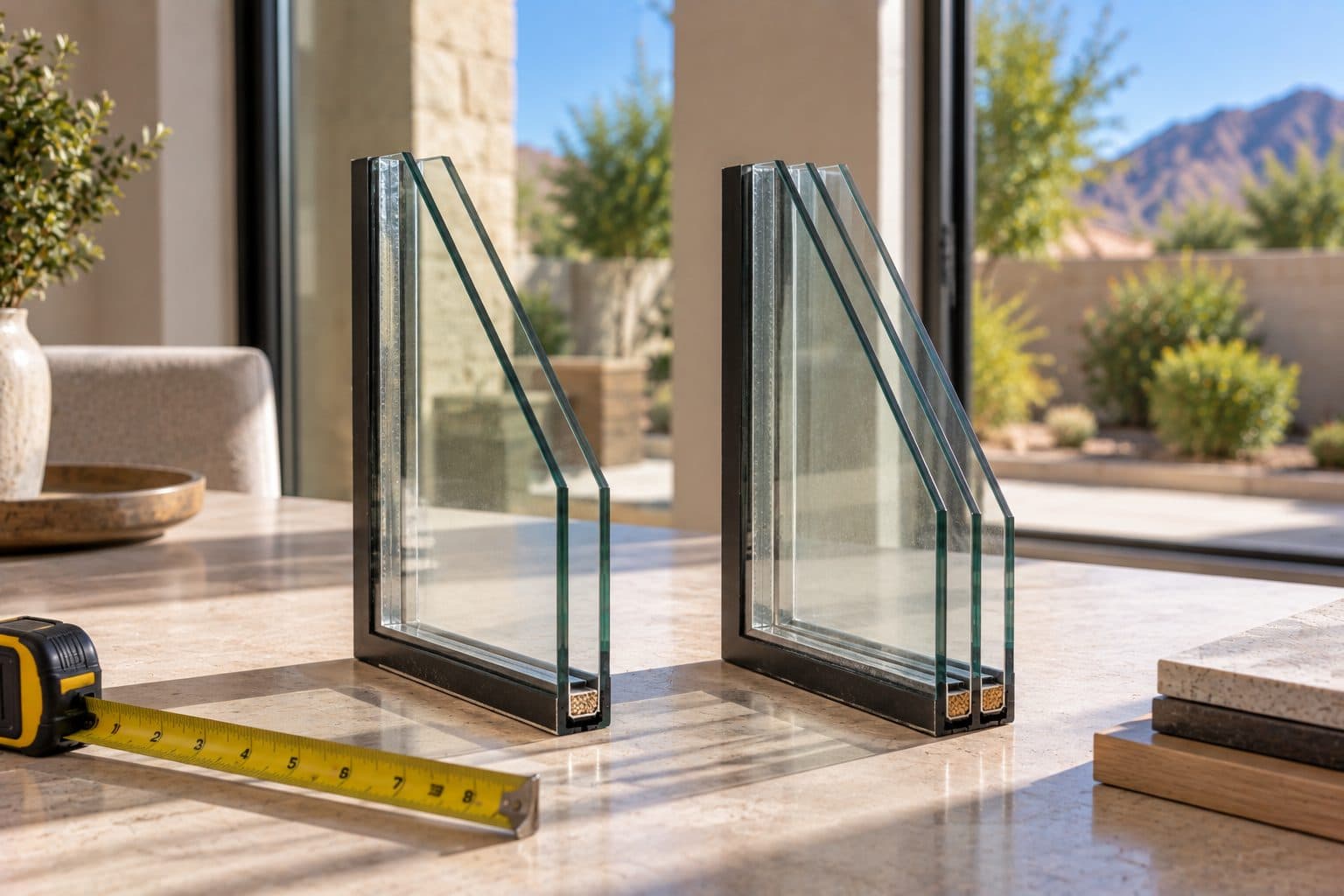
Double-Pane vs Triple-Pane Windows
Double-pane vs triple-pane windows: what a third pane changes for insulation, sun heat, noise and weight, and how to tell if it is worth it for a room.
Read the guide →keep going
Related Pages
- Replacement window installation
Replacement windows in Las Vegas, planned room by room. See how to choose glass, frames and installation method, and what a clear estimate should include.
Sources referenced on this page
Independent references linked in the text above. A manufacturer source explains a product concept; it does not mean Agave Windows supplies that brand.
- Measurement explanations (energystar.gov)
- U.S. Department of Energy (energy.gov)
- ENERGY STAR product criteria (energystar.gov)

ready when you are
Request an Energy-Efficient Window Estimate
Tell us your location, the approximate number of openings, and what matters most to you. You do not need to arrive with a product already selected.
- Photos can follow once we reply; no measurements needed
- A written scope before anything is ordered
- Licensed, insured, and bonded
Request an Estimate