


Wood Entry Doors in Las Vegas
A wood front door brings grain, texture, and material character close to the place where people enter your home. Choosing one involves more than selecting a stain color. The construction, exterior exposure, finish system, and willingness to care for the surface should all fit the project.
Agave Windows helps Las Vegas homeowners explore wood entry doors as complete exterior assemblies. Start with the appearance you want and the conditions at your entrance, then develop a selection that can be specified, installed, and maintained appropriately. The entry door replacement page covers the installation side of the project.
- Licensed, insured, bonded
- Written scope before ordering
- Las Vegas valley
The short version
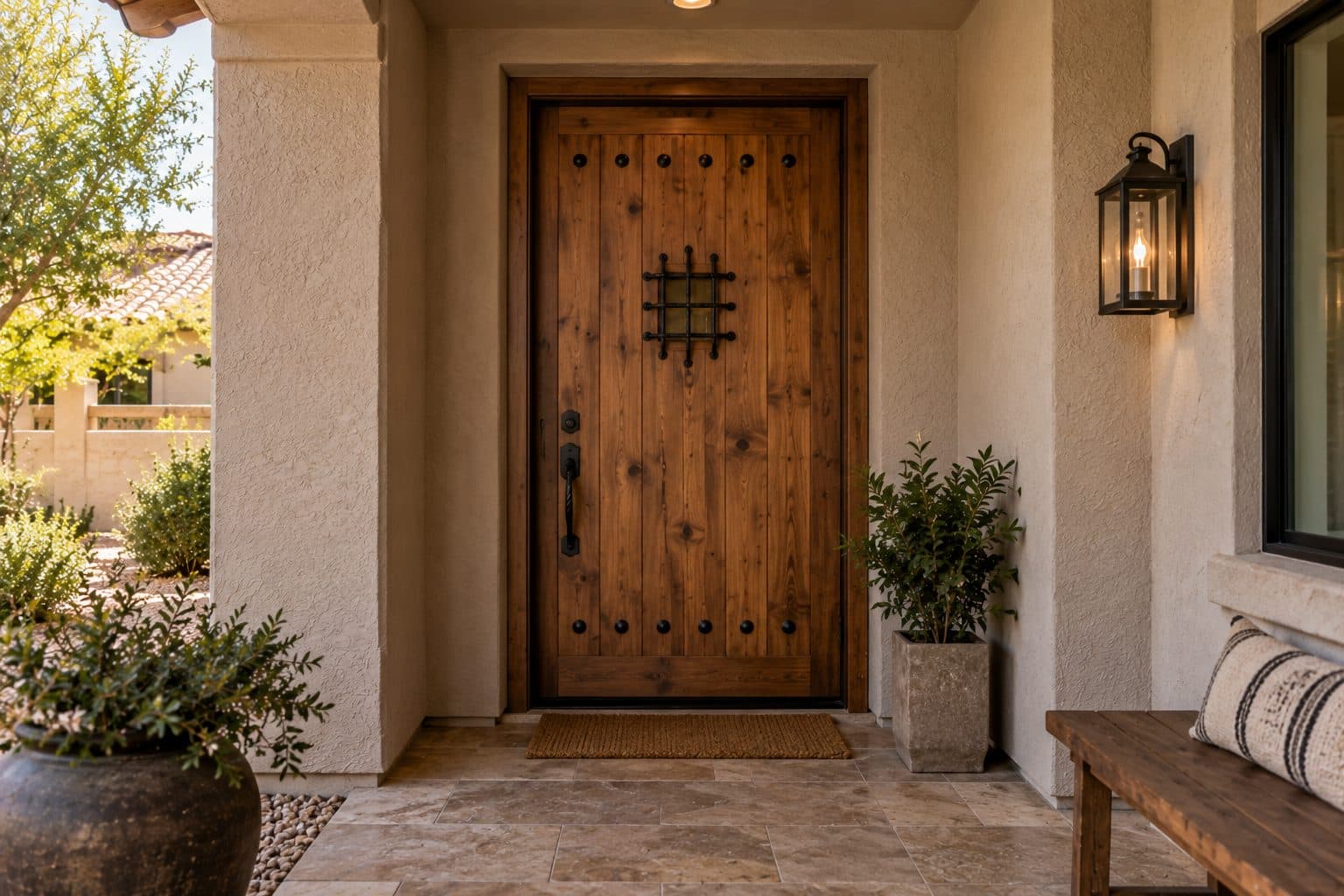
A wood front door offers natural grain and character but needs a protective finish and ongoing care. How well it suits your home depends on sun, water exposure and the shelter of a porch or overhang.
01 of 14
Decide what you value about real wood
The appeal may be visible grain, a particular species, traditional panel proportions, or the way a natural surface complements stone and stucco. Identify which feature matters most. That helps distinguish a material preference from a general request for a warm-looking entrance, which a wood-look fiberglass entry door might also satisfy.
Natural grain and color variation are part of the visual decision. A sample can establish a direction without predicting every line in a full leaf. If consistency between the door, sidelights, and surrounding trim is important, explain the expectation and ask how it can be addressed in the proposed construction.
Also consider how close people will be to the surface. A front door is seen from the street and touched at the handle. Grain, edge treatment, joints, and sheen should look appropriate at both distances. Review those details before narrowing the choice to a color name.
how it works
Hinged door in a prehung frame
- 1
The slab hangs on hinges in its own frame with a sill and weatherstrip
- 2
Sidelites and transoms are separate glazed frames beside or above it
- 3
Handle, deadbolt and strike are set to the frame, not just the slab
Illustration of the operating principle, not a drawing of a specific product.
at a glance
Wood Entry Doors
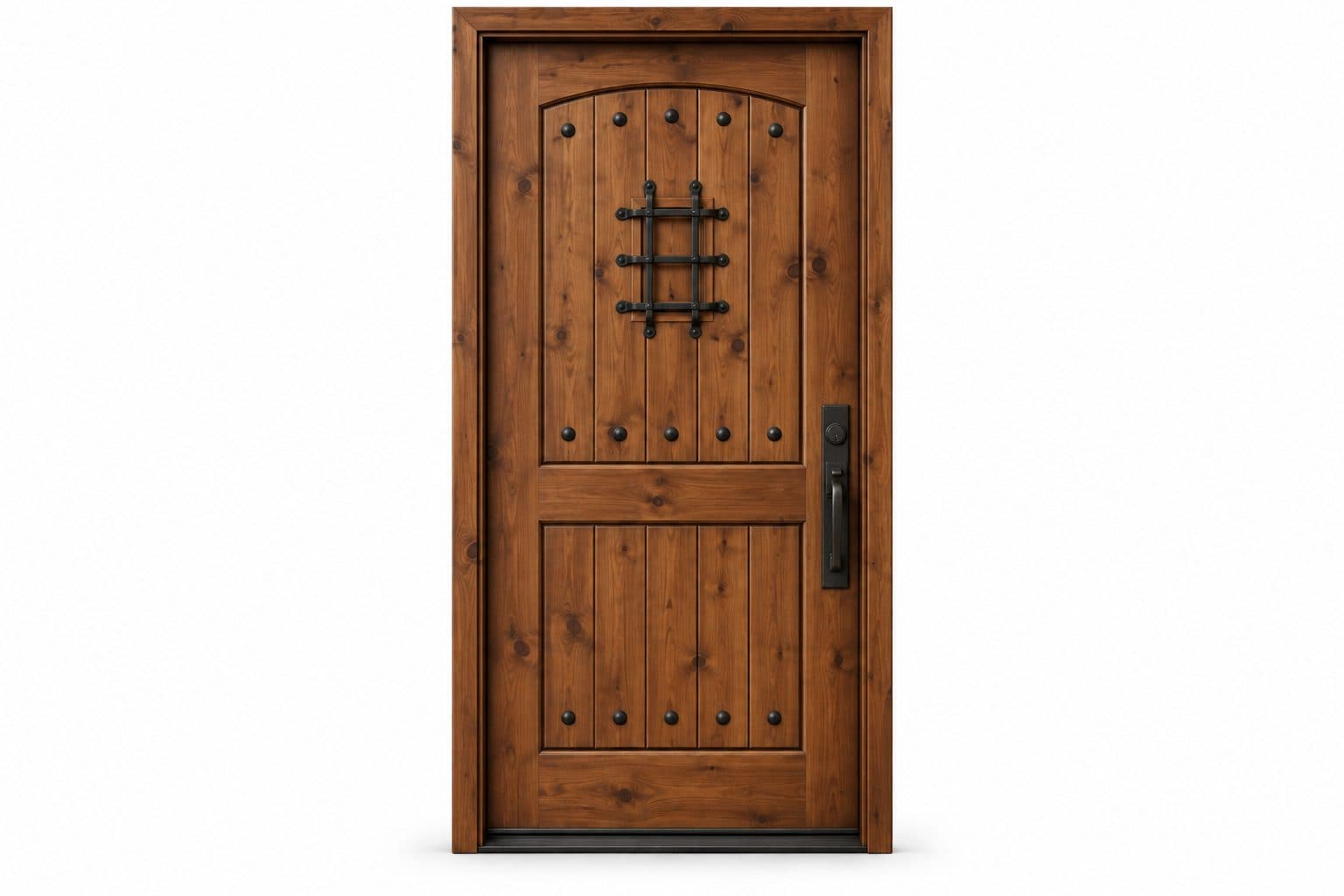
A wood front door offers natural grain and character but needs a protective finish and ongoing care. How well it suits your home depends on sun, water exposure and the shelter of a porch or overhang.
- Measured on site before ordering
- Written scope with product and finish details
- Installed, sealed and reviewed with you
02 of 14
Ask how the door is constructed
Wood doors can use different constructions, including engineered components and veneers. Ask the supplier to identify the actual construction of the proposed leaf and frame. Terms such as solid or premium should be explained through product information rather than left as broad impressions.
Construction affects what can be sized, machined, glazed, and maintained. A panel design may have specific relationships between stiles, rails, and inserts. Requests to change those proportions need manufacturer or fabricator review, as with any custom front door project, rather than an assumption that wood can be cut into any arrangement.
Confirm the exterior application for the selected assembly. A door that looks suitable in an interior photograph may not have the construction or finish requirements needed at a front entrance. Keep the product identification and exterior-use information with the proposal.
four steps, in order
How a Project Runs
- 1
Tell us about the project
Send your location, the approximate number of openings, and what you want to improve.
- 2
Review the openings and options
We discuss your priorities and assess the details that affect product selection and installation.
- 3
Define the work in writing
The proposal identifies the products and agreed installation scope so you can understand what the project includes.
- 4
Install and review the result
At completion, we review the installed products, operation, visible finish, and care information with you.

03 of 14
Study exposure before selecting the finish
Photograph the entrance when sun reaches it and note the shelter provided by the porch or overhang. Consider water reaching the door from weather, irrigation, or nearby surfaces. Those observations help describe the application without assuming that every Las Vegas entrance has identical exposure.
U-factor
How easily heat passes through the whole window. Lower keeps more heat out in summer and in during winter.
SHGC
Solar heat gain coefficient: how much of the sun's heat comes through. Lower means less heat from direct sun.
VT
Visible transmittance: how much daylight comes through. Higher means a brighter room.
Manufacturer requirements for weather protection and finishing can differ by door construction. Ask what applies to the actual product, including any overhang or exposure conditions. A rule quoted for one wood-door collection should not be generalized to every other design.
If the desired door does not suit the existing exposure, the discussion may need to include a different construction, a different finish, or changes to the entrance design. The comparison of front door materials sets out the alternatives. Resolve that before ordering. An attractive finish sample does not compensate for an unsuitable exterior application.
04 of 14
Compare stain and paint as complete finish systems
A stained appearance emphasizes the wood and its variation. Paint produces another result and may suit a design where panel form and color matter more than visible grain. The correct choice depends on the product, exposure, and the appearance you want to maintain.
Ask which preparation and coating system is approved for the proposed door. Finishing includes more than the front face; edges and other specified surfaces need appropriate treatment. Identify who completes the work and how it fits the installation schedule required by the manufacturer.
View samples near the actual exterior finishes. A stain can look different across species, grain patterns, or lighting conditions. If a dark finish is desired, obtain product-specific approval for the application rather than assuming that every exterior wood door accepts the same color without restrictions.
how we install
The Part Behind the Glass

Measured before anything is ordered

Hung, aligned and latched
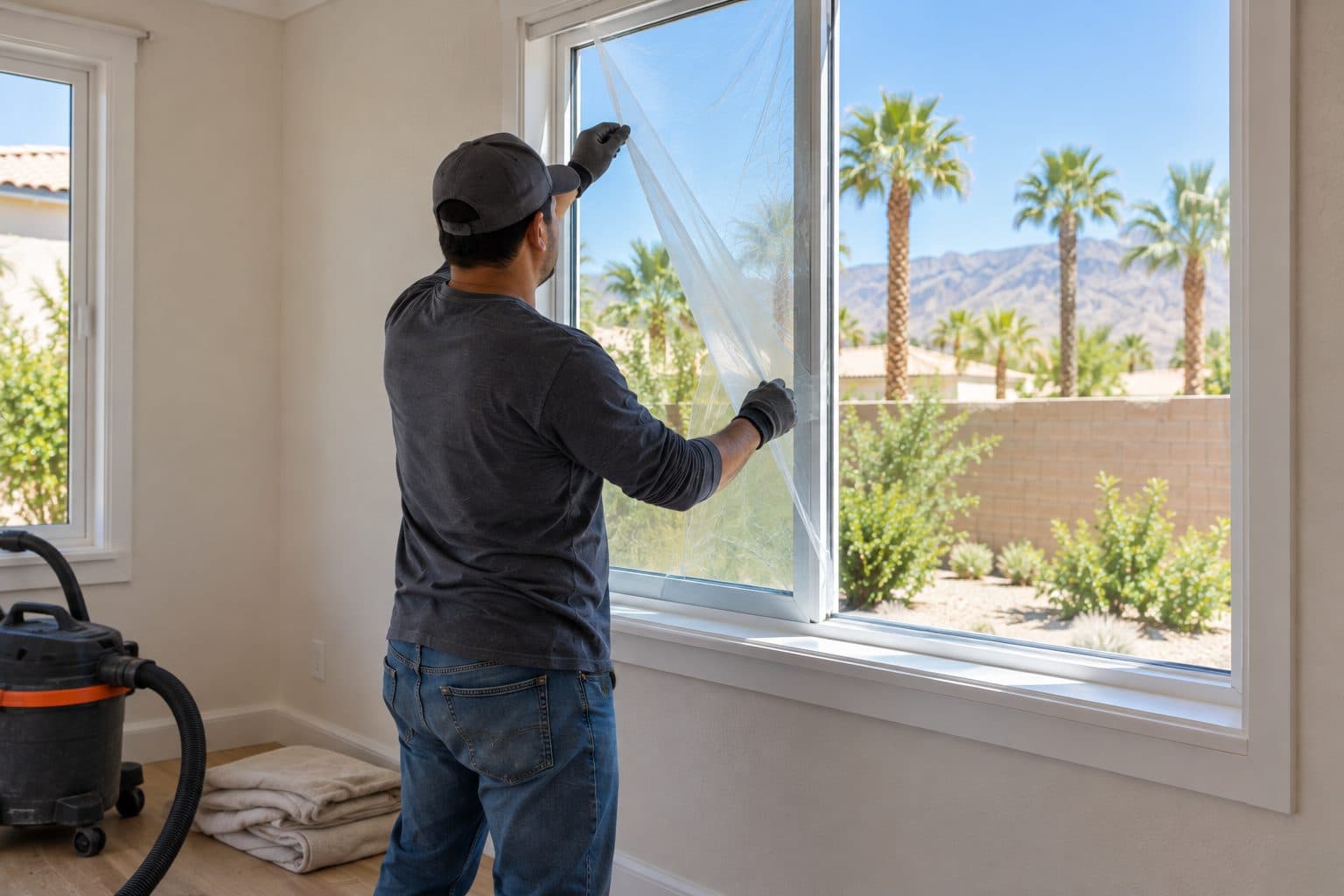
Cleaned up and reviewed with you
05 of 14
Treat the finish as protection with observable condition
A wood-door finish is more than the color on the street-facing surface. The selected system must protect the specified faces, edges and details. Simpson's care guidance explicitly includes all six sides for its doors, illustrating why a beautifully coated front face does not establish a complete finish job.
Ask how newly exposed areas from permitted fitting or hardware preparation are treated. A later alteration can leave a surface outside the original coating process. Responsibility for that work should be clear, particularly if installation and finishing are handled by separate parties.
Inspect according to the actual care instructions and exposure. Changes in sheen, cracking, peeling, bare areas or staining are reasons to seek appropriate finish advice; they do not all mean the leaf must be replaced. Distinguish coating deterioration from a moving joint, damaged panel or water route around the frame before choosing the response.
Keep the finish product, color, sheen and application record. Recoating over an unidentified incompatible finish can create another problem. A condition-based maintenance discussion is more useful than promising a universal annual or multiyear refinishing interval.
The design should also leave access for that care. Large hardware, a close-fitting screen or fixed trim can obstruct surfaces. Review how the door and its edges will be reached without damaging the surrounding components.
06 of 14
Shape the panel and glazing composition
Review rail widths, panel proportions, grain direction, and glass together. A large glazed area can lighten the appearance of a wood entrance, while a more solid design can emphasize the material. The configuration should fit both the facade and the foyer.
Sidelights and transoms can add daylight while keeping the moving leaf more solid. They also expand the assembly and change the frame lines visible from inside. Ask for a full entrance elevation rather than judging the door leaf in isolation.
For decorative or privacy glass, examine actual samples and viewing conditions. A textured surface can obscure detail without blocking all light or visibility. Confirm suitable safety glazing and the relevant performance information for the chosen configuration instead of treating decorative glass as a complete specification. The glass entry doors page covers front-entry glazing in detail.
07 of 14
Evaluate comfort through documented performance
Wood is a material choice, not a complete thermal rating. Glazing, frame construction, seals, and the installed opening all contribute to the entrance. Compare whole-product information where available for the proposed assembly rather than relying on a generalized claim about wood.
Explain the problem you want to address. A warm patch of direct sun in the foyer is a different concern from a door that does not seal comfortably at its edge. The solution should be tied to the actual issue, with realistic expectations about what door replacement can change.
If glass or sidelights are included, review U-factor and solar heat gain coefficient with the exposure and daylight needs. Do not assume that a darker stain, thicker-looking panel, or reduced glass area establishes a particular energy outcome for the home.
08 of 14
Confirm machining and hardware before delivery
The hinges, lock, pull, and any electronic access device need to suit the leaf construction, so review the door hardware options early. Establish the approved preparation before fabrication or ordering. A prominent handle can be part of the design, but its location and fastening need technical coordination.
Avoid planning on significant field trimming as a substitute for the correct size. Manufacturers set product-specific limits on alterations, and construction can constrain where material may be removed. Ask what adjustments are permitted and who is responsible for them.
The same care applies to later additions such as a viewer, mail slot, or pet opening. Confirm suitability before cutting into the leaf. A wood surface may seem straightforward to modify, but the complete assembly and written coverage still depend on the relevant requirements.
09 of 14
Connect the door to a sound opening
The existing frame, threshold, and surrounding wall need assessment. A wood leaf installed into a compromised frame may retain the very problems the homeowner hoped to resolve. Establish which components will remain and why they are suitable for the proposed replacement.
For a complete assembly replacement, review support, alignment, sealing, flashing, and drainage at the opening. The details should follow the selected product and actual wall conditions. If the entrance has a history of staining or moisture, include investigation in the scope rather than concealing the evidence behind new trim.
Discuss interior and exterior finishing responsibilities. Casing, stucco, paint, floor edges, and nearby fixtures may be affected. If the opening size changes, construction and approval requirements should be addressed separately from the material selection.
10 of 14
Make the species, construction and finish do separate jobs
Species describes the wood selected; construction describes how components form the leaf; finish describes the protective and visual surface system. These should be separate fields in the proposal. A desirable species cannot, by itself, establish the suitability of a particular panel assembly for the exposure.
Engineered parts and veneers should be described accurately rather than hidden behind a broad solid-wood label. They can be deliberate elements of a design. The useful questions concern the actual construction, exterior suitability and limits on machining, not whether one marketing adjective sounds more substantial.
For a grain-focused design, review the relationship among stiles, rails and panels. Their grain directions and natural variation may not form a continuous drawing across the face. If aligned veneer or a particular matching method is essential, request that specific fabrication detail and sample standard before approval.
11 of 14
Test the exposure against the product, not a regional stereotype
Two Las Vegas entrances can have very different protection. One may sit deeply under a porch; another may receive direct afternoon sun or irrigation spray near the sill. Record the actual conditions instead of relying on a statement that every door in the city needs the same overhang or finish.
Compare the proposed door's exposure requirements with that record. If a condition is outside the supported application, the decision is whether to change the entrance protection, choose a supported construction or select another product. Repainting more often is not automatically an acceptable substitute for an installation the manufacturer does not support.
A hypothetical example is an owner who wants a dark stained door at an exposed entrance. The stain sample settles color, but not the exterior application. The supplier's approval, coating system and any required protection must be resolved before the color becomes a final selection. This keeps a visual preference from quietly overruling a practical constraint.
12 of 14
Understand why field trimming has limits
A wood surface can make a door appear easy to resize, but the leaf may contain engineered components, specific rails, joints and prepared hardware zones. Removing material can affect those parts and the remaining finish coverage. The limit is a product-construction question, not simply how much wood a saw can remove.
Simpson's alteration guidance gives different constraints for particular constructions and directs special questions for rated doors. Its figures should not be transferred to another product. Order the appropriate size and confirm any permitted fitting before accepting an almost-matching slab.
If the old frame is out of alignment, trimming a new door to follow it may preserve an unsuitable seal or threshold relationship. The assessment should explain whether the retained frame is worth fitting to, or whether the assembly needs a broader correction. That decision belongs before custom machining and finishing.
13 of 14
Decide what evidence will settle an appearance concern
Agree on the sample reference and acceptable natural variation before production. A range of finished wood samples may communicate the likely result more honestly than one unusually uniform piece. A photograph can record the reference but cannot reproduce every lighting condition.
At delivery, evaluate the agreed surface in appropriate light and distinguish natural variation from damage or a mismatch to the approved specification. Preserve identifying labels and report concerns before unapproved alteration. A clear approval record helps the conversation focus on the actual product and expectation rather than a remembered image.
14 of 14
Approve a complete wood-door proposal
The written selection should identify construction, species or surface, dimensions, swing, panel layout, glass, hardware, frame, threshold, and finish system. Confirm what natural variation to expect and which samples define the agreed appearance. The entry door buying guide lists the other decisions to settle.
Ask for the actual product and installation coverage documents, including finish and exposure conditions. Avoid relying on a general warranty phrase without reading what is covered, by whom, and what care is required. The documents should match the assembly being purchased.
At handoff, review operation and receive the care information for the leaf, glass, finish, and hardware. Request a wood door estimate and share your entrance photographs and preferred wood appearance to begin a project grounded in both design and ownership.
things people ask us
Frequently Asked Questions
Does every wood front door need the same overhang?
No universal overhang rule applies to every wood-door construction. Manufacturers may specify protection based on the product and exposure, and some assemblies have different requirements from others. Ask for the selected product instructions and evaluate the actual entrance before ordering. Do not transfer a dimension or warranty condition from an unrelated door collection.
Can a wood door be trimmed to fit an unusual opening?
Only within the limits permitted for its construction. Significant field cutting can affect engineered parts, panels, hardware preparation, and coverage. A measured order is preferable to assuming the leaf can be altered later. Ask the supplier what adjustments are allowed and identify who performs them before deciding that a near match is suitable.
How often will the door need refinishing?
The interval depends on the finish, exposure, product, and condition, so a fixed promise would be misleading. Follow the selected care instructions and inspect the surface for signs that attention is needed. Keep finish information so the next maintenance step is compatible. Ask what routine inspection looks like for the particular entrance rather than relying on a generic annual schedule.
Will the finished door look exactly like a small wood sample?
A sample helps establish species, color, texture, and sheen, but natural grain and color can vary across the full leaf. Discuss acceptable variation and any matching priorities before approval. If exact uniformity is essential, say so early and compare appropriate alternatives. The proposal should record what the sample represents and how the final appearance is assessed.
Still have a question about your home?
Ask us directly. A quick description of the opening is enough.
keep going
Related Pages
- Plan entry door installation
Front door replacement in Las Vegas: decide between a new door slab or a full frame, pick glass and hardware, and know what to check when it is installed.
- Compare front door materials
Fiberglass vs steel vs wood entry doors: how the three materials compare on looks, upkeep, sun exposure and security, and how to choose for your entrance.
- Develop a custom front door
Custom front doors in Las Vegas: when you need true custom work, how drawings and samples settle the design, and who handles measuring and hardware.
- Choose front-entry glazing
Glass entry doors in Las Vegas bring daylight into the foyer. Compare clear, textured and decorative glass, sidelights, transoms and privacy at night.
- Review the entry buying guide
An entry door buying guide and checklist: rank your must-haves, shortlist two front door options, compare quotes fairly and confirm details before ordering.
Sources referenced on this page
Independent references linked in the text above. A manufacturer source explains a product concept; it does not mean Agave Windows supplies that brand.
- Simpson's care guidance (simpsondoor.com)
- Simpson's alteration guidance (simpsondoor.com)

ready when you are
Request a Wood Entry Door Estimate
Tell us your location, the approximate number of openings, and what matters most to you. You do not need to arrive with a product already selected.
- Photos can follow once we reply; no measurements needed
- A written scope before anything is ordered
- Licensed, insured, and bonded
Request an Estimate