






- 6 min read
- Updated
- Supports: Specialty Projects
Window and Door Project Permit Timeline
A permit timeline is a sequence of decisions and reviews, not one reliable number of days. For a window or door project, particularly the specialty projects that change an opening, the schedule depends on the property authority, the alteration proposed, the completeness of the information and any revisions required.
Ask which stage a quoted duration describes. Preparing drawings, waiting for an agency review, responding to comments and scheduling an inspection are different activities. Keeping them separate gives you a clearer plan and a more useful way to discuss delays.

The short version
No fixed number of days applies to a window or door permit. Timing depends on the jurisdiction, the scope of work, how complete the submission is, and review comments, with inspections following installation.
On this page
Start the clock at a defined milestone
Ask every schedule estimate to name its starting event and finishing event. The time from a complete accepted submission to a first review response is different from the time between the first site visit and permit issuance. Comparing those two estimates as if they measured the same activity creates a misleading deadline.
Keep preparation, agency review, applicant response and later inspection scheduling as separate periods. The project team can often influence the completeness and speed of its own response; it cannot convert that preparation time into a promise about the authority’s queue.
| Schedule statement | Clarification needed |
|---|---|
| Review takes a stated period | Does the clock begin at upload, completeness acceptance or assignment? |
| Plans are approved | Is issuance complete, and are fees or other conditions outstanding? |
| Corrections were sent | Were revised documents accepted, and what next review is pending? |
| Inspection is booked | Which inspection and which work must remain visible? |
Use the responsible authority’s current information for the actual project and record the date of the estimate. The City of Henderson’s building resources, for example, route application and inspection tasks separately. A forecast from one authority or scope should not be reused as a valley-wide promise.
A useful progress update states the current stage, the evidence of that status, the next action and the party responsible. That is enough to distinguish a genuine review wait from a document that has not yet been prepared.
Stage 1: confirm jurisdiction and project scope
Establish the authority responsible for the address. The City of Las Vegas directs applicants to verify city jurisdiction; Clark County, Nevada (for unincorporated areas), Henderson, North Las Vegas and Boulder City maintain their own official processes. City of Las Vegas, Clark County, Henderson.
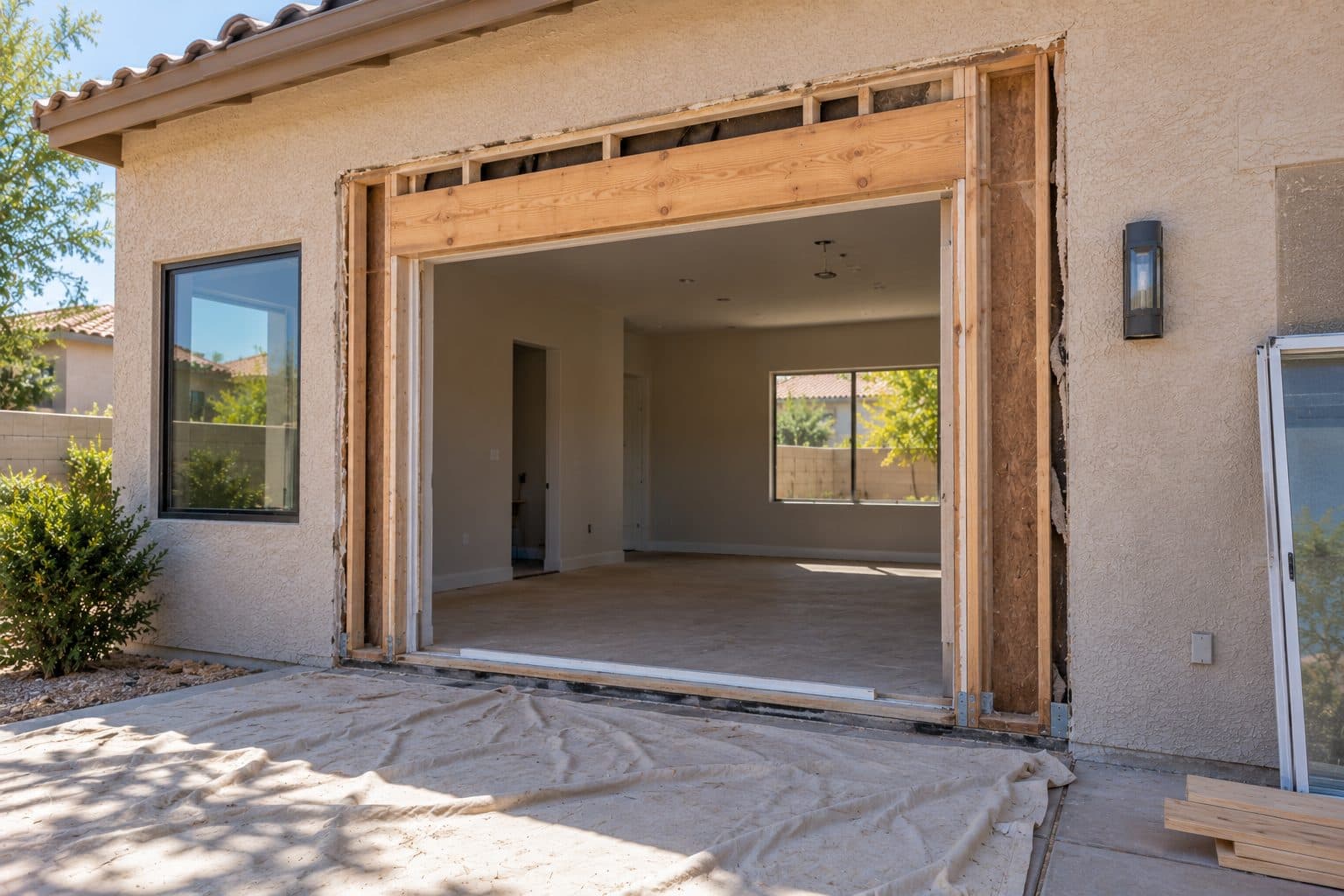
Describe whether the project is an existing-opening replacement, a window-to-door conversion, an enlargement or another alteration. Our conversion permit planning guide shows how to describe an altered opening. Include related work that may affect the review. An answer based on a simple replacement should not be reused after the scope changes.
The milestone for this stage is a clear authority route and an understood list of next information needs. It is not an implied promise that the project has already been approved.
Stage 2: prepare the required information
The team may need measurements, product documents, drawings or professional design information, depending on the project and authority. Ask who prepares each item and what decisions they need from you.
Late product changes can interrupt preparation. If the opening dimensions, panel configuration or sill are still undecided, identify which documents depend on those choices. A realistic schedule places selection deadlines before the work that requires them.
If investigation or a structural assessment of the opening is needed to understand the existing building, show it as a separate task. Its result may change the design or reveal additional questions. Treating it as invisible time makes the eventual review schedule harder to understand.
Stage 3: submit and confirm acceptance
Identify who submits the application and how the project team confirms it has entered the appropriate process. Keep the application reference and submission date in the project record. Ask whether anything remains incomplete or outstanding.
The City of Las Vegas permit page distinguishes applications with plans from those without plans, a distinction our guide to replacement-window permits explains. That does not mean a homeowner can choose whichever route appears faster; the correct route depends on the actual scope and current requirements.
At this stage, ask what status information is available and who will monitor it. A single assigned contact avoids multiple people giving inconsistent instructions or assuming someone else has responded.
how we install
The Part Behind the Glass

Measured before anything is ordered
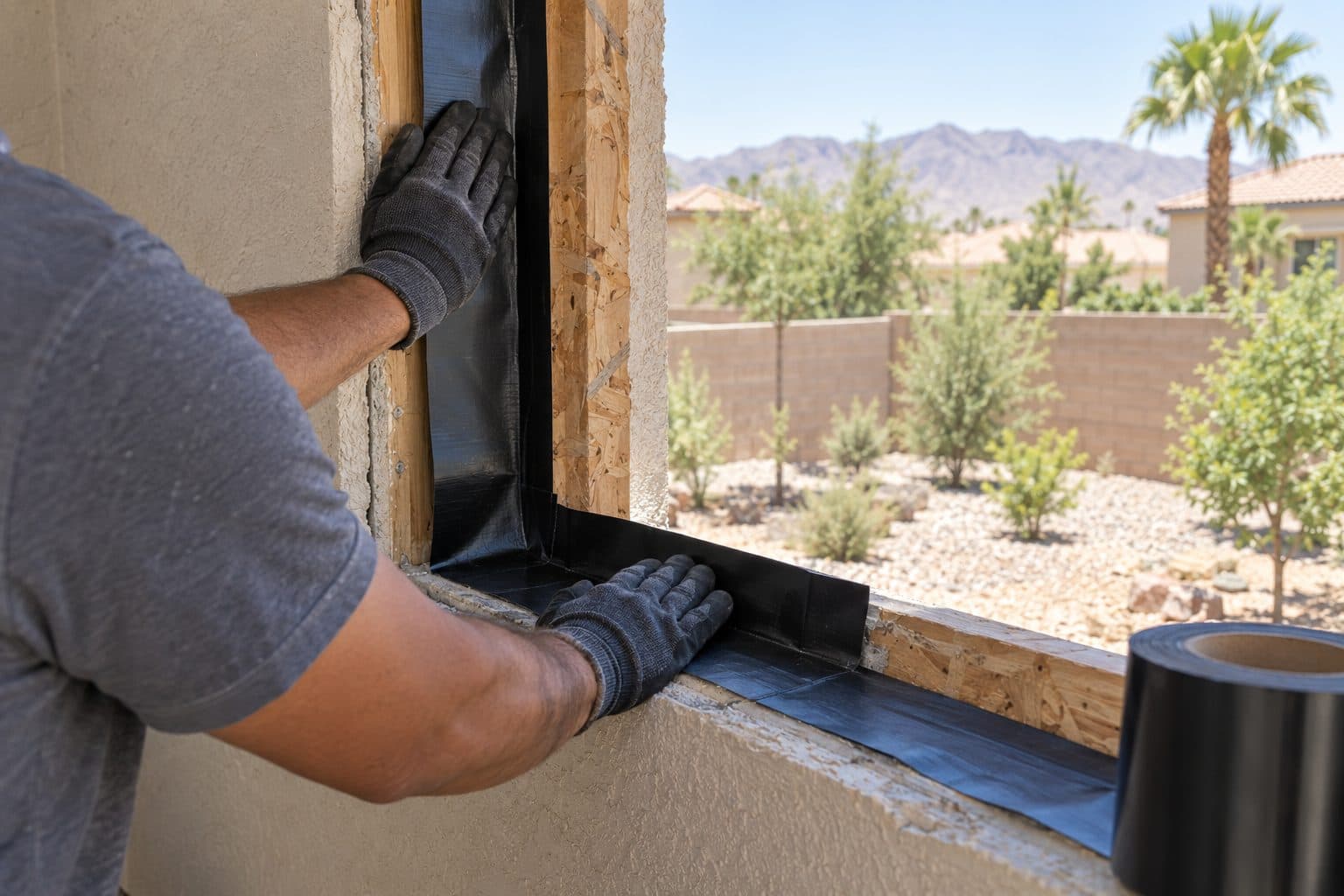
Flashed so water has a way out
Stage 4: review and respond to comments
A review comment should become an assigned task with a traceable response. Copy the issue into a log, identify the person responsible for the technical answer, name the affected drawing or product document and record the revision submitted. Keep the authority’s actual wording in the project record rather than relying on an informal paraphrase.
Close the response loop
A reply saying corrected is not as useful as one identifying where the correction appears. If a comment changes the opening dimension, update the plan and check the door order, structural information and finish scope that depend on it. If it only clarifies an unchanged detail, record that too so unrelated decisions are not needlessly reopened.
For a hypothetical application, a request for a clearer sill section may need the designer and product supplier to coordinate. The applicant’s response interval includes that coordination. A later agency review interval starts according to the authority’s process; it should not be disguised as time the manufacturer spent preparing the detail.
Keep a distinction between response prepared, response submitted and comment resolved. These are different states. The project is ready to proceed only when the actual required milestones and conditions are satisfied.
Independent work can continue where appropriate, but the team should identify the dependency. Comparing finish samples may be independent of a technical response; releasing a sill-dependent custom order may not be. This is a project sequencing decision, not permission to begin regulated construction before authorization.
Stage 5: issuance and release decisions
Before treating the permit stage as complete, confirm that the required permit has actually been issued for the intended scope and identify its conditions. An application receipt or a favorable comment is not the same record.
Coordinate the product release with the settled design and approval requirements. Ordering before those decisions may create financial exposure if a dimension or configuration changes. Waiting until every unrelated task is finished may also be unnecessary; the team should identify the actual dependencies.
Ask who authorizes ordering and construction scheduling. Those decisions should reflect the contract, product lead information and the project's approval status rather than an assumption that all stages automatically begin together.
Stage 6: construction inspections
Required inspections belong in the construction schedule. Ask which work must be available for inspection and who books the appointment. The project professional and authority should determine those requirements for the actual scope.
If a correction is requested, record who will perform it and what follow-up is needed. Do not conceal work that needs review because the installer is trying to meet an unrelated completion date. The agreed schedule should respect the required sequence.
Inspection availability is separate from fabrication time and the crew's availability. Keep all three visible when discussing the expected completion window.
Stage 7: complete the project record
Ask what final approval or closure records are applicable and who obtains them. Retain the relevant permit documents, approved revisions and inspection information with the installation agreement.
A finished door may be usable before every administrative record is assembled, but that should not make the remaining responsibility disappear. Define the handover package and any outstanding items in writing.
This final stage is particularly useful for an opening alteration. Future work may depend on understanding the approved design, not just knowing which door model was installed.
Use a status tracker instead of an unsupported countdown
| Milestone | Record to keep | Next-action question |
|---|---|---|
| Scope confirmed | Address, authority and project description | What information is still needed? |
| Documents ready | Current coordinated set | Who authorizes submission? |
| Application accepted | Reference and date | What review or response is pending? |
| Comments addressed | Response log and revision | Is another submission needed? |
| Permit issued | Issued document and conditions | What can now be scheduled? |
| Inspections complete | Relevant results | What remains for final records? |
Add dates supplied by the actual project team. Do not fill the tracker with invented local averages. If a date changes, record why and whether it affects the door order, construction appointment or only an independent task.
To discuss the proposed work and how approval responsibilities should fit the project plan, request an estimate from Agave Windows. Begin with the property location and whether the opening itself will change.
This guide supports
Specialty Projects →things people ask us
Frequently Asked Questions
How many weeks should I allow for a permit?
Obtain a current estimate from the responsible authority and project team for the actual scope. Ask what stage it covers and when that clock starts. No single duration applies across the valley's jurisdictions.
Does the contractor’s installation time include permitting?
Do not assume so. Ask for document preparation, review, product ordering and work at the property to be described separately. A short on-site installation can still have earlier approval and supply dependencies, as our window replacement timeline shows.
Can HOA review happen at the same time?
It may be possible to coordinate independent tasks, but the project team should identify which decisions depend on each approval. Keep private HOA design review separately tracked and avoid committing to an unresolved configuration.
Still have a question about your home?
Ask us directly. A quick description of the opening is enough.
keep going
Related Services and Guides
- Specialty Projects
Specialty window and door projects in Las Vegas: turn a window into a door, widen a patio opening, enclose a patio or add a pet door through glass.
- Replacement-window permits
Do you need a permit to replace windows in Las Vegas? It depends on your jurisdiction and the work. Learn who to ask and what details to give them.
- Conversion permit planning
Turning a window into a door in Las Vegas changes the building, so plan for permit review. Learn which office to ask, what drawings help and who does what.
- Structural assessment
Do you need structural engineering for a door opening? Learn when an engineer is involved, what to prepare, and how wall changes affect the door order.
- Window replacement timeline
How long does window replacement take? See each stage, from measuring and ordering to delivery, installation and finish work, and what can cause delays.
- HOA Approval for Windows and Doors
How to get HOA approval for replacement windows and doors in Las Vegas: find the current guidelines, show colors and frames, and keep the written decision.
- Best Time to Replace Windows
When is the best time to replace windows in Las Vegas? See how heat, wind, lead times and window condition affect scheduling, and when not to wait.
Sources referenced on this page
Independent references linked in the text above. A manufacturer source explains a product concept; it does not mean Agave Windows supplies that brand.
- City of Henderson’s building resources (cityofhenderson.com)
- City of Las Vegas (lasvegasnevada.gov)
- Clark County (clarkcountynv.gov)

ready when you are
Have a Question About Your Own Home?
A guide can explain the choice. Your openings decide the answer. Tell us what you are seeing and we will help you work out the next step.
- Photos can follow once we reply; no measurements needed
- A written scope before anything is ordered
- Licensed, insured, and bonded
Request an Estimate