




- 9 min read
- Updated
- Supports: Replacement Windows
How to Plan a Window Replacement Timeline
Window replacement has more than one clock. There is time to decide what to order, time for products and approvals, time in your home and time to finish any remaining details. A short installation visit does not mean the whole project can be arranged in the same short period.
Ask for a schedule that identifies those stages separately, in the way the Agave project process lays them out. The useful answer is a sequence of milestones with clear dependencies and a current update for your project, rather than a universal promise about how many days all replacements take.
The short version
Window replacement has several stages: final measurements and selections, any permit or HOA review, manufacturing and delivery, installation, and finish work. The installation visit is only one part, so ask for a schedule that shows each stage.
On this page
Planning ranges by stage
The ranges below are the planning assumptions Agave Windows uses when it schedules a project, reviewed September 29, 2026. They are conditional: the right-hand column names what moves each one. Your written scope states the dates that apply to your project, and a confirmed appointment is the only date to arrange your household around.
| Stage | Planning range | What moves it |
|---|---|---|
| Measurement visit and written scope | 1 to 2 weeks after the first conversation | Access for the measuring visit; open decisions on finish, glass and hardware |
| Association design review, where applicable | 2 to 6 weeks | The association's meeting calendar; whether the package is complete on first submission |
| Building permit, same-opening replacement | Same day to about 2 weeks | Jurisdiction; over-the-counter issue versus plan review; whether tempered glass or egress questions need answers |
| Building permit, opening change with structural work | 3 to 8 weeks | Engineering, plan-review cycles and resubmittals; see the permit timeline guide |
| Product lead time, stock vinyl or aluminum in standard colors | 2 to 5 weeks after order release | Manufacturer backlog; screens and grids shipped separately |
| Product lead time, custom color, fiberglass, wood, or large door systems | 6 to 14 weeks after order release | Painted or laminated finishes; multi-slide, bifold and pivot systems built to order |
| On-site installation, same-opening replacement | 1 to 3 days for up to about ten windows; about one day for a patio or entry door | Access, floor level, full-frame removal, stucco and trim repair |
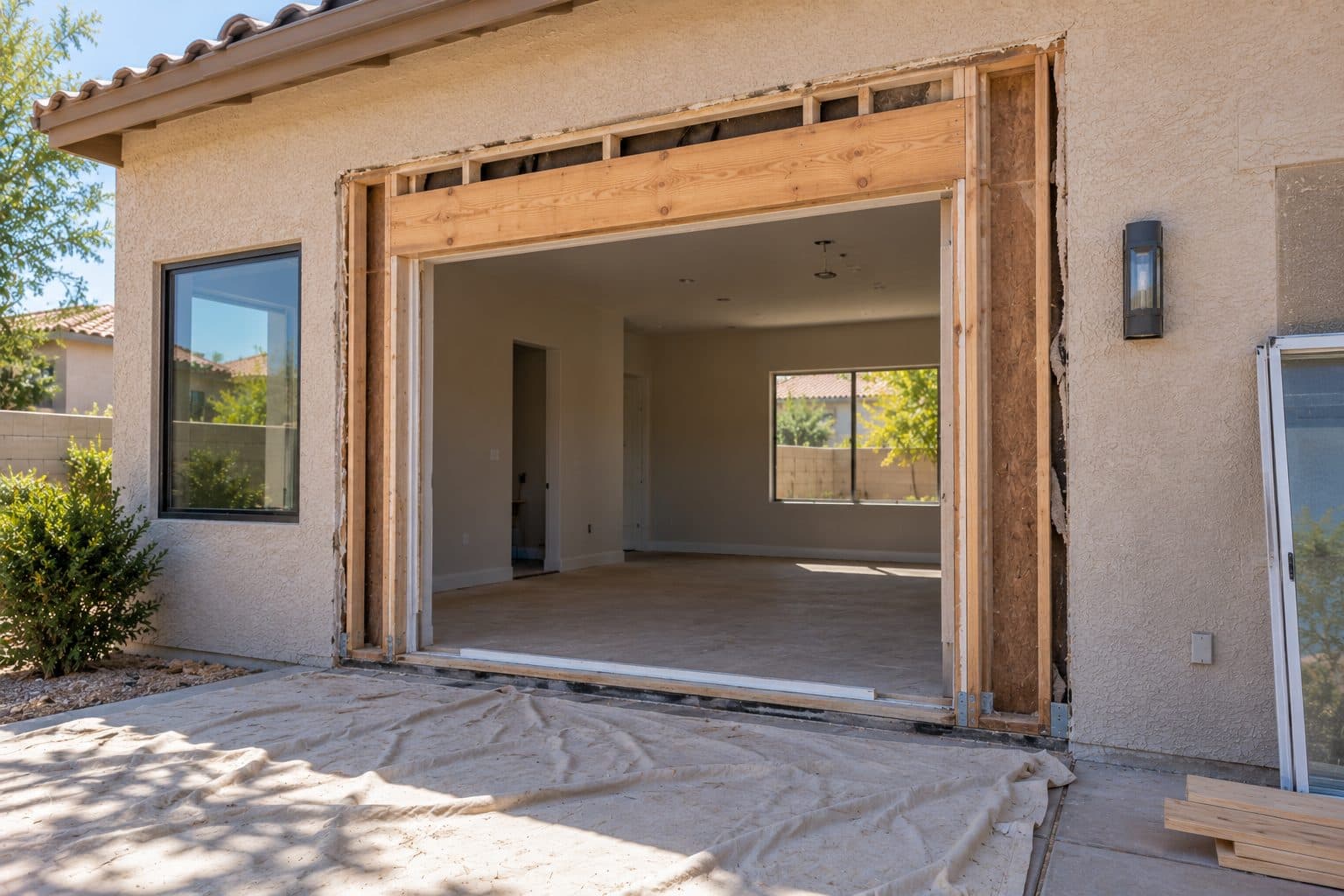
| On-site work, window-to-door conversion or widened opening | 1 to 2 weeks including framing, inspections, stucco cure and finish | Header size, utilities in the wall, texture and paint blending |
| Closeout: operation check, final inspection where required, punch items | 1 to 2 weeks | Inspector scheduling; back-ordered accessories |
Put together, a standard same-opening replacement usually runs 5 to 12 weeks from a signed scope to completion, and most of that is product lead time rather than days in your home. A structural conversion usually runs 10 to 20 weeks because engineering, permit review and the longer site period are added in sequence. Stages that do not depend on each other overlap: association review and the measurement visit can run in the same weeks, and access preparation happens while products are being made.
Establish what must be decided before the clock is meaningful
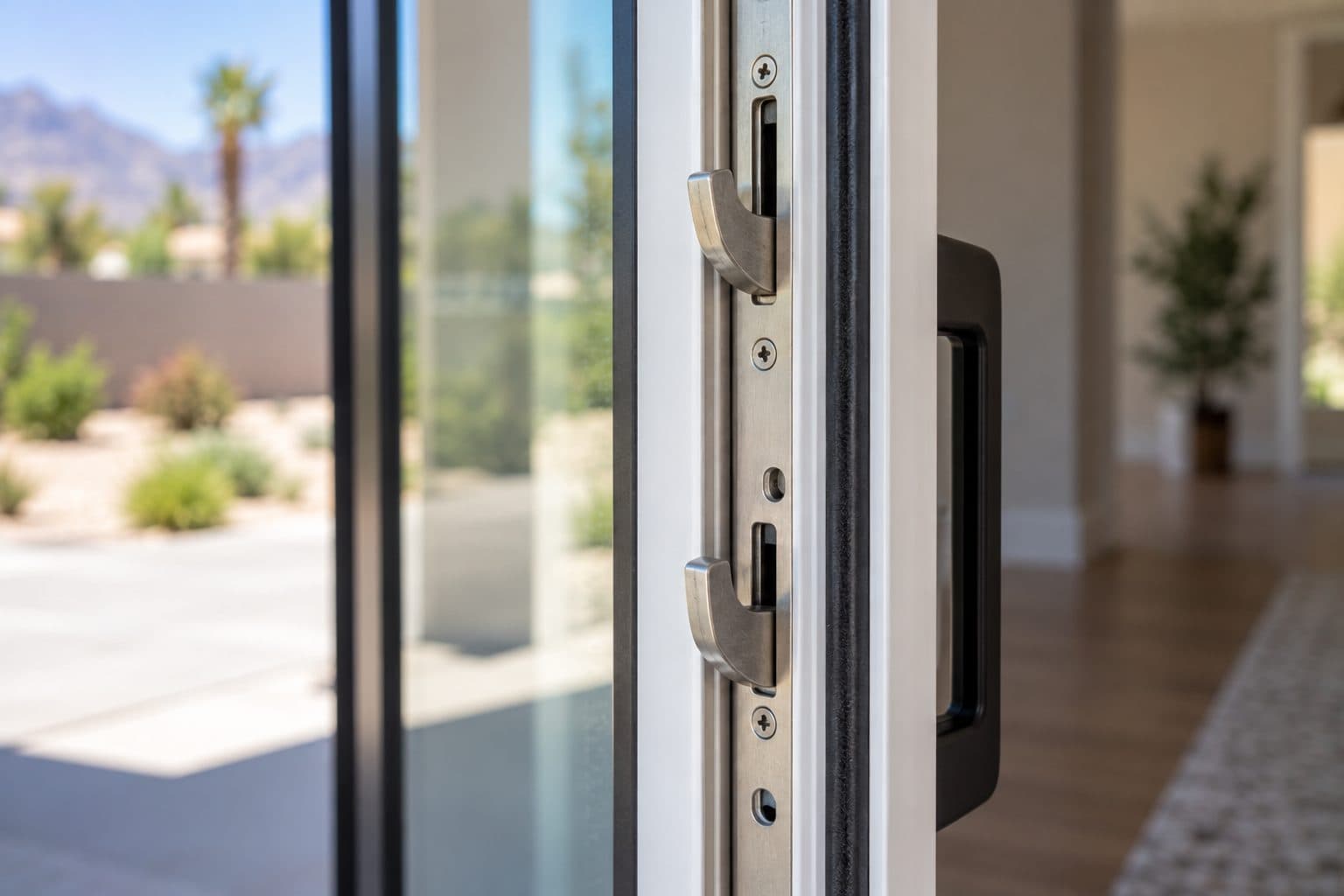
An initial conversation may identify your goals and a likely scope. Final ordering requires a more definite product schedule: opening measurements, configuration, frame finish, glazing and relevant accessories. Unresolved decisions can delay an order even when the installation team has availability.
Ask which measurements are preliminary and which authorize fabrication. If a product choice changes after measurement, confirm whether it changes the required dimensions or installation detail. The size of the existing visible opening is not automatically the product order size.
Separate your preferred completion date from a confirmed appointment. Our guide to the best time to replace windows can help you choose a target. Tell the contractor about travel, a planned gathering or another renovation, but ask what must happen before that date can be committed to. This gives the project a useful target without treating an early estimate as a guarantee.
Track approvals as their own stage
Permit or association review, where applicable, can affect when the scope is ready for release. Determine who checks requirements, who submits documents and whether the product order waits for the outcome. The correct sequence depends on the project and the risks of changing an already ordered item.
A complete application, a review response and final approval are different milestones. Ask what would trigger resubmission, especially if the opening size, exterior appearance or structural scope changes. Do not build a schedule around an assumed approval duration. Our guide to permit schedule planning explains the review stages.
Track review and product status separately
For planning purposes, keep an approval status line beside the product status line. That makes it easier to see whether the next step is waiting for a decision, a document or a delivery rather than describing everything as a general delay.
Know when an order is released and what can still change
Ask for confirmation of the final specification before release. Review room labels, quantities, operating directions, colors, glass options and any matching requirements. Correcting a small discrepancy before manufacturing can be easier than resolving it after delivery.
Find out how order updates are communicated and what the current lead-time information means. A manufacturer estimate, an expected shipment and a received product are different levels of certainty. Availability can vary by series, finish, configuration and supplier conditions.
If timing is the main constraint, ask which acceptable options are actually available sooner. A substitution should still satisfy the project, documentation and approval requirements. Do not assume a faster alternative has the same appearance or performance.
how we install
The Part Behind the Glass

Measured before anything is ordered
Flashed so water has a way out
Make delivery and site readiness visible
Once products arrive, the project may still need receiving checks, staging or confirmation that every required item is present. Ask whether installation is scheduled before receipt or only after the necessary materials have been checked.
Discuss access and protection planning early enough to avoid a last-minute obstacle, using our checklist to prepare for window installation. Upper-level openings, limited side access or unusually large units can change the resources needed. If another trade is working nearby, agree which space must be available and when.
Do not cancel essential household arrangements merely because a delivery date appears on an update. Confirm the installation appointment and the conditions that could change it. A schedule is most useful when it names the event being promised.
Understand what the on-site period includes
Window removal and installation are only part of some scopes. Opening repairs, exterior finish work, interior trim, inspections and painting can require additional time or separate visits. Ask which tasks are included in the main appointment and which follow later.
The number of openings matters, but it is not the only driver. Access, unit handling, installation method, concealed conditions and the finishing standard can affect the duration. Two homes with the same window count may have very different work plans.
Ask how the house will be left at the end of each work period and which rooms may be affected. The answer should address the actual sequence without promising that every opening follows an identical hourly schedule. Product and weather requirements also matter to the work plan.
Allow for findings that change the next step
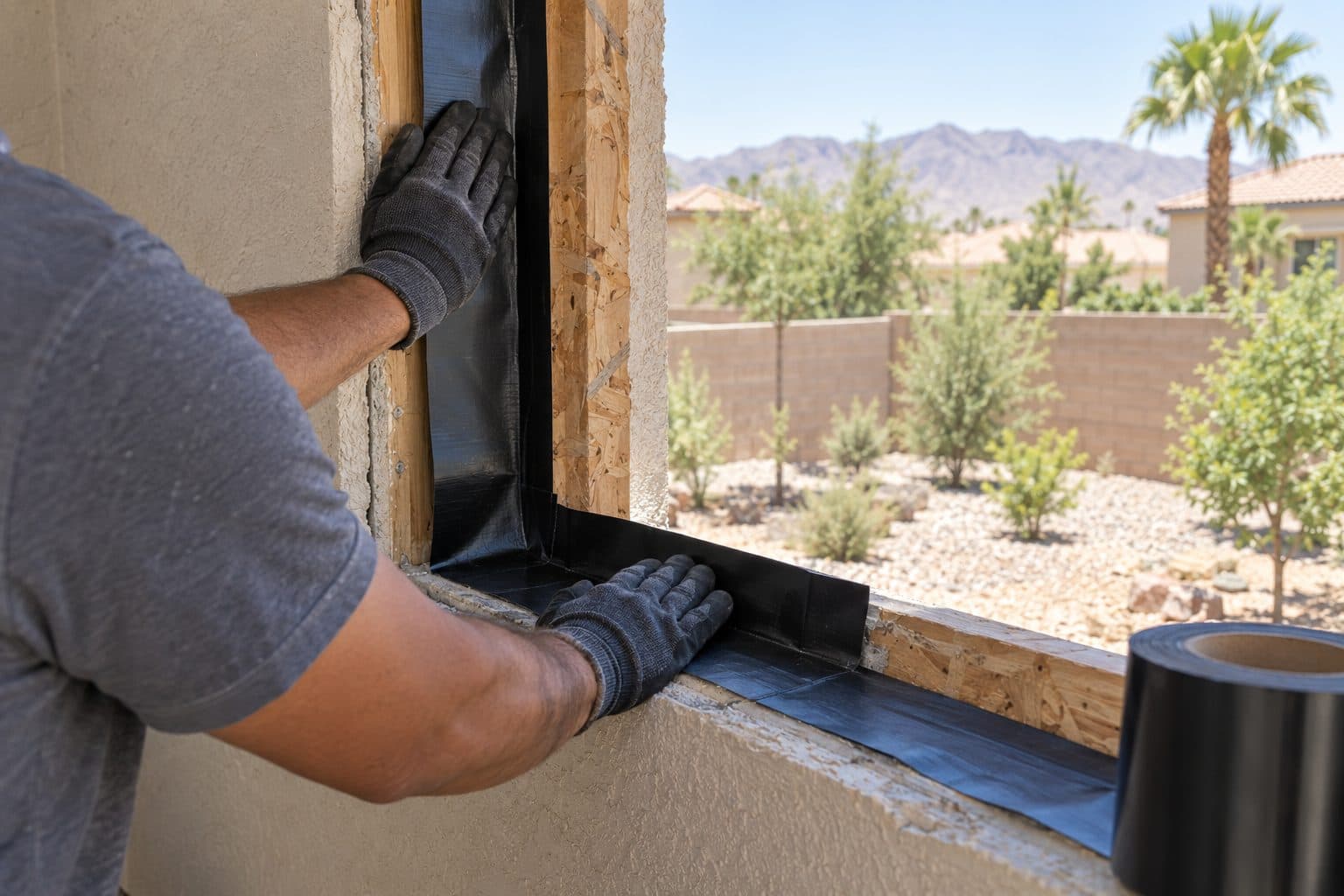
Some opening conditions become clear only after removal. If damage or an unsuitable prior detail is found, the schedule may need to change while the correction is defined and approved. Ask how those findings will be documented and who can authorize additional work.
A useful update says what was found, what decision is needed and how it affects the next milestone. “The bedroom opening needs an approved repair before installation continues” is more actionable than “the job is running behind.”
For a hypothetical project, the windows might be installed while exterior finish work remains scheduled for a later visit. That is not the same as an incomplete product delivery. Knowing the difference lets the homeowner plan room access and follow-up expectations sensibly.
Choose phase boundaries around usable completion
Splitting a job (see whole-house or phased replacement) can be practical when each group can reach an agreed usable condition independently. It is less useful when a phase leaves a shared finish, access route or product connection unresolved. Group openings by the work needed to complete them, not only by equal counts.
For each proposed split, record what is installed, what finish work remains and when the homeowner can resume ordinary use of the affected room. Include repeat setup or return visits in the agreed scope. A staged schedule may spread disruption without shortening the total project.
Use this reasoning to evaluate a delay response rather than assuming every missing unit requires either stopping everything or installing everything available. The right choice depends on the actual interfaces and the agreement.
Plan closeout before declaring the project finished
Closeout can include operation checks, any required inspection, a documented remaining-items list and delivery of care and coverage information. Ask which event marks completion under the agreement and how outstanding items are tracked.
Walk through the openings using the same room labels as the order. Record any unresolved finish or operation concern precisely. Confirm the contact and next step for follow-up rather than relying on a general promise to return.
Keep the final product schedule, instructions and project documents together. They help with future parts inquiries and make it easier to identify what was installed in each room.
Find the dependency that actually controls the appointment
Some tasks can progress together; others must wait. A homeowner can prepare access while products are being made, but an approval-sensitive custom order may need its final configuration settled first. Installation then depends on the agreed materials, site readiness and crew plan coming together.
Use a dependency view instead of adding every estimated duration end to end. If two independent preparation tasks run at the same time, the later-finishing task controls their shared next step. If one depends on the other, their time is sequential. The contractor should identify which relationship applies to your actual work.
A worked scheduling example
Imagine a project whose products have arrived, but one room remains blocked by another renovation. The delivery milestone is complete; that room's site readiness is not. The team can evaluate whether unaffected openings form a sensible separate work package or whether splitting the work creates unacceptable handling and finish complications. Product arrival alone does not decide the answer.
Now imagine the site is ready but a required accessory is missing. The visible window count may be complete while the installation package is not. The useful update identifies the missing item, affected openings and next decision instead of calling the entire project delayed without explanation.
Neither example is a rule for every project. Each shows why status should be tied to a dependency and a specific opening group.
Record certainty as well as dates
| Schedule entry | What it means | Planning use |
|---|---|---|
| Target | A desired result not yet supported by all dependencies | Guides choices and exposes conflicts |
| Current estimate | A forecast based on stated information | Helps plan, with assumptions visible |
| Confirmed appointment | An agreed work arrangement under the contract's conditions | Supports household preparations |
| Completed milestone | An event verified as finished | Removes that dependency from the next decision |
Ask for updates that state the milestone, current status, unresolved dependency, responsible contact and next update. A new estimated delivery date should not silently replace a confirmed installation discussion, and a booked appointment should not be confused with final project closeout.
Bring timing priorities for your replacement window project to Agave Windows early, including the decision you need by a particular date, when you request an estimate. A clear dependency discussion is more useful than a universal promise about how long every replacement takes.
This guide supports
Replacement Windows →things people ask us
Frequently Asked Questions
How many days will installation take?
The answer depends on the number and type of openings, access, removal method, repairs and finishing. Ask for the expected on-site period for your written scope and whether separate visits are planned. Keep that estimate distinct from product manufacturing and delivery time.
Can I book installation before the windows arrive?
Scheduling practices differ. Ask how an appointment is confirmed, whether materials are checked first and what happens if an item arrives damaged or incomplete. Make household arrangements around a confirmed plan and understand which conditions can still move it.
What decisions most often need to be settled before ordering?
Measurements, opening configuration, frame finish, glass, grids, screens and any required approvals should be resolved for the specific order. Your contractor should identify the final sign-off items. A later design change may affect product availability, cost and timing.
Does a whole-house project always take longer on site than a small project?
Window count contributes to the scope, but access and complexity also matter. A small group with opening repairs and substantial finish work may require more coordination than a larger group of straightforward openings. Compare the actual tasks and resources rather than count alone.
Still have a question about your home?
Ask us directly. A quick description of the opening is enough.
keep going
Related Services and Guides
- Replacement Windows
Replacement windows in Las Vegas, planned room by room. See how to choose glass, frames and installation method, and what a clear estimate should include.
- Agave project process
See how a window or door project with Agave Windows works, step by step: first conversation, measuring, product selection, ordering, installation and review.
- Permit schedule planning
How long does a window or door permit take? See the stages from submission and review to inspection, and what affects timing across the Las Vegas valley.
- Prepare for installation
How to prepare for window installation: clear access to each window, handle blinds and alarm sensors, protect belongings, and plan for pets and children.
- Choose a scheduling window
When is the best time to replace windows in Las Vegas? See how heat, wind, lead times and window condition affect scheduling, and when not to wait.
- Whole-house or phased replacement
Should you replace all your windows at once or in phases? Compare matching, disruption and budget, and see which windows to put in the first phase.
- Window Buying Guide
How to choose replacement windows in Las Vegas: list what each room needs, pick a style, compare glass ratings and installation, then line up quotes.
- Window Replacement Cost
What affects window replacement cost in Las Vegas: window size and type, glass, installation method and stucco or trim repair. Learn how to compare quotes.
- Window Replacement vs Glass Replacement
Should you replace the glass or the whole window? Learn when new glass is enough, when a sash swap works and when full window replacement makes sense.
- Replacing Windows in Stucco Homes
Replacing windows in a stucco home: when stucco must be cut, how water is managed behind it, and what to expect from patching, texture and paint.
- Signs Windows Need Replacement
Signs your windows may need replacement: fog between panes, sticking sashes, drafts, stains or damage. Learn what each one means and what to do next.
- Retrofit vs Full-Frame Replacement
Retrofit vs full-frame window replacement: what stays in the wall, what comes out, how each affects glass size and finish work, and when each one fits.

ready when you are
Have a Question About Your Own Home?
A guide can explain the choice. Your openings decide the answer. Tell us what you are seeing and we will help you work out the next step.
- Photos can follow once we reply; no measurements needed
- A written scope before anything is ordered
- Licensed, insured, and bonded
Request an Estimate