




- 7 min read
- Updated
- Supports: Replacement Windows
Replacing Windows in a Stucco Home
In a stucco home, the window is part of a larger exterior assembly. The visible stucco, the materials behind it and the window perimeter work together to manage exposure. Good replacement window planning explains what happens at that connection, not simply which new window is chosen.
The right questions are practical: Will surrounding stucco be disturbed? What condition can be assessed before removal? Who repairs the finish? How will the new perimeter relate to the wall’s drainage details? Those answers help you compare scope and understand the finished appearance.
The short version
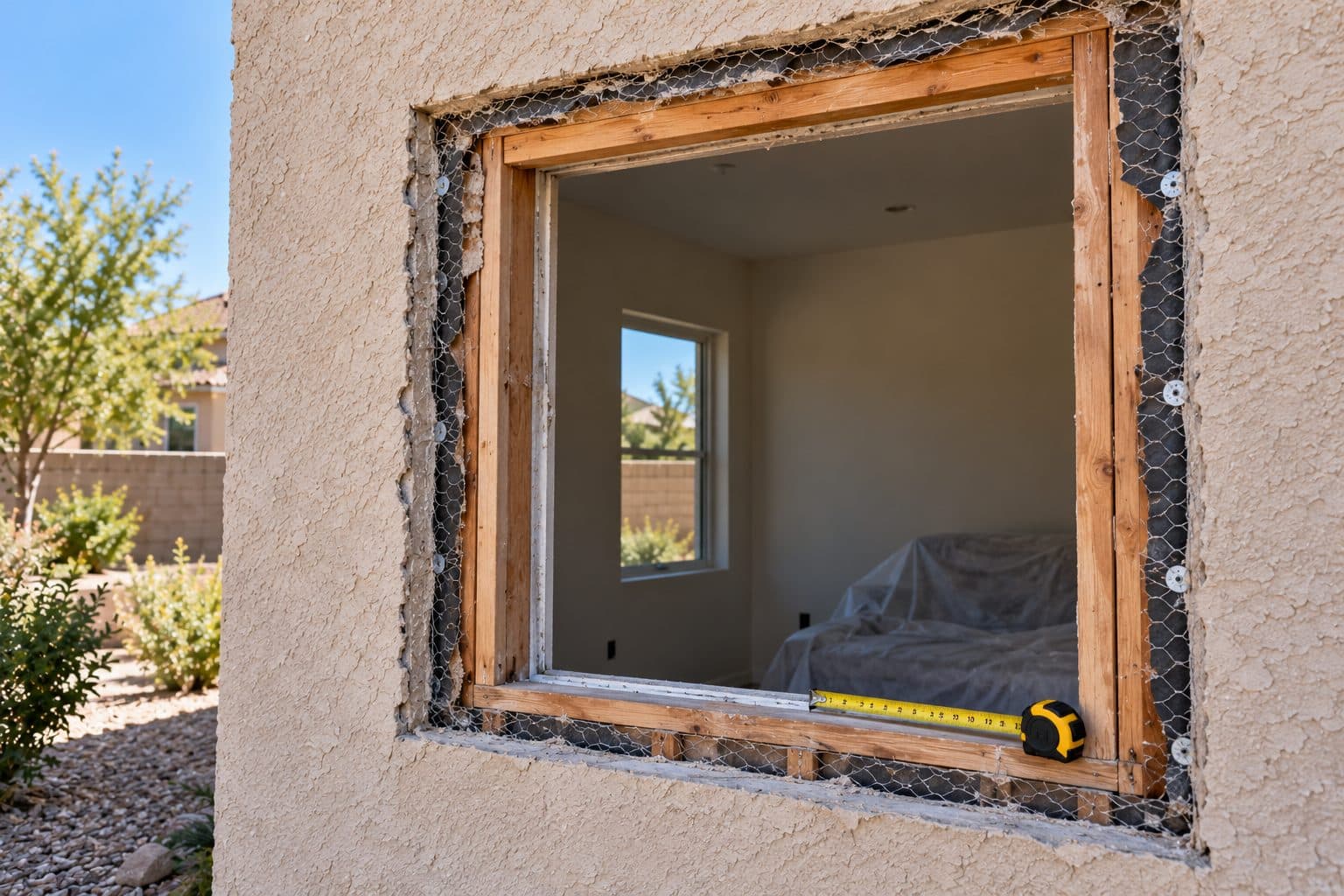
Some window replacements in stucco homes keep the old frame and limit stucco cutting, while full-frame replacement disturbs more of the wall. Stucco patches may stay visible, so agree on patch area, texture and paint before work starts.
On this page
Read the existing wall before choosing the finish approach
Look at the window and the surrounding elevation together. Note cracks, staining, past patches, uneven trim and places where sealant has been repeatedly added. These observations do not establish the cause, but they tell an evaluator where closer examination may be useful.
A small exterior crack and water damage inside the wall are not interchangeable findings. Nor does an intact-looking surface prove the concealed opening is sound. Ask what the inspection can determine now and what may remain unknown until selected materials are removed.
Photographs are helpful before work begins. Include the full wall, individual corners and interior surfaces where staining has appeared. A dated record provides a common reference for discussing existing conditions and the intended patch area.
Ask exactly where the new window meets the stucco
Some replacement approaches preserve much of the existing exterior finish; others require more access around the opening. Our guide compares the retrofit and full-frame options. The suitable detail depends on the retained frame, wall construction and selected product instructions. A wide exterior fin or trim piece (see replacement and new-construction window terms) is not, by itself, an explanation of water management.
Ask the contractor to show the proposed perimeter in a drawing or representative detail. Identify which existing materials remain, which are removed and what supports the new unit. Also ask where the exterior sealant joints will be visible and which drainage features must remain functional.
Avoid assuming that the narrowest disturbance is always the best outcome. Preserving an unsuitable condition can be a poor trade. Equally, full removal of sound surrounding stucco should have a reason tied to the project rather than be treated as an automatic requirement.
Follow the water path behind the finish
Stucco is the visible cladding, but the opening's water-management connection includes materials behind that surface. Incidental water can reach a drainage layer and move downward. At a window, that path is interrupted, so the installation must direct water around the opening and back out rather than into the wall.
Flashing works through its relationship to adjacent layers, not merely because a waterproof material is present. In a simple conceptual overlap, the upper layer sheds onto the outside of the lower layer. Reversing that relationship can direct water behind it. A sill collection/drainage detail also needs a way to discharge; sealing an intended outlet can defeat its purpose. PNNL's flashing guide explains the integrated drainage principle.
This is a way to understand the drawing, not a universal installation recipe. Our installation standards describe how we approach the perimeter. Proprietary retrofit details, existing frames and accessible wall layers vary. Ask the detail to show which drainage path remains and how the new work connects to it. A wide trim fin may conceal a joint without establishing that connection.
Compare limited access with an unresolved condition
If the retained frame and drainage connection are suitable, limiting exterior disturbance may be a reasonable design objective. If a history of leakage points to an inaccessible failed connection, preserving every finish can conflict with investigating and correcting it. The choice is between defined methods for the assessed wall, not simply “cut stucco” versus “do not cut stucco.”
State water-entry history separately from the desired cosmetic result. Water appearing below a window may originate higher in the wall; a new unit is not a remedy unless its scope addresses the actual path.
Define the patch boundary and final appearance
Stucco repair involves shape, texture and color. A small patch may preserve more original finish while remaining visible because the existing wall has aged. A wider finishing area may change the appearance differently. Ask what result the proposal includes rather than assuming a patch will disappear.
Review the texture under realistic light. Shadows can make a repair more noticeable at one time of day than another. If paint is included, establish whether it covers the patch, a defined wall area or the full elevation, and identify who selects and approves the color. In a managed community, exterior changes may also need review, so check the HOA approval steps for windows.
| Finish question | Detail to put in writing |
|---|---|
| Where will work stop? | Defined patch or painting boundary |
| What texture is intended? | Agreed sample or reference area |
| Who performs each task? | Window, stucco and painting responsibilities |
| What is excluded? | Adjacent aging, unrelated cracks or broader repainting |
| How will completion be reviewed? | Planned inspection and remaining touch-up process |
The goal is an agreed finish scope, not a promise that new material will be indistinguishable from every existing surface. If exact appearance is critical, discuss a sample and acceptance approach before removal begins.
how we install
The Part Behind the Glass

The old unit comes out cleanly
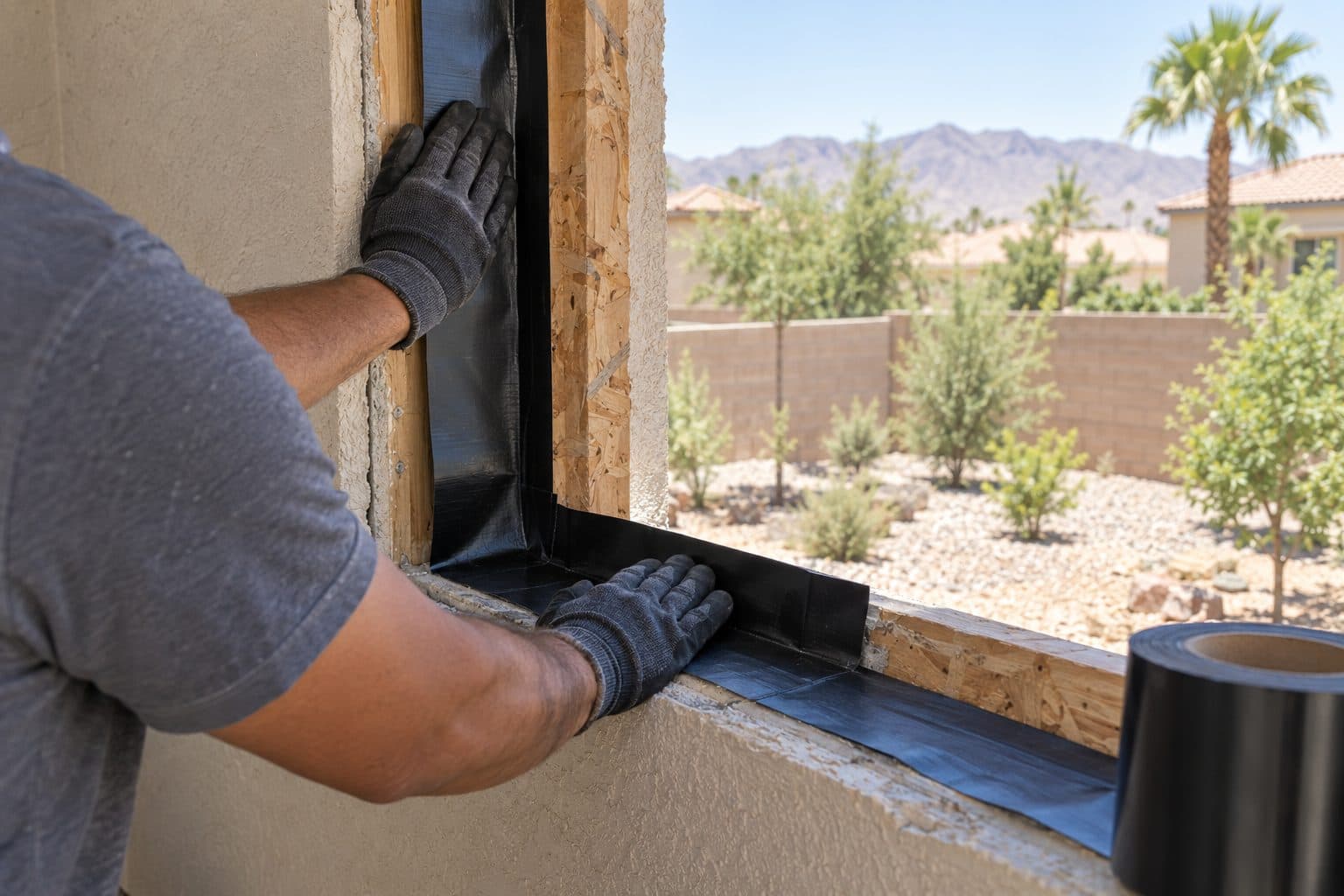
Flashed so water has a way out
Separate texture acceptance from paint coverage
A stucco patch can match color while remaining visible because its texture casts different shadows. Conversely, a close texture match can still differ in color because the old surface has weathered. Painting and texture work address related but different aspects of appearance.
Define three boundaries: where material is removed, where texture is repaired, and where paint or coating is applied. They need not be the same line. A proposal that says “patch and paint” without those boundaries leaves a large visual decision unresolved.
For a hypothetical rear window beside an existing wall corner, compare a local paint patch with painting to that natural break. The broader paint area may create a more coherent color field, but it does not automatically hide a texture mismatch. Review the intended texture reference and paint boundary together under representative light.
A sample or agreed reference helps explain expectations; it is not a promise of invisibility from every angle. Record which adjacent cracks or weathered areas remain outside the work so the completion review concerns the actual repair scope.
Coordinate inside and outside work
Exterior access is only part of the project. Window depth and the retained opening can affect interior returns, stools, trim and window coverings. Have the proposal identify those consequences so a clean exterior detail does not leave an unexpected interior finishing task.
Outside, identify landscaping, irrigation, patio furniture and paths that affect access. Ask what protection and temporary relocation are needed. A narrow side yard or upper-level opening may require a different work plan than a readily accessible ground-floor window.
Finishing may occur after the unit is installed. Confirm whether stucco repair or painting will involve another visit, which materials must be left undisturbed and when coverings or nearby items can be restored. Actual conditions and product requirements determine those instructions.
Put concealed-condition decisions into the proposal
Ask what happens if removal reveals damaged material, an unsuitable opening or an unexpected earlier repair. Useful answers include how the finding is documented, who explains the proposed change and how additional work is approved.
This is not a reason to assume every stucco replacement will uncover a major problem. It is a way to avoid making rushed decisions while an opening is exposed. A clear change process helps distinguish necessary repair from work already included in the original price, a point our window replacement cost guide expands on.
For example, a hypothetical homeowner planning three rear windows might discover that only one has a visibly altered perimeter and an old interior stain. Those openings should not automatically receive identical assumptions. The scope can identify the additional evaluation needed at that specific location.
Review the opening as a finished assembly
At closeout, look at operation, visible joints, interior finish and exterior repair boundaries. Ask which care instructions apply to the new window and which apply to newly repaired surfaces. Keep photographs and product information with the final scope.
If something remains incomplete, describe its location and the expected next step. “Stucco touch-up at the lower left corner of the rear bedroom window” is easier to resolve than a general note that the exterior needs attention.
Bring both appearance concerns and any moisture history when you request an estimate. A useful proposal connects the new window to a clear plan for the wall around it.
This guide supports
Replacement Windows →things people ask us
Frequently Asked Questions
Can replacement windows be installed without cutting stucco?
Some products and existing conditions may support an approach that limits exterior disturbance. The decision depends on the retained frame, opening condition and manufacturer detail. Ask for the proposed perimeter section and an explanation of how it manages water; a promise of no cutting alone does not establish suitability.
Will the stucco patch match perfectly?
Texture, color, aging and lighting affect the visible match. Establish the intended patch boundary and any painting scope before work starts. Where appearance is especially important, ask whether a sample or broader finishing area would make the expected result clearer.
Does new exterior caulk fix a leaking window?
It depends on the source. Water can travel through the unit, around the opening or from another wall area. Repeated sealant application should not replace an assessment of the actual path. Avoid blocking drainage features when addressing a suspected leak.
Who should repaint the repaired area?
That responsibility belongs in the written project scope. Confirm whether painting is included, the exact area covered, who approves the color and whether it requires a later visit. Do not assume that window installation, stucco work and painting are supplied by the same party.
Still have a question about your home?
Ask us directly. A quick description of the opening is enough.
keep going
Related Services and Guides
- Replacement Windows
Replacement windows in Las Vegas, planned room by room. See how to choose glass, frames and installation method, and what a clear estimate should include.
- Retrofit and full-frame options
Retrofit vs full-frame window replacement: what stays in the wall, what comes out, how each affects glass size and finish work, and when each one fits.
- Window assembly terminology
Replacement vs new-construction windows: how nail-fin, flush-fin and block-frame windows differ, and which one fits the wall work planned for your home.
- Installation standards
What good window and door installation looks like: a checked opening, the manufacturer's instructions, water and air sealing, and a clear final walkthrough.
- HOA application details
How to get HOA approval for replacement windows and doors in Las Vegas: find the current guidelines, show colors and frames, and keep the written decision.
- Window Buying Guide
How to choose replacement windows in Las Vegas: list what each room needs, pick a style, compare glass ratings and installation, then line up quotes.
- Window Replacement Cost
What affects window replacement cost in Las Vegas: window size and type, glass, installation method and stucco or trim repair. Learn how to compare quotes.
- Window Replacement vs Glass Replacement
Should you replace the glass or the whole window? Learn when new glass is enough, when a sash swap works and when full window replacement makes sense.
- Signs Windows Need Replacement
Signs your windows may need replacement: fog between panes, sticking sashes, drafts, stains or damage. Learn what each one means and what to do next.
- Window Replacement Timeline
How long does window replacement take? See each stage, from measuring and ordering to delivery, installation and finish work, and what can cause delays.
- Whole-House vs Phased Replacement
Should you replace all your windows at once or in phases? Compare matching, disruption and budget, and see which windows to put in the first phase.
Sources referenced on this page
Independent references linked in the text above. A manufacturer source explains a product concept; it does not mean Agave Windows supplies that brand.
- PNNL's flashing guide (basc.pnnl.gov)

ready when you are
Have a Question About Your Own Home?
A guide can explain the choice. Your openings decide the answer. Tell us what you are seeing and we will help you work out the next step.
- Photos can follow once we reply; no measurements needed
- A written scope before anything is ordered
- Licensed, insured, and bonded
Request an Estimate