




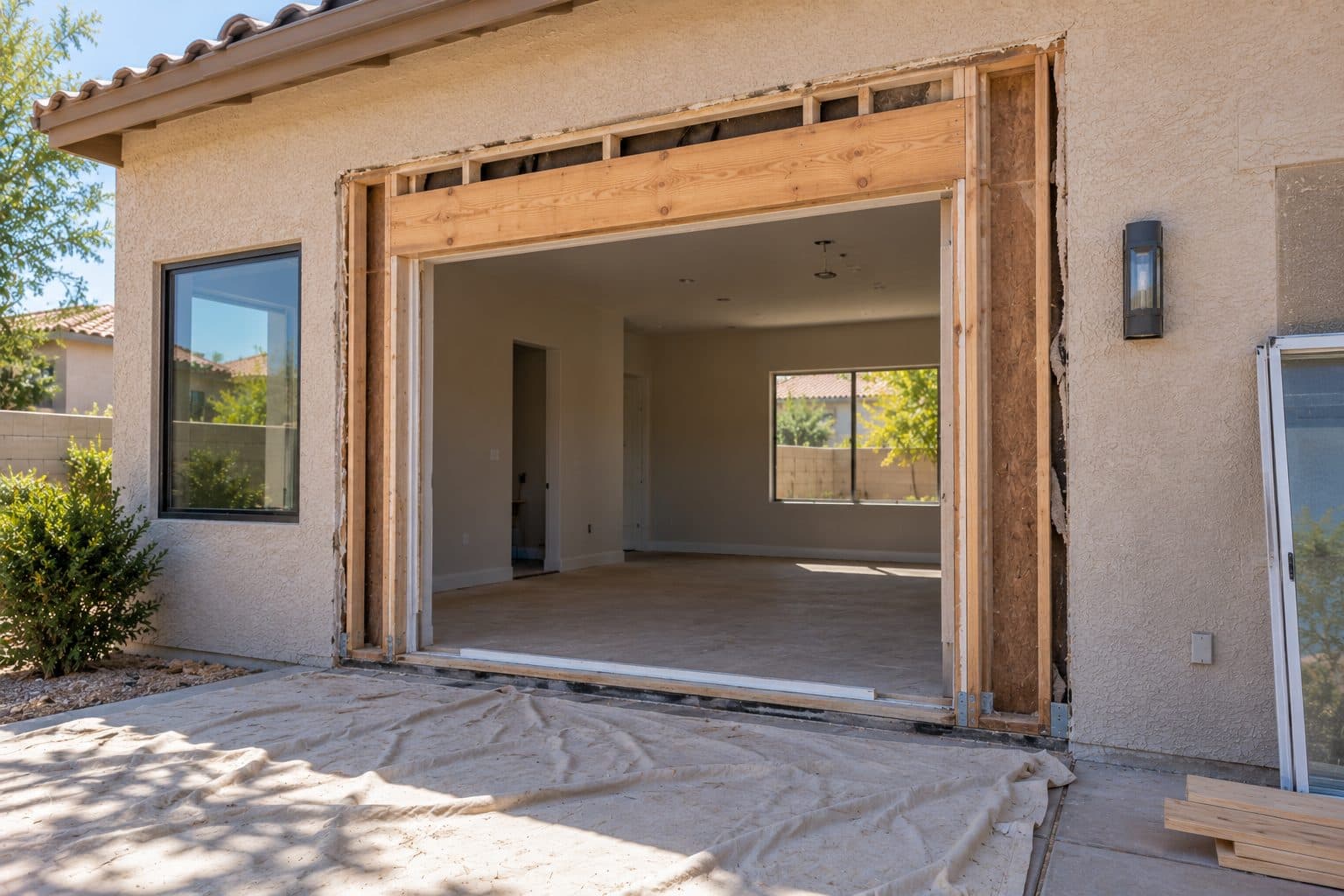
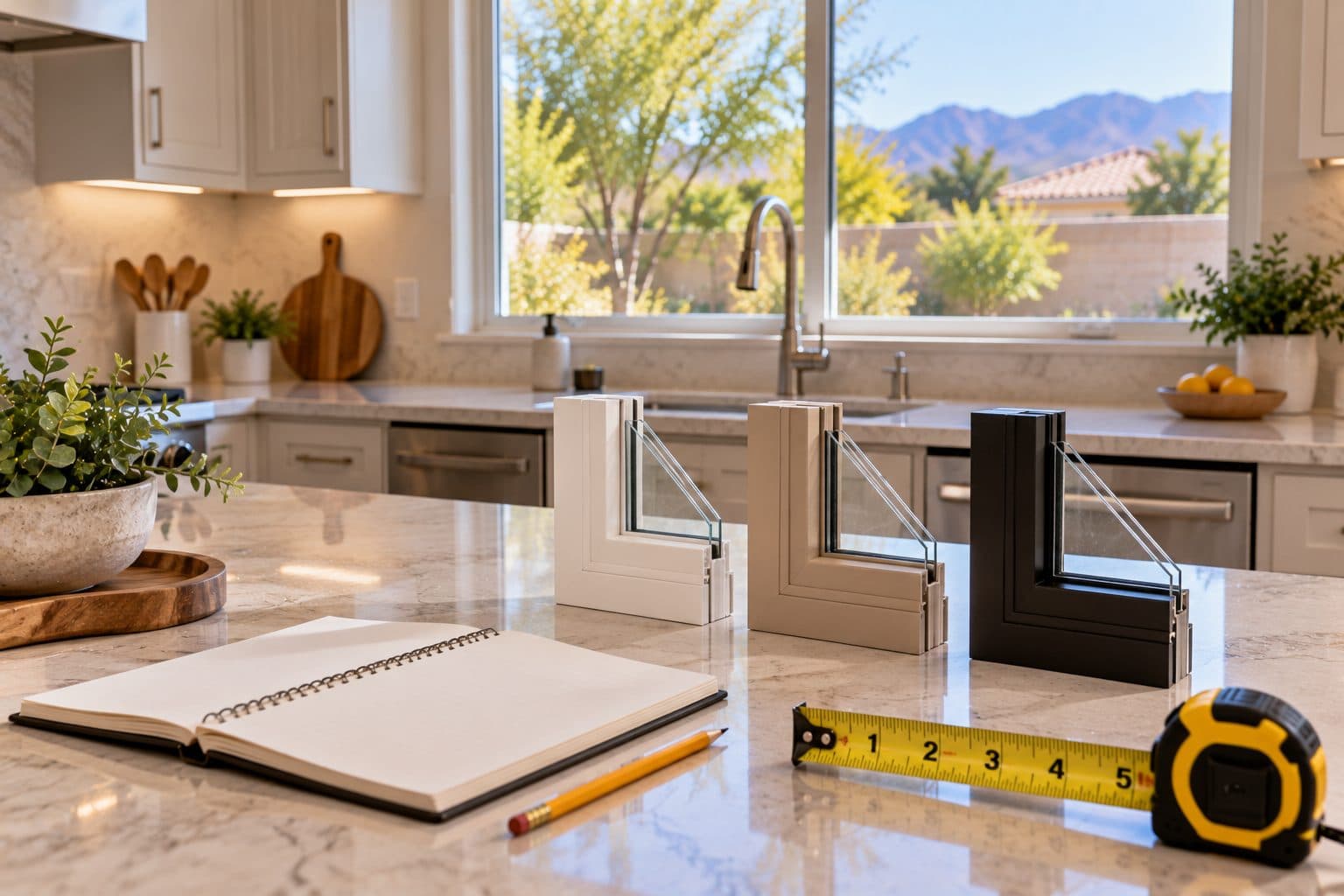

Window Glass Replacement in Las Vegas
Damaged or deteriorated glass does not always call for a completely new window. The right scope depends on the glazing construction, condition of the existing assembly and availability of a compatible replacement.
Agave Windows reviews glass-replacement requests in Las Vegas for supported window assemblies, as part of our repair services. Share a photo of the whole window and a close-up of the concern. We can discuss the assessment needed to determine what glass or glazing component can be replaced and what surrounding parts can remain.
- Licensed, insured, bonded
- Written scope before ordering
- Las Vegas valley
The short version
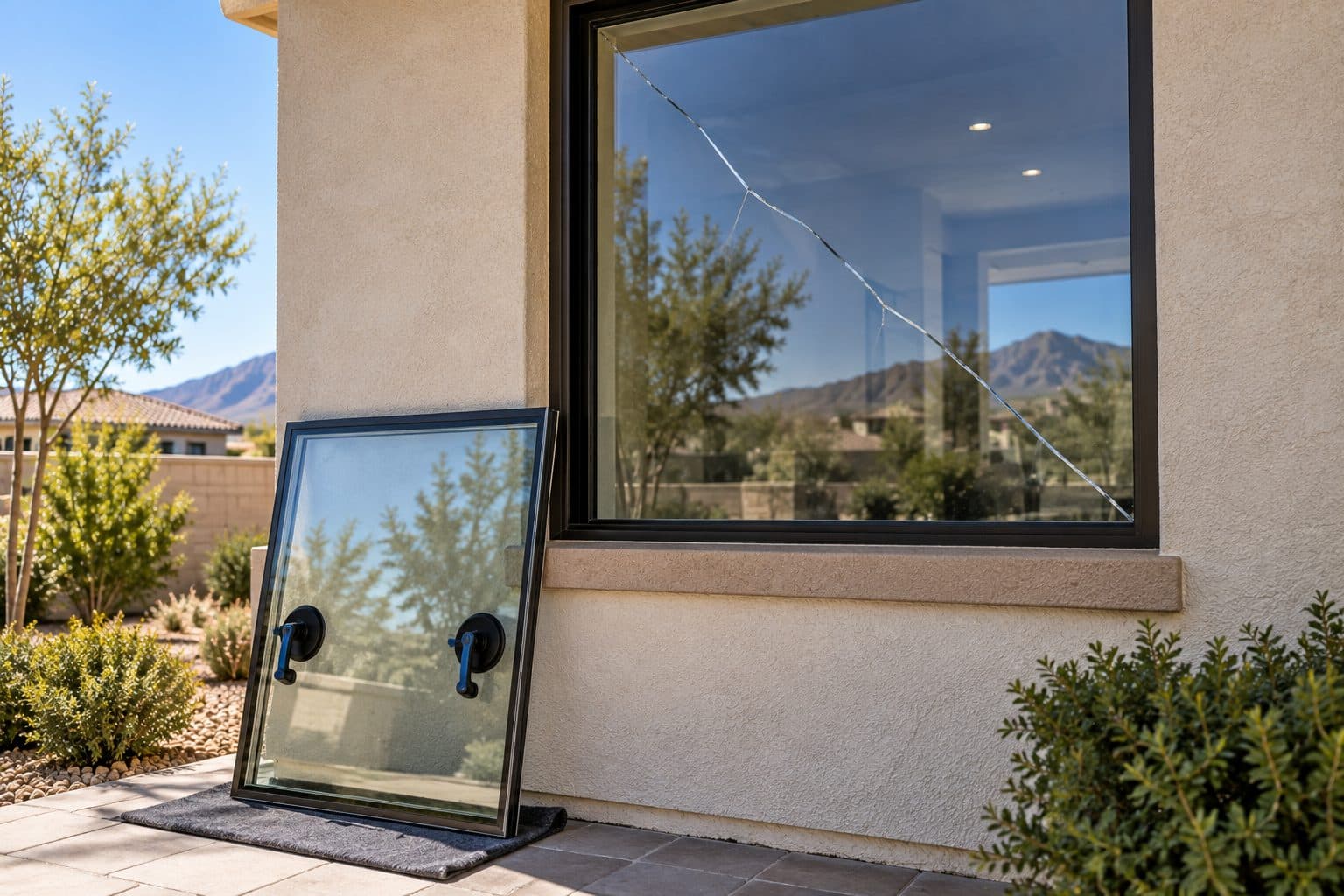
Cracked or foggy window glass can often be replaced while keeping the existing frame, as long as the frame and sash are in good condition. Final glass measurements are taken on site, not from photos.
01 of 12
Start with what you can see
A crack, an impact mark and persistent moisture between panes are different observations. Tell us when the problem appeared, whether it has changed and which part of the window is affected. If several windows have similar symptoms, identify each opening rather than assuming one specification fits them all.
If glass is broken or unstable, keep people and animals away from the area and avoid handling loose pieces. Do not remove glazing stops or tape over a damaged assembly as a substitute for a professional assessment. Explain the condition when you contact us and confirm the available next step.
Photographs help with routing, but a final glass order requires more information than the visible width and height. The construction, thickness, glazing method and condition of the retained frame must be considered.
02 of 12
Understand the replacement unit
The glass you see is part of an assembly. A single-glazed window may contain one pane; an insulating glass unit, or IGU, contains panes separated at the edge to create a sealed space. That glazing then sits in a frame or sash with a product-specific retention system. A sash is the framed section that holds glass in many operating windows; a fixed direct-glazed window may have no separate sash.
These distinctions create different repair scopes:
| Proposed component | What is replaced | What needs to remain suitable |
|---|---|---|
| Single pane | The specified individual sheet of glass | Its compatible frame and glazing retention |
| Sealed insulating glass unit | The specified multi-pane glazing assembly | The sash or frame that receives it |
| Glazed replacement sash | Glass together with its surrounding sash | Main frame and compatible operating connections |
| Complete window | The full specified unit | The building opening, subject to installation work |
The available option depends on the product. It is not a menu in which every row fits every window. In a sealed unit, one broken pane does not mean a separately ordered sheet can simply be exchanged while all original edge seals and performance remain intact. The replacement should identify the glazing assembly or manufacturer-supported component actually being supplied.
This also explains why “glass replacement” and “sash replacement” proposals can both respond to a fogged window while describing different work. Compare what each retains, the reason for that choice and any operating hardware affected. Marvin's glossary distinguishes glazing, sash-related components and direct-glazed frames; actual repair instructions must match the identified window.
four steps, in order
How a Project Runs
- 1
Tell us about the project
Send your location, the approximate number of openings, and what you want to improve.
- 2
Review the openings and options
We discuss your priorities and assess the details that affect product selection and installation.
- 3
Define the work in writing
The proposal identifies the products and agreed installation scope so you can understand what the project includes.
- 4
Install and review the result
At completion, we review the installed products, operation, visible finish, and care information with you.

03 of 12
Locate moisture before deciding the scope
Moisture on the roomside surface, dew on the outside and fogging trapped between sealed panes point to different conditions. Surface moisture may vary with the environment; persistent moisture between panes can indicate an insulating-glass seal problem. Our condensation location guide helps you describe what you see. Pella's condensation guidance explains these distinctions.
If you can safely determine which accessible surface is wet during ordinary cleaning, describe that observation. You do not need to disassemble the window or prove the cause yourself. A photo taken when the condition is visible can help the assessment.
Glass replacement should not be promised as a cure for every moisture issue near a window. Water entering around a frame can involve the installation or surrounding wall. Those concerns need their own evaluation and should be identified separately in the scope.
04 of 12
Confirm the frame and sash can remain
A glass-only plan relies on the existing assembly being suitable for the work. The assessment should review visible frame and sash condition, retention details and operation. Damage or deterioration around the glass may change what can reasonably be repaired.
Tell us about a window that also sticks, fails to lock or shows staining around the opening. Operating problems belong to non-glass window repair. These concerns may be separate from the glazing failure, but they matter when deciding how much of the assembly to retain.
Ask for the reason if a broader replacement is recommended. Our guide to glass versus complete window replacement compares the two scopes. A useful explanation identifies the condition or compatibility limitation. It should not assume that every fogged window needs a whole new frame, or that retaining every frame is always possible.
how we install
The Part Behind the Glass

Measured before anything is ordered
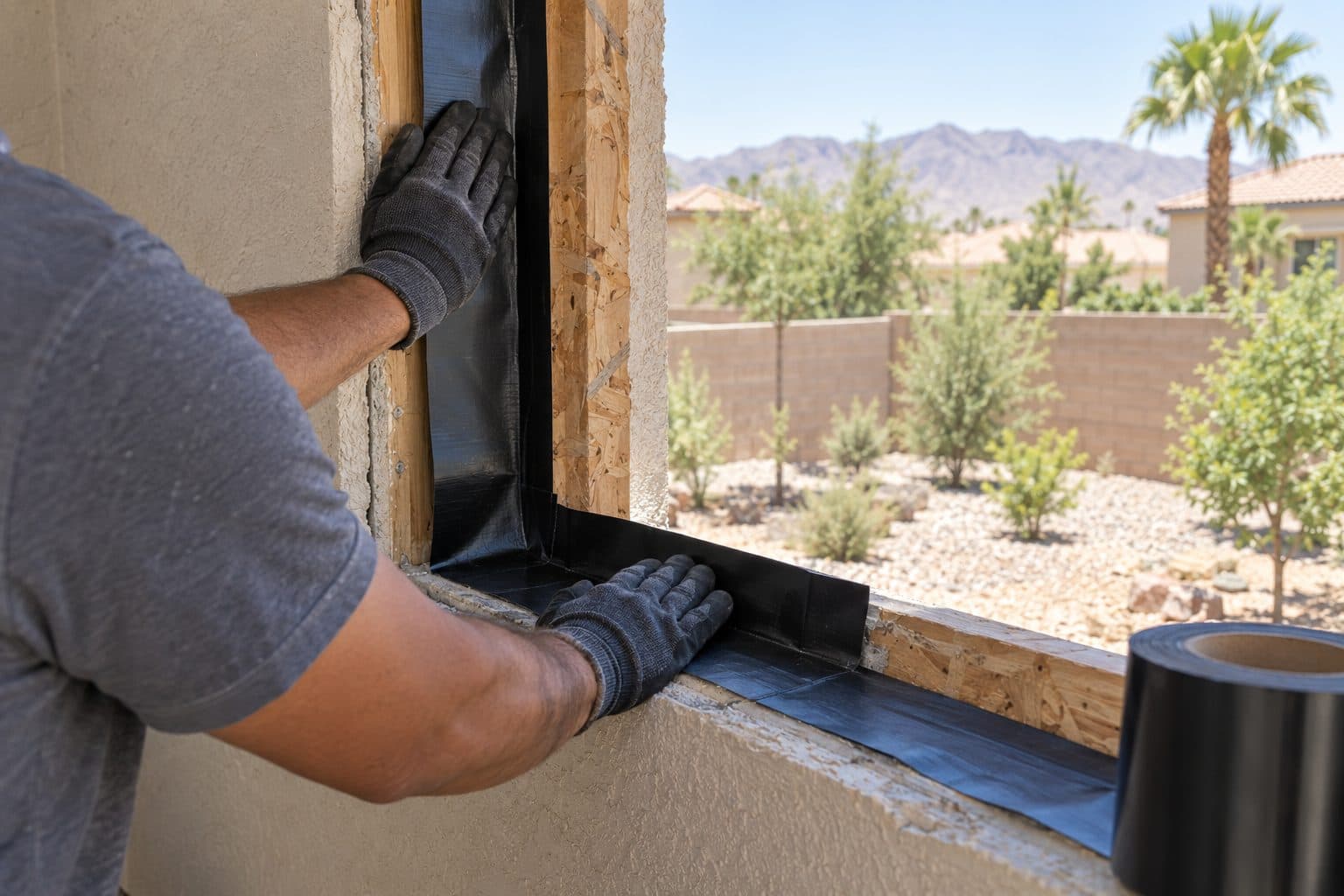
Flashed so water has a way out

Set level, plumb and shimmed
05 of 12
Specify the glass beyond its size
A usable glass specification needs geometry, construction, appearance and compatibility. Width and height identify only part of that order. Overall unit thickness, pane arrangement, coatings, spacer details, grid layout and any required safety treatment also matter.
The visible opening is not the actual glass size. Some glass extends behind the parts that retain it. Measuring only between visible edges can therefore describe the daylight opening without describing the component to fabricate. Do not remove stops or probe a damaged unit to obtain hidden measurements; professional assessment must establish the ordering dimensions and allowance for the selected glazing method.
The specification should answer three distinct questions:
- 1.Will it fit? Actual glass dimensions, overall thickness and retained assembly must be compatible.
- 2.Is it the right construction? The glazing type, required safety characteristics and applicable product limitations must be resolved for the opening.
- 3.Will it meet the agreed appearance? Coating, tint, spacer and decorative layout need a recorded selection, including orientation where relevant.
For a hypothetical pair of side-by-side panes, one may be a fixed unit and the other may sit in an operating sash. Their visible heights can match while the glazing sizes or retention arrangements differ. Ordering them as identical based on an exterior photo could miss that difference. Assign each opening or glazed section its own identification.
A marking can help establish what is present, but it is not permission to improvise a different glass treatment in the field. The glass supplier and installer need the correct specification before fabrication. Any change from the original construction should be checked against retained-frame compatibility and applicable requirements before approval.
06 of 12
Compare appearance with nearby glass
New glazing may sit beside an older fixed pane, another sash or adjacent windows that remain. Consider color, reflection, spacer appearance and grid pattern. A product described as clear can still look different beside a different existing glass construction.
Ask what matching is possible and what variation may remain. If appearance across a prominent elevation is important, discuss it before approving the order. Do not assume a new unit will be visually indistinguishable from weathered glazing in every light condition.
For divided-light patterns, confirm whether the grids are within the glass or part of another component. Their arrangement should be recorded with orientation and dimensions appropriate to the product. A general note to “match existing” may not capture an unusual pattern.
07 of 12
Keep performance claims specific
A glass change can involve different coating or thermal characteristics, but the retained frame and complete assembly still matter. Ask what performance information applies to the replacement and whether any original rating or warranty assumptions change.
Do not treat the term Low-E glass as a complete specification or a guarantee of a particular room temperature. U-factor and solar heat gain coefficient describe different performance measures, and whole-product information should be used where applicable. ENERGY STAR explains these ratings.
If the aim is to improve comfort as well as replace damaged glass, say so at the beginning. The assessment can distinguish a compatible repair from a broader decision about replacement windows. That prevents an ordinary glazing replacement from being sold as an unsupported whole-home energy upgrade.
08 of 12
Measurement and ordering are separate from the first request
The initial request identifies the opening and concern. Professional assessment establishes the information needed to order a compatible component. Fabrication or sourcing happens after that specification is settled, and installation is scheduled around the actual material availability.
Ask which visit covers measuring, whether any assessment charge applies and what authorization is needed before ordering. Custom glazing decisions should be documented before a non-returnable or specially fabricated component is committed.
If a product or finish changes after approval, the order should be checked again. A seemingly small change can affect compatibility or appearance. Keep the final specification with the proposal so both parties know what is being supplied.
09 of 12
What belongs in the written glass-replacement scope
The proposal should name the opening and the component being replaced: a pane, sealed IGU, glazed sash or another supported assembly. “Replace glass” by itself leaves too much unresolved. Include removal, installation, disposal and the treatment of existing stops, seals and any decorative parts that must be disturbed.
Record the assumptions that permit the surrounding assembly to remain. For example, a glass-only scope may rely on an intact sash and reusable retention components. If removal reveals concealed damage, the agreement should explain how the changed condition is documented and authorized before additional work proceeds. It should also explain the plan for the opening while that decision is resolved.
Separate the expected result from other concerns. New glazing can address the specified damaged or failed glass assembly. A binding sash, water entering from the wall above, deteriorated exterior trim or an unrelated screen remains a separate item unless explicitly included. A single property can need more than one scope without making every condition the fault of the glass.
Before approving an order, check the recorded appearance selection, the party responsible for final measurement and the coverage attached to the new component and labor. Retain those details for later service. If a supplier substitution changes tint, grid layout or construction, review it as a specification change rather than an administrative replacement of one stock number with another.
10 of 12
Prepare for installation
Keep the area around the window accessible and move fragile objects away from the work zone. Mention furniture, shutters, alarms and exterior access limitations. The team should determine the appropriate handling method; do not remove the glass or sash yourself to prepare.
Arrange a safe location for pets and children while glazing is being handled. If the opening serves a room with special access needs, explain that during scheduling. Ask what preparation is expected and what the installer will protect or move under the agreement.
The work sequence should suit the actual assembly and manufacturer's guidance. Product-specific installation instructions illustrate why methods vary. There is no single removal method appropriate to every window.
11 of 12
Review the result and retain the specification
At handover, review the installed glass appearance and any affected window operation. Ask about normal care for the new glazing and the time or conditions relevant to any installation materials used, based on the actual product instructions.
Keep product identification, the work description and written coverage terms. Clarify who handles a concern about the glass unit compared with repair labor or an unrelated retained frame. Replacing glazing should not be assumed to renew coverage on the entire window.
If a concern remains after the work, describe where it appears and whether it relates to the repaired glass or another part of the opening. A clear record makes that follow-up more focused.
12 of 12
Send the whole-window view first
Tell Agave Windows your location, the number of affected windows and whether the concern is breakage, between-pane fogging or another glazing issue. Include any labels and photos showing the surrounding assembly when you request glass replacement.
things people ask us
Frequently Asked Questions
Can foggy double-pane glass be replaced while keeping the frame?
That may be an appropriate option when a compatible replacement is available and the retained frame or sash is suitable. Our guide to foggy double-pane windows covers the repair-or-replace decision. The assessment should first confirm the moisture location, glazing construction and surrounding condition.
Will the replacement glass match the adjacent pane?
Matching depends on the original and available glass specifications. Ask about tint, reflection, spacer and grid differences before ordering. An exact visual match should not be promised without the relevant product information.
Can glass replacement fix a leaking wall around the window?
It should not be assumed to do so. Water at the opening can involve glass, seals, installation details or the surrounding building. Identify the source and match it to a specific repair scope.
Can I get an order-ready measurement from a photo?
No. A photo can start the discussion, but final sizing and construction details must be established for the actual assembly. Visible glass dimensions do not provide every measurement needed for fabrication or installation.
Still have a question about your home?
Ask us directly. A quick description of the opening is enough.
keep going
Related Pages
- Repair services
Window and door repair in Las Vegas for sticking windows, broken or foggy glass, dragging patio doors and torn screens. Describe the problem and send photos.
- Non-glass window repair
Window repair in Las Vegas for windows that stick, drop, will not stay open or will not lock. See what can be repaired and how an assessment works.
- Glass versus complete window replacement
Should you replace the glass or the whole window? Learn when new glass is enough, when a sash swap works and when full window replacement makes sense.
- Foggy double-pane windows
Foggy double-pane windows usually mean a failed glass seal. Learn how to confirm it, whether the glass alone can be replaced, and what defogging cannot do.
- Condensation location guide
Window condensation guide: what moisture on the inside, on the outside, or between the panes means, and when a wet window needs service.
Sources referenced on this page
Independent references linked in the text above. A manufacturer source explains a product concept; it does not mean Agave Windows supplies that brand.
- Marvin's glossary distinguishes glazing, sash-related components and direct-glazed frames (marvin.com)
- Pella's condensation guidance explains these distinctions (pella.com)
- ENERGY STAR explains these ratings (energystar.gov)
- Product-specific installation instructions illustrate why methods vary (pella.com)

ready when you are
Discuss Window Glass Replacement
Tell us your location, the approximate number of openings, and what matters most to you. You do not need to arrive with a product already selected.
- Photos can follow once we reply; no measurements needed
- A written scope before anything is ordered
- Licensed, insured, and bonded
Request an Estimate