






- 7 min read
- Updated
- Supports: Replacement Windows
Fog Between Window Panes: What Comes Next?
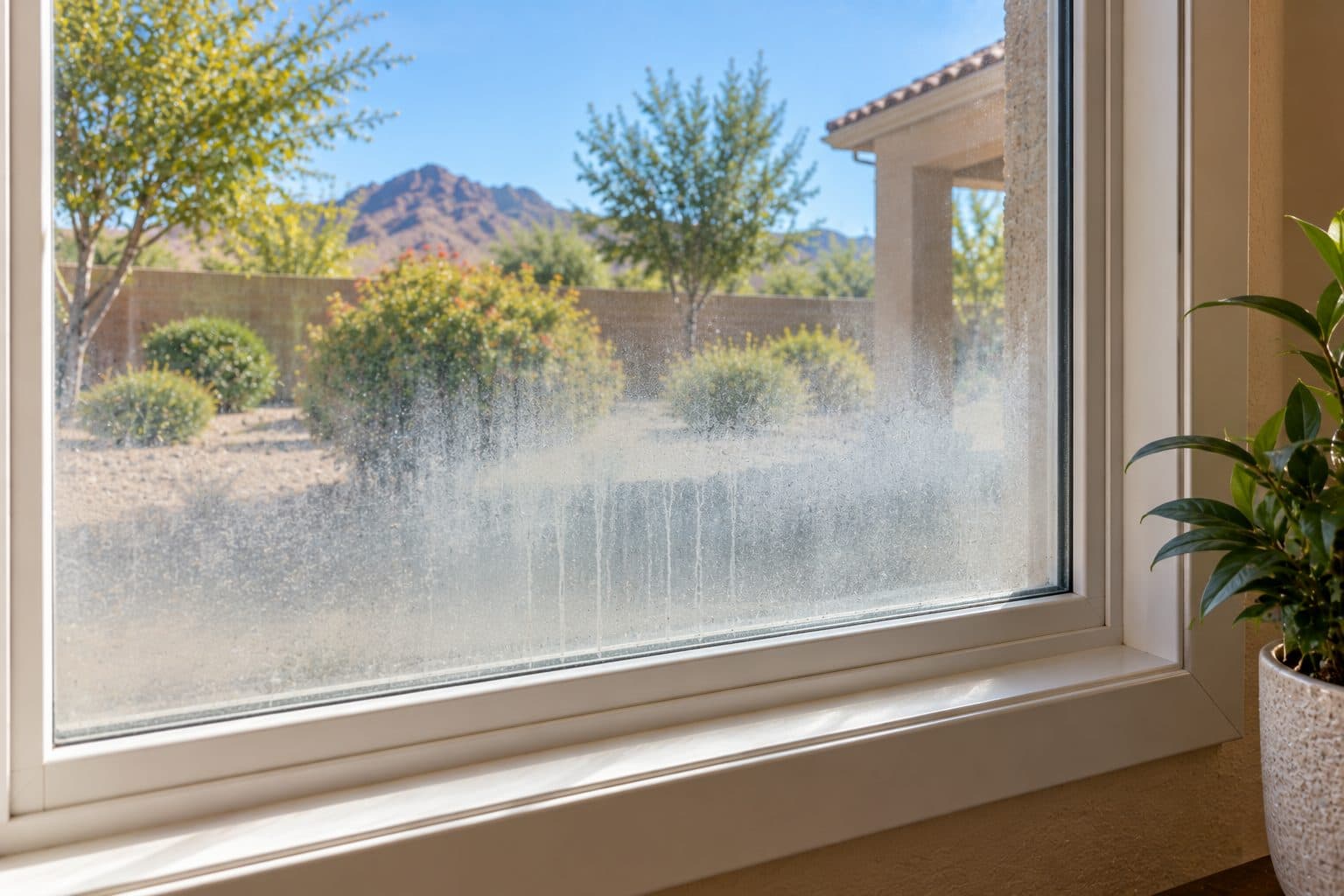
If a cloudy patch remains after the accessible glass surfaces are clean, the moisture or haze may be inside the insulating-glass unit. Persistent between-pane moisture commonly points to a problem with the sealed glass assembly. The next step is to confirm the location and identify the product.
That finding does not automatically require a new frame or a whole-house project. Glass-unit, sash and complete-window options depend on the window’s construction, available components and the condition of the rest of the opening.
The short version
Fog between window panes usually means the seal on the insulated glass unit has failed. It cannot be wiped away, but the glass unit can often be replaced without replacing the whole window.
On this page
Confirm what you can observe without taking the window apart
Gently wipe the roomside glass with an appropriate cloth. If the moisture clears from that surface, the issue belongs to the interior-condensation discussion in our window condensation guide. Exterior dew may also be temporary, but do not climb or lean outside to prove its location.
When haze remains between clean accessible surfaces, photograph it in different light and note whether it changes during the day. Reflections, deposits and coatings can make location difficult to judge. Describe what you see rather than declaring a seal failure from a single photograph.
Leave the sealed assembly intact
Do not separate panes, drill the glass or remove glazing parts to investigate. The insulating-glass assembly and any safety features need product-specific handling. An assessment should establish the condition without turning the homeowner’s observation into an improvised repair.
Understand what the sealed unit does
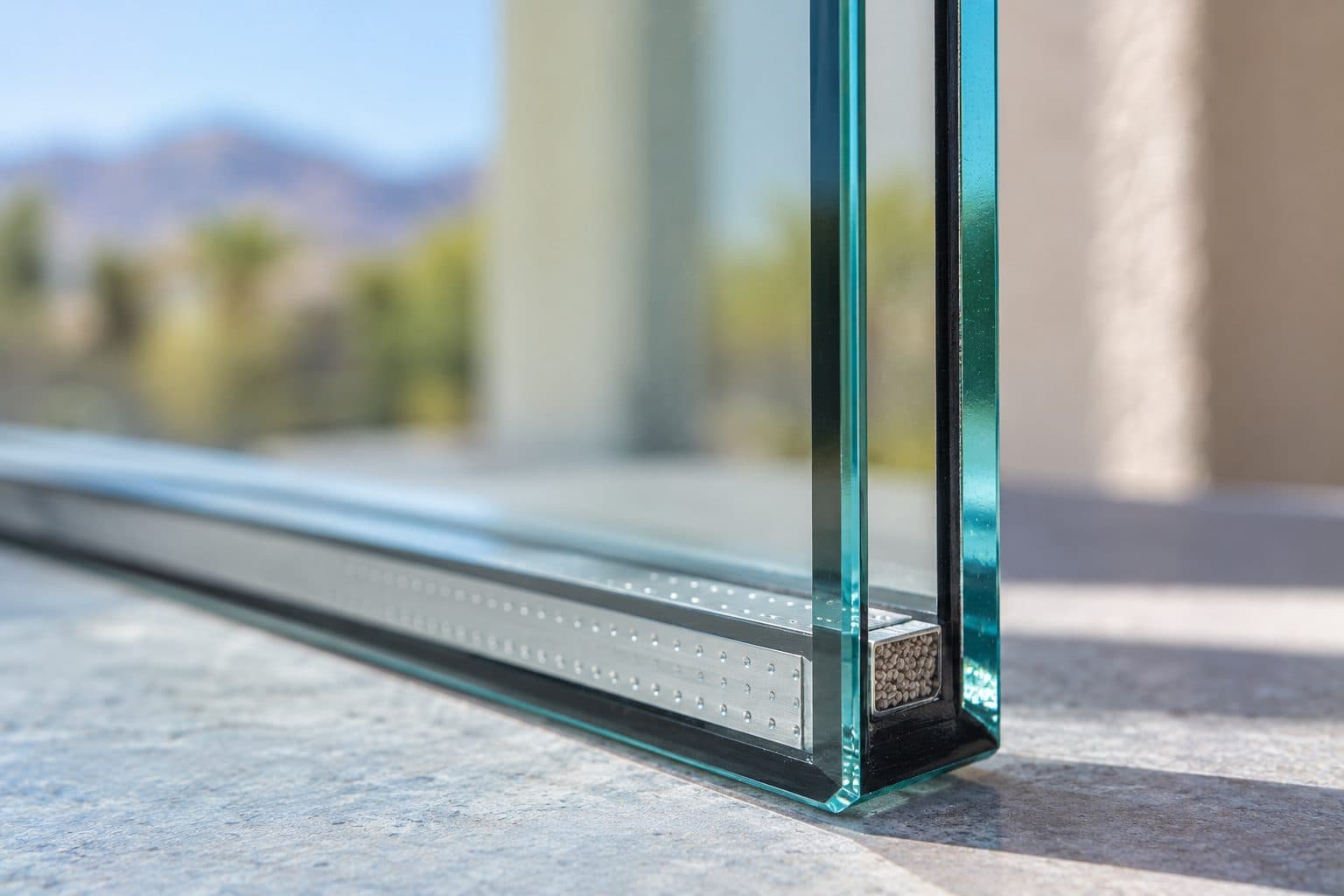
An insulating-glass unit is an assembly rather than two loose panes. A spacer holds the glass apart, seals manage the cavity boundary, and desiccant manages trace moisture within the system. The space may contain air or a specified gas. Cardinal's component illustration shows why these parts work together.
Moisture becomes visible when the cavity conditions allow condensation on a glass surface. The fog can therefore change with temperature even though the underlying assembly concern remains. A temporarily clear afternoon is not proof that a recurring between-pane issue has repaired itself.
Cardinal's condensation bulletin identifies failed seals as a usual cause of airspace condensation, while also noting that a small glass crack can be involved. That distinction matters: the symptom supports evaluation of the sealed assembly, but does not establish the exact failed edge or the reason it failed.
Cloudiness is also not a gas-content meter. A photograph cannot tell you how much gas remains, quantify the lost insulating performance or show whether every coating is intact. Record the view problem and seek an assembly assessment without claiming the window has lost all thermal value.
Find the product identity before requesting parts
Look for accessible manufacturer labels, etched markings or original order records. Photograph identifiers and keep them connected to the room location. A glass marking can identify one aspect of the assembly without necessarily identifying every frame or sash detail.
If records are missing, provide a full-window photo, operating-style description and approximate age if known. Make clear which details are estimates. The service provider may need additional measurements or inspection before identifying compatible components.
A window that looks similar to another brand is not enough to establish interchangeability. The replacement must suit the existing assembly and the installation method. Product identity can be more important than finding a glass unit with roughly the same visible dimensions.
Check existing coverage before authorizing alteration
Read any applicable product warranty and ask what information is needed for a glass claim. Our window warranty guide explains what to look for. The terms may distinguish a sealed-unit issue from breakage or surface condensation. Coverage can also depend on the product, date and other stated conditions.
Ask whether a covered remedy includes labor and associated work or provides only a component. The answer affects the practical scope even when the glass issue is accepted. Keep the claim contact and documentation requirements clear.
Avoid assuming that a current manufacturer webpage describes the exact warranty on an older unit. Locate the applicable document where possible and retain the correspondence. Do not alter the assembly first if that could complicate assessment or the stated claim process.
how we install
The Part Behind the Glass

Measured before anything is ordered
Flashed so water has a way out
Evaluate glass, sash and complete-window options
Start with the smallest replaceable assembly that is compatible and addresses the findings. The answer depends on both the glass and the parts you would retain, a choice our guide to glass versus whole-window replacement covers in more depth.
| Option | What changes | What still needs to be suitable |
|---|---|---|
| Insulating-glass-unit replacement | The sealed glazing assembly | The glazing support, sash or fixed frame, and relevant retained components |
| Replacement sash | Glass together with its surrounding movable sash | Main frame, compatible operating interfaces and opening condition |
| Complete-window replacement | The specified window assembly and associated installation work | The surrounding opening must be assessed and addressed within scope |
The options are not simply three price levels for identical work. A replacement sash may be the supported service route for one product, while another can accept a separately replaced glass unit. Component availability and the original construction determine what is feasible.
Consider a hypothetical fixed window with confirmed airspace condensation, suitable retained framing and a compatible replacement IGU. Fog alone does not establish a benefit from removing all the surrounding frame. Now add deteriorated framing or a separate unresolved perimeter leak: glass replacement could clear the view while leaving that second problem. The evaluator needs to address both findings, either in coordinated scopes or a broader project.
When a larger project such as complete replacement windows is recommended, identify the reason: unsuitable retained parts, unavailable compatible components, required opening work or a deliberate design change. That reason should remain visible in the proposal. “It is foggy” does not explain why every adjacent component must be removed.
Match more than the dimensions
Replacement glazing needs the correct specification for the application. Discuss glass construction, coating, thickness, spacer appearance and any required safety glazing. The provider should determine the appropriate assembly rather than copying only the visible width and height.
Appearance can matter when one unit sits beside several retained windows. Ask about potential differences in tint or reflection and whether an exact match is available. A clear view is the goal, but a visual difference should be discussed before the order.
If you want to upgrade performance while replacing glass, ask whether the existing system supports the proposed specification and what evidence applies. Do not assume any new coating or thicker unit can be fitted to an unchanged frame.
Be precise about defogging claims
Compare the claimed result rather than the service name. A clearer view, a restored sealed cavity, a specified gas fill, documented thermal performance and warranty coverage are five different claims. Evidence for one does not establish the others.
If a proposed treatment only promises improved appearance, evaluate it as that limited outcome. Ask what physical alteration is made, which original features remain and what recurring haze or other limits the written terms address. A before-and-after photograph can show a visible change; it cannot measure gas concentration or certify the resulting assembly.
For a proposed replacement IGU, the comparison should identify the new glass construction and its fit within the retained window. Replacing a component also does not automatically issue a new whole-window certification for every remaining part. Keep the evidence tied to what is actually supplied.
A homeowner who wants the original specified assembly restored needs more than a cosmetic demonstration. Another may consider a limited appearance treatment after understanding its documented limits. Put those outcomes in separate columns before comparing prices, so two offers using the word repair are not mistaken for equivalent work.
Prepare an efficient assessment request
Send the room name, full-window photo, close-up of the haze, accessible identifiers and a description of when it appears. Mention any operation, frame or water-entry concerns separately so they are not lost in the glass discussion.
Ask what the proposed work includes: identification, measurement, supplied component, installation, disposal and surrounding finish handling where relevant. Confirm the applicable coverage before authorizing work. Our window glass replacement service page explains what we need to assess a request.
To discuss the condition with Agave Windows, request an estimate. Bring the product information you have so the next step is based on the actual assembly and the scope you need.
This guide supports
Replacement Windows →things people ask us
Frequently Asked Questions
Can fog between panes disappear on its own?
Its visibility can change with conditions, but a temporarily clearer view does not prove the sealed unit has returned to its original condition. Record when the haze appears and have persistent between-pane moisture assessed. First confirm that it is not condensation on an accessible surface.
Do I need to replace every window if one fogs?
No such conclusion follows from one affected unit. Assess that opening, identify the product and consider the condition of other windows separately, using the other signs of window problems as a reference. Matching appearance and broader goals may influence a project, but isolated fogging is not evidence that every frame must be replaced.
Will glass replacement look identical to nearby windows?
An exact match depends on the existing product and available replacement specifications. Coating, tint, reflection and spacer appearance can differ. Ask the provider to explain the likely match and identify any limitations before ordering, particularly for a visible group of adjacent windows.
Does drilling or venting restore the original insulating-glass unit?
Ask the provider to substantiate the exact outcome. A process that improves visibility should not automatically be treated as restoring the original sealed construction, gas fill or rated performance. Compare its documented limits and warranty with those of a compatible replacement component.
Still have a question about your home?
Ask us directly. A quick description of the opening is enough.
keep going
Related Services and Guides
- Replacement Windows
Replacement windows in Las Vegas, planned room by room. See how to choose glass, frames and installation method, and what a clear estimate should include.
- Locate window condensation
Window condensation guide: what moisture on the inside, on the outside, or between the panes means, and when a wet window needs service.
- Glass versus whole-window replacement
Should you replace the glass or the whole window? Learn when new glass is enough, when a sash swap works and when full window replacement makes sense.
- Read the applicable warranty
How to read a window warranty: what is covered, who pays for labor, what lifetime really means, whether it transfers, and which records you should keep.
- Window glass replacement availability
Window glass replacement in Las Vegas for cracked, broken or foggy panes. Learn when the glass can be replaced while the existing frame stays in place.
- Other signs of window problems
Signs your windows may need replacement: fog between panes, sticking sashes, drafts, stains or damage. Learn what each one means and what to do next.
- Drafty Windows: Repair or Replace
Drafty windows: repair or replace? Learn how to find where the air comes in, which causes can be repaired, and when replacement is worth pricing.
- Why Sliding Glass Doors Are Hard to Open
Why is your sliding glass door hard to open? Common causes include a dirty track, worn rollers and misalignment. Learn what to check and what to avoid.
- Why Patio Doors Leak Air
Why patio doors leak air: worn seals, panels out of alignment, the threshold, or the gap around the frame. Learn how to find the draft and what fixes it.
Sources referenced on this page
Independent references linked in the text above. A manufacturer source explains a product concept; it does not mean Agave Windows supplies that brand.
- Cardinal's component illustration (cardinalcorp.com)
- Cardinal's condensation bulletin (cardinalcorp.com)

ready when you are
Have a Question About Your Own Home?
A guide can explain the choice. Your openings decide the answer. Tell us what you are seeing and we will help you work out the next step.
- Photos can follow once we reply; no measurements needed
- A written scope before anything is ordered
- Licensed, insured, and bonded
Request an Estimate