



Window Repair in Las Vegas
A window that sticks, drops out of position or refuses to latch can interrupt a simple daily routine. The useful first step is to understand which part of the existing assembly needs attention and whether a compatible repair can address it.
Agave Windows reviews window operation and supported component-repair requests in Las Vegas, alongside our other repair service options. Tell us how the window moves, what has changed and whether it can close and lock. We can discuss the assessment needed before a part or repair method is selected.
- Licensed, insured, bonded
- Written scope before ordering
- Las Vegas valley
The short version
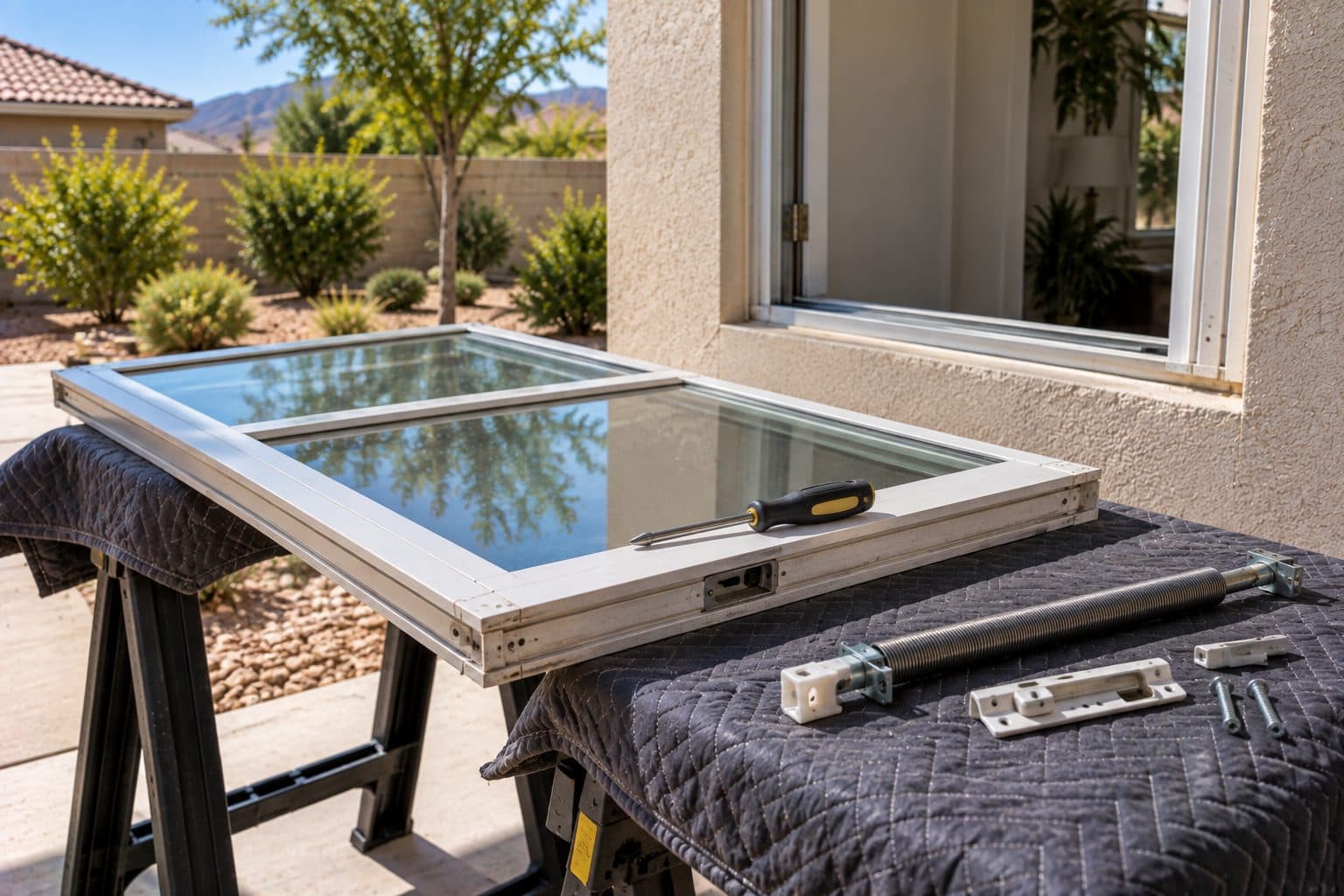
Many windows that stick, will not stay open or will not lock can be repaired by replacing worn balances, rollers, operators or locks. Agave Windows assesses the window first, then checks that compatible parts are available.
01 of 11
Describe the behavior before naming a part
You may notice that a sash is difficult to raise, a crank turns without moving the window, or the lock only engages when you push on the frame. Those observations are useful even if you do not know the component names.
Tell us whether the issue happens through the whole movement or at one position. Note whether it began suddenly, developed gradually or followed another repair. If multiple windows have the same appearance, identify which ones actually have the problem; similar-looking units do not necessarily need identical work.
Avoid forcing a sash that feels unstable or a mechanism that is binding. Do not release balances, hinges or other loaded components to investigate. Photos and a description of normal behavior can begin the assessment without turning a repair request into a disassembly project.
02 of 11
The type of window guides the inspection
The operating style determines which mechanism carries the sash and which mechanism closes it. A handle, support component and lock perform different jobs. Replacing the part you can see is useful only when it addresses the failed function.
Vertically moving windows
A single-hung or double-hung sash needs a supporting mechanism that works with that product's sash. In applicable designs, balances help support the moving sash; locks secure the meeting sections when closed. A window that stays closed when locked but drops when opened can therefore have a support problem even though the lock works.
Balance type, attachment and required strength vary. Marvin's product glossary illustrates the relationship between balances, sash pivots and support components. It is an example of why sash size alone is not a replacement-part specification. A suitable assessment identifies the actual series and supporting arrangement before choosing a component.
Tell us which sash is affected, whether it tilts for cleaning and whether one side appears lower. Do not unhook a balance or rely on a prop to keep an unstable sash open. A damaged attachment point can change the repair scope even when a replacement balance exists.
Horizontally sliding windows
A slider's moving glazed panel follows guides or a track arrangement appropriate to the product. Resistance throughout travel suggests a different inspection pattern from a catch at one point. A latch that only meets when the sash is lifted adds an alignment concern; it does not establish that the latch itself is defective.
Describe the movement you normally encounter without repeating a motion that binds. The assessment can distinguish accessible debris, worn operating components and a sash or frame that no longer aligns. These are possible inspection categories, not a diagnosis from the symptom alone. A clean-looking track is not proof that the concealed operating parts are sound.
Identify the insect screen separately. Its lighter frame and hardware do not define the repair needed by the glazed sash.
Hinged and crank-operated windows
A casement or awning window has an operator that moves the sash, hinges that guide or support its movement, and hardware that secures closure. The exact arrangement varies. A crank that turns without moving the sash differs from a sash that moves but cannot finish closing. The first directs attention toward the drive connection; the second also raises questions about obstruction, alignment and final engagement.
The repair should preserve those connected functions. Simply increasing closing force can conceal binding or stress another component. Describe the last position in which the window operated normally and any previous handle, operator or hinge work. Pella's parts resources show separately supplied hardware examples; they do not establish a compatible substitute for another series.
four steps, in order
How a Project Runs
- 1
Tell us about the project
Send your location, the approximate number of openings, and what you want to improve.
- 2
Review the openings and options
We discuss your priorities and assess the details that affect product selection and installation.
- 3
Define the work in writing
The proposal identifies the products and agreed installation scope so you can understand what the project includes.
- 4
Install and review the result
At completion, we review the installed products, operation, visible finish, and care information with you.

03 of 11
Identify the product without taking it apart
A label, etched marking or original invoice may help identify the manufacturer and series. Photograph anything accessible, along with the complete window from indoors. A close-up of the handle or latch can be helpful, but it should accompany a view that shows the whole assembly.
If the label is missing or unreadable, say so. Product identification can involve dimensions, component shape and assembly details during assessment. It should not depend on the homeowner guessing a brand from frame color.
Ordering the correct part may require more than a brand name. Products can vary by series, configuration and manufacturing period. A useful repair plan records the identification used and any remaining uncertainty before a component is purchased.
04 of 11
Look at the retained frame and sash
A component repair relies on the assembly around it being suitable for the intended work. The assessment should consider visible frame and sash condition, alignment and the places where the replacement part attaches. A new latch may not solve a closing problem caused elsewhere in the assembly.
Tell us about cracked frame material, repeated adjustments, staining, air leaks or previous patching. Our drafty-window assessment guide covers the air-leak side of that question. These details do not automatically mean full replacement, but they affect the repair discussion. The technician should distinguish a supported component repair from more extensive frame reconstruction or surrounding-wall work.
If the proposed repair leaves other concerns unresolved, ask for that limitation in writing. The goal is to know what the work is expected to improve, not to assume every issue at the opening disappears when one part is changed.
how we install
The Part Behind the Glass

Measured before anything is ordered
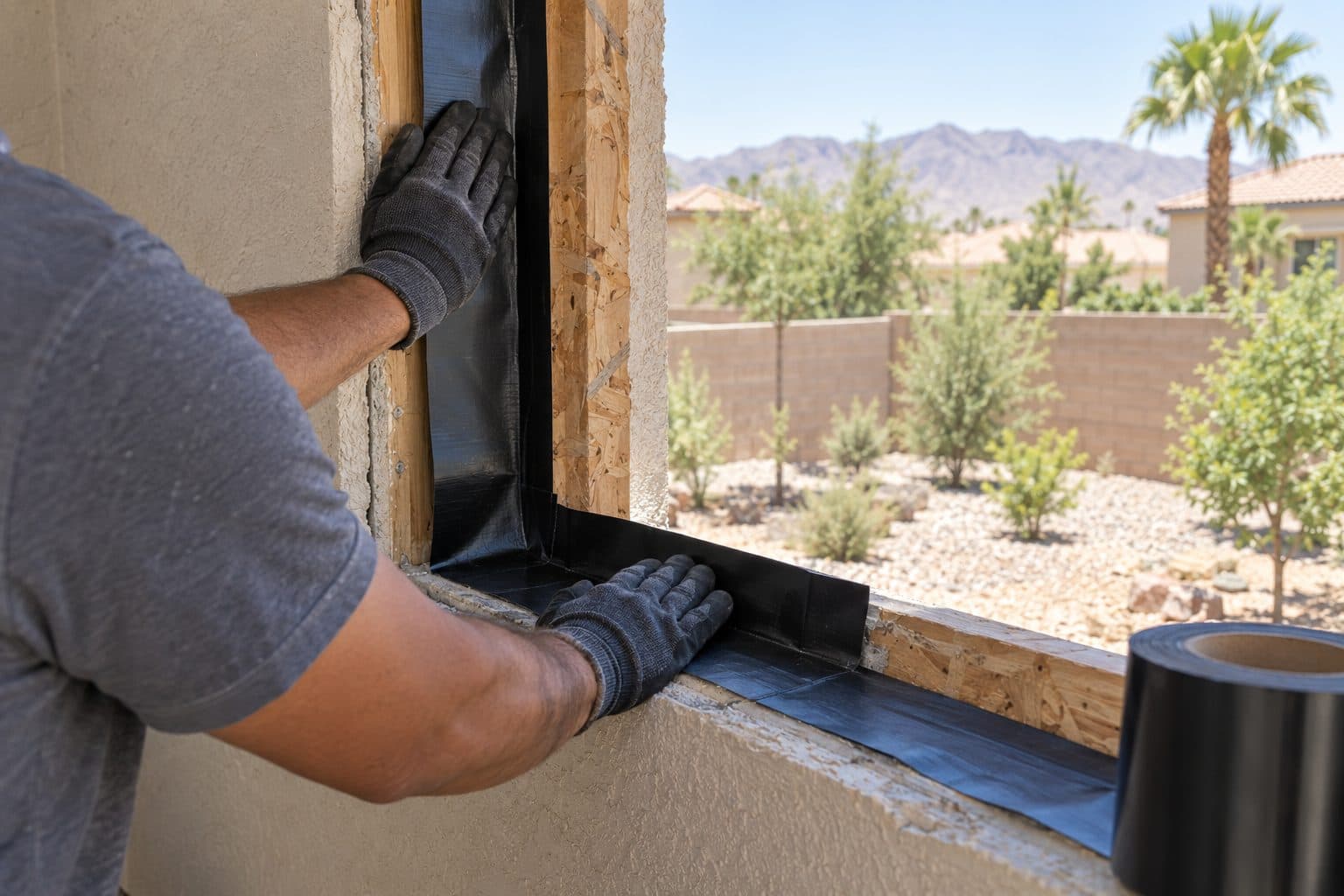
Flashed so water has a way out

Set level, plumb and shimmed
05 of 11
Keep glass concerns on the right path
Cracked glazing and persistent moisture between panes need a window glass replacement discussion. They may coexist with an operating problem, but their cause and proposed work should be described separately.
Surface condensation is a different condition again, and our guide to where window condensation forms explains each location. Moisture on the roomside glass does not by itself prove a failed hardware component or an exterior leak. Pella's condensation guidance distinguishes surface moisture from moisture between sealed panes.
If both glass and operation concern you, include both in the request. A complete assessment can help define whether the work involves hardware, glazing or a broader assembly decision. Operating-component work and glass replacement need separately defined scopes, even when both concern the same window.
06 of 11
What the assessment should establish
The assessment should turn a symptom into a bounded repair recommendation. A useful explanation connects four things: the observed behavior, the affected component or condition, the reason the proposed work addresses it, and the function that will be checked afterward.
Consider a hypothetical crank-operated window whose handle turns but whose sash does not move. “Replace handle” is not yet a complete finding. The inspection needs to establish whether the handle connection, operator or another part has failed and whether the sash can move correctly on its retained supports. A new handle cannot restore movement through a disconnected or damaged mechanism farther along that path.
The resulting record can be simple:
| Decision | What a useful answer contains |
|---|---|
| Which window? | Opening ID, operating section and reported symptom |
| Which part? | Product identification and compatible component basis |
| What remains? | Frame, sash and attachment condition relevant to the repair |
| What changes? | The specific supported movement or locking function |
| What is separate? | Glass, perimeter water, finish or other unresolved concerns |
Uncertainty should have a next step. If the series cannot be identified from visible markings, additional identification may be needed before sourcing. If a component is hidden, the appointment scope should explain whether inspection involves access work and how the opening will be left afterward.
The first visit may establish this recommendation rather than complete the repair. Confirm its coverage and any applicable charge before scheduling. A parts promise should follow identification, not precede it.
07 of 11
Compare repair with replacement on a defined basis
Repair can be a useful direction when the concern is identifiable, the surrounding assembly is suitable and an appropriate component is available. Replacement may deserve consideration when the intended repair cannot address the condition or when other project goals require a different assembly. Our guide to the signs a window needs replacement describes those conditions.
Ask for the reason behind the recommendation. A statement that a window is old is less informative than an explanation that a required component is unavailable or its attachment area is damaged. Likewise, a low parts price says little about the complete assessment and installation scope.
If both options are discussed, compare what each includes and leaves unchanged. Repairing a crank does not necessarily update the window's glass performance or appearance. Installing replacement windows is a different project with its own installation and finish requirements.
08 of 11
Put the repair scope in writing
The proposal should identify the window, components, agreed labor and any related adjustment. It should state whether disposal, additional visits or other work is included. Product substitutions should be reviewed for compatibility rather than treated as interchangeable because they look similar.
Ask how discoveries during the work are handled. If the existing condition differs from what could be assessed initially, the next action and any price change should be explained before additional work proceeds.
Review coverage for the supplied component and the repair labor separately. Keep the terms with the product identification and work description. Do not assume the repair renews the entire window's original warranty or creates coverage for unrelated conditions.
09 of 11
Prepare the window area
Move small personal items and fragile objects away from the opening. Tell us about furniture that is difficult to move, window coverings, alarms and pets. Agree on any preparation that requires special care rather than removing attached accessories without a plan.
For upper-story or difficult-access windows, show the location in the initial photos. Do not climb outside or lean through an opening to obtain a better image. The service team should establish an appropriate access method for the work.
If the sash cannot safely remain open or the window cannot be secured, describe that condition clearly. Use the contact page to confirm the next step with us directly; an online request is not a guaranteed urgent response.
10 of 11
Review operation and care after the work
At completion, review the repaired function with the technician. Ask how the window should open, close and latch, and which observations warrant a follow-up. If a limitation remains, have it recorded rather than relying on memory.
Use the selected product's care guidance. Cleaning methods and lubricants are not universal across hardware and frame materials. Manufacturer owner's manuals are an appropriate starting point once the actual product has been identified.
Keep a brief record of the part and repair date. That can make later service more precise, especially in a home with several similar windows from different installation periods.
11 of 11
Tell us which window is giving you trouble
Send Agave Windows the property location, a complete-window photo and a description of the movement or locking concern. Include product labels and previous repair information if available. We can use those details to discuss a suitable assessment and define the supported repair scope.
things people ask us
Frequently Asked Questions
Can a window that will not stay open be repaired?
It may have a repairable operating-component issue, but the sash, supporting hardware and product compatibility need assessment. Avoid propping or forcing an unstable sash as a substitute for repair. The recommendation should identify the actual condition and supported solution.
Do you need to replace the glass to repair a handle or lock?
Not necessarily. Hardware and glazing are different components, but the actual assembly determines the work method. Ask the assessment to identify what must be removed or replaced and whether any separate glass concern exists. Our comparison of glass versus complete window replacement explains how those scopes differ.
What if the original part is discontinued?
Ask whether an approved compatible replacement is available and what documentation supports the choice. If a suitable repair cannot be established, discuss the limitation and any replacement option separately. A look-alike part should not be assumed to function correctly.
Can one visit resolve every window problem?
The number of visits depends on assessment needs, compatible parts and the agreed work. Some components require identification before sourcing. Confirm the appointment scope and scheduling expectations without assuming that every request can be completed immediately.
Still have a question about your home?
Ask us directly. A quick description of the opening is enough.
keep going
Related Pages
- Repair service options
Window and door repair in Las Vegas for sticking windows, broken or foggy glass, dragging patio doors and torn screens. Describe the problem and send photos.
- Window glass replacement
Window glass replacement in Las Vegas for cracked, broken or foggy panes. Learn when the glass can be replaced while the existing frame stays in place.
- Glass versus complete window replacement
Should you replace the glass or the whole window? Learn when new glass is enough, when a sash swap works and when full window replacement makes sense.
- Drafty-window assessment guide
Drafty windows: repair or replace? Learn how to find where the air comes in, which causes can be repaired, and when replacement is worth pricing.
- Replacement windows
Replacement windows in Las Vegas, planned room by room. See how to choose glass, frames and installation method, and what a clear estimate should include.
Sources referenced on this page
Independent references linked in the text above. A manufacturer source explains a product concept; it does not mean Agave Windows supplies that brand.
- Marvin's product glossary illustrates the relationship between balances, sash pivots and support components (marvin.com)
- Pella's parts resources show separately supplied hardware examples (pella.com)
- Pella's condensation guidance distinguishes surface moisture from moisture between sealed panes (pella.com)
- Manufacturer owner's manuals are an appropriate starting point (pella.com)

ready when you are
Send Your Window Repair Details
Tell us your location, the approximate number of openings, and what matters most to you. You do not need to arrive with a product already selected.
- Photos can follow once we reply; no measurements needed
- A written scope before anything is ordered
- Licensed, insured, and bonded
Request an Estimate