


- 11 min read
- Updated
- Supports: Replacement Windows
Window Replacement Cost in Las Vegas
A useful window replacement budget starts with the work being purchased. The number of windows matters, but it does not explain the difference between a small, accessible replacement and a large opening that needs frame removal and finish repair. To compare costs fairly, separate the product, installation and surrounding work before comparing totals.
This guide explains the factors behind a Las Vegas estimate for replacement window installation. A price for your home should identify the selected products, opening conditions and included work. Broad advertised amounts are difficult to use when those details are missing.
The short version
Window replacement cost in Las Vegas depends on the number and size of windows, the product and glass chosen, whether the old frame stays or is removed, and finish work such as stucco, trim and paint.
On this page
Published price ranges for window replacement, sampled September 29, 2026
These are published estimates from the sources named in the table, sampled September 29, 2026. They are not Agave Windows job history and they are not a quote. National figures describe a typical market, not Las Vegas specifically, and each publisher defines its own scope, so read the scope column before comparing two rows. Use them to set a budget bracket, then use the rest of this guide to see why two proposals inside the same bracket can describe different work.
| Scenario | Published range | Scope as the source states it | Source |
|---|---|---|---|
| One replacement window, installed, any material | $450 to $1,500 per window; $4,500 to $22,500 for 10 to 15 windows | Product plus installation; labor $100 to $500 per window | HomeGuide window replacement cost |
| One replacement window, installed, typical | $450 to $1,200 per window, average about $800; whole house of 10 to 15 windows $8,000 to $12,000 | Product plus installation; labor $150 to $300 for small windows | Fixr window replacement cost, January 21, 2026 |
| Whole project average | $7,347 per project, typical range $3,436 to $11,837 | Per project; labor about 15 percent of the total | HomeAdvisor window installation cost, updated June 17, 2026 |
| Vinyl frame | $350 to $800 per window installed (Fixr); $450 to $800 (Today's Homeowner) | Installed unit | Fixr; Today's Homeowner window replacement cost |
| Fiberglass frame | $400 to $1,500 per window installed (Fixr); $500 to $1,000 (Today's Homeowner) | Installed unit | Same two sources |
| Wood frame | $600 to $2,000 per window installed (Fixr); $600 to $1,500 (Today's Homeowner) | Installed unit | Same two sources |
| Retained frame (insert) versus full-frame installation | Installation labor $100 to $300 per window for a retrofit insert, $180 to $1,500 per window for full-frame removal | Installation portion only, product excluded | Angi window replacement cost, updated August 3, 2026 |
| Full-frame premium | About 10 to 15 percent more than a retrofit installation | Whole installed price | Today's Homeowner, September 3, 2025 |
| Bay and bow windows | Bay $2,000 to $6,000; bow $3,000 to $8,000 or more | Installed unit | HomeGuide |
| Las Vegas, ten vinyl double-hung windows, custom exterior color | $20,975 job cost, about $2,100 per window; 93.7 percent of cost recouped at resale | Replace ten 3 by 5 foot double-hung windows with low-E simulated-divided-light vinyl units, exterior trim matched, interior trim undisturbed; includes 10 percent markup on labor and materials | 2025 Cost vs Value report, Las Vegas, Zonda, September 2025 |
| Las Vegas, ten wood windows, aluminum-clad exterior | $26,029 job cost, about $2,600 per window; 90 percent recouped | Same ten openings with stained hardwood interiors | Same report |
Two things explain the spread between the survey figures near $500 and the Cost vs Value figure near $2,100 per window. The Cost vs Value scope is a defined, fully finished job with a custom-color exterior and matched trim, priced the way a contractor prices it. The survey figures pool every job size, including single inexpensive windows and homeowner-supplied products. A written Las Vegas proposal for a whole-house vinyl replacement with finish work will usually sit closer to the Cost vs Value figure than to the survey averages.
Agave Windows will publish its own dated, scoped ranges here as measured proposals accumulate. Until then, the published figures above are the budget reference on this page.
Count openings in a way the quote can follow
Create a room list and assign a label to each window. Record approximate size, operating style, floor level and visible concerns. Photos of both sides can show access and finishing conditions. They do not reveal every concealed condition, but they help establish an initial scope.
Be clear about what you are counting. A wide grouping may contain multiple units joined together. A quoted opening might include a fixed center and operable sides. Asking whether the price refers to each unit or the entire group prevents a misleading per-window comparison.
Keep patio doors, opening enlargements and window-to-door conversions separate. They may share a visit or design conversation, but they introduce different product and construction requirements. Combining them into a single average can hide the decision you are trying to make.
Separate product selection from site work
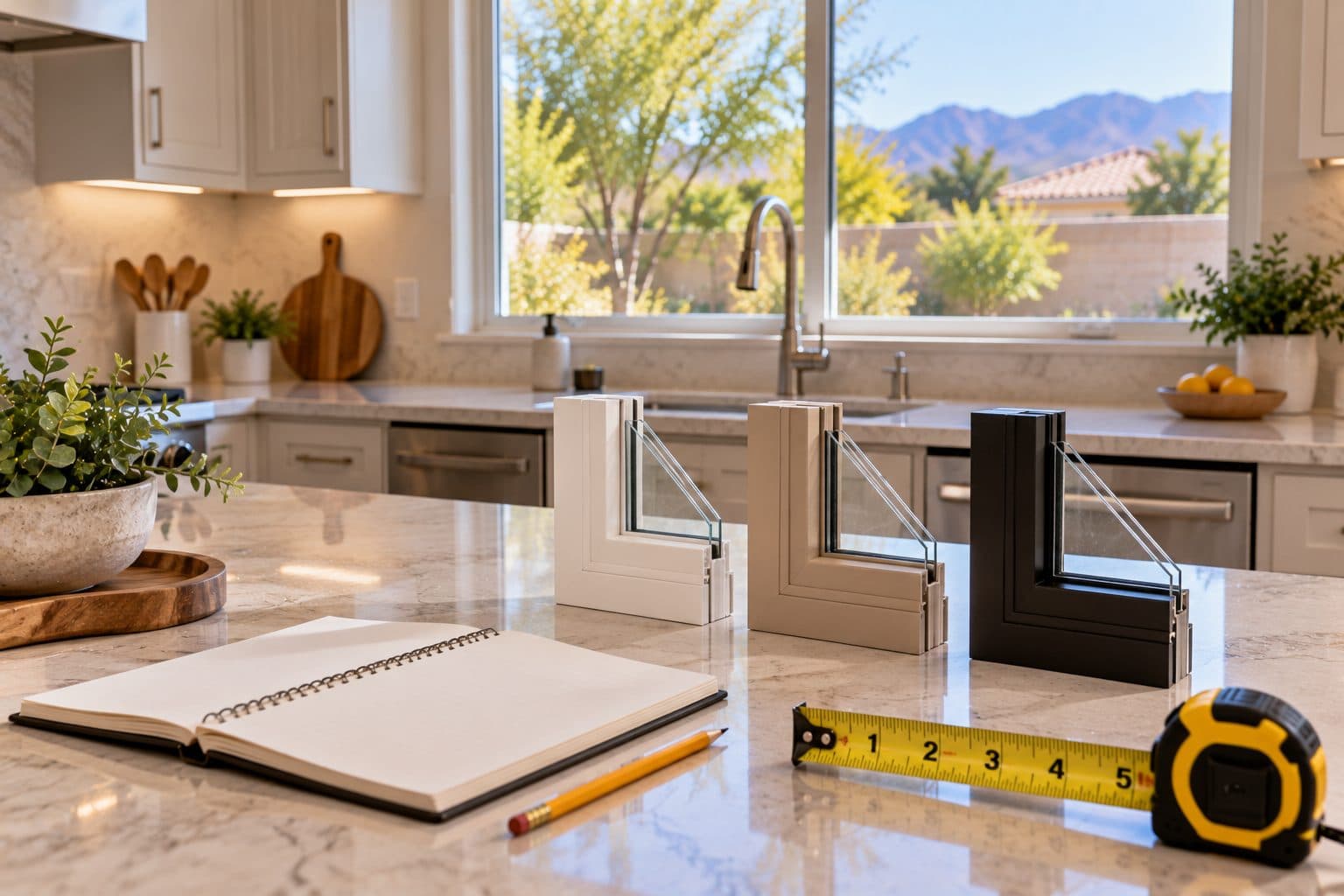
The product portion of a quote should identify the actual configuration. Material, series, dimensions, operating type, glass, grids, frame finish, hardware and screens can all change what is supplied. Custom shapes or combinations need their own line descriptions.
Do not assume two double-pane windows are equivalent. Glass coatings and whole-product performance can differ. Likewise, two products made from the same frame material can have different profiles, size limits and options. Comparing the exact package gives a more meaningful explanation for a price difference than a material label alone.
Ask whether design changes are priced individually. You may discover that one optional finish drives a meaningful part of the upgrade, while the feature most important to daily use is a separate choice. Clear alternatives let you adjust the scope deliberately.
Define the installation that the price includes
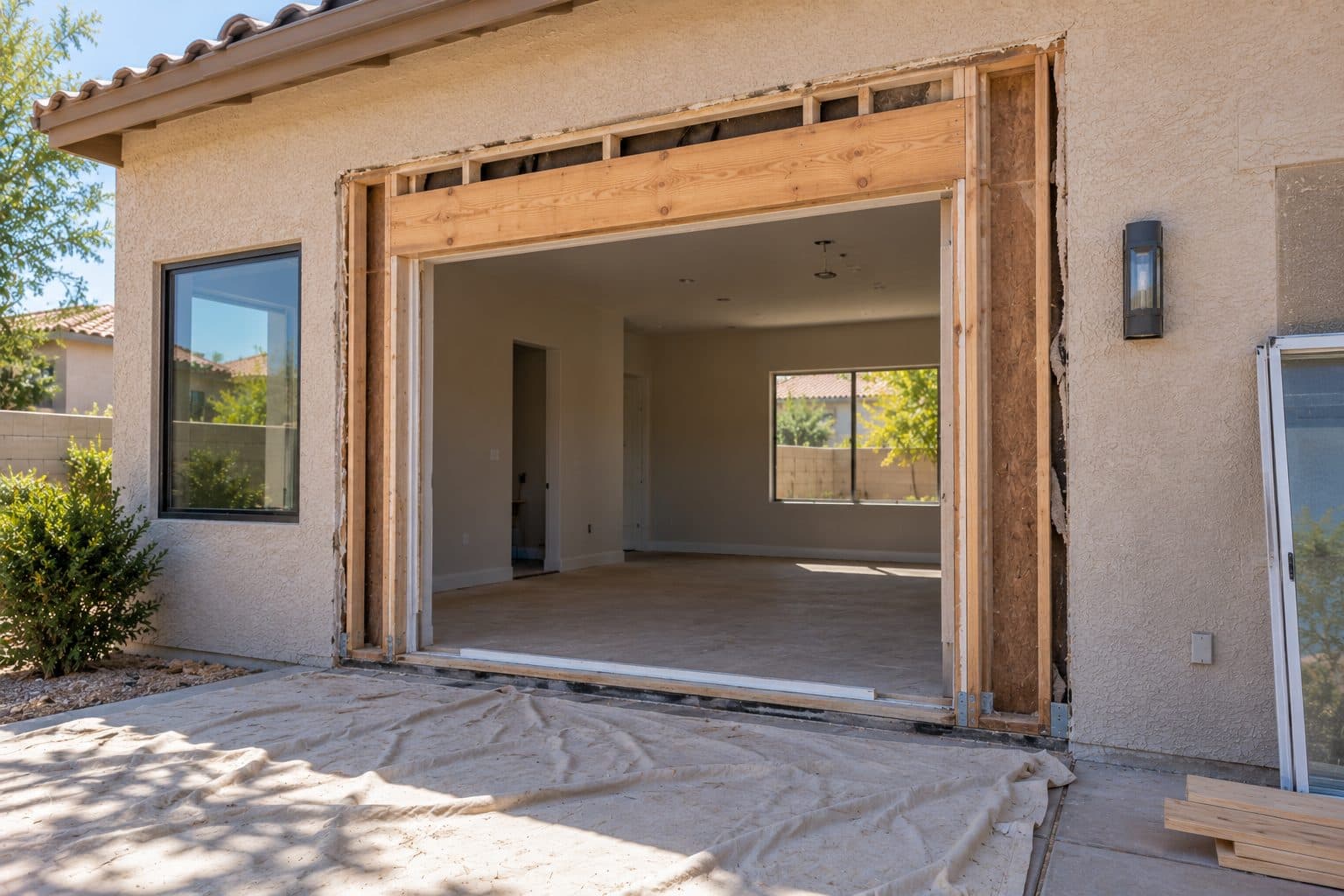
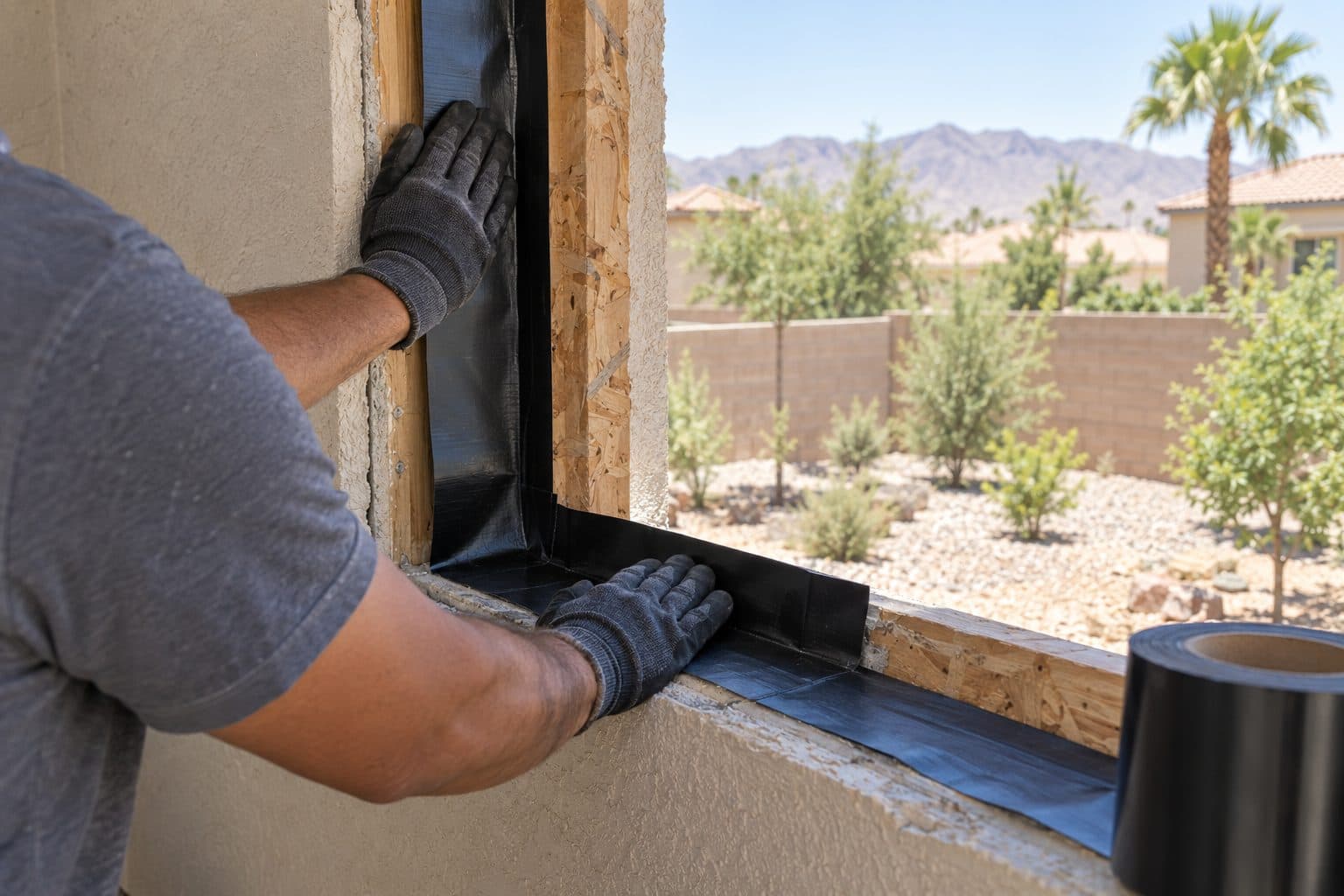
Installation is not one interchangeable line item. Ask whether the existing frame remains or is removed (see retrofit and full-frame methods), how the opening will be integrated with the wall, and what accessible damage has already been considered. Attachment, air sealing and water management should suit the assembly and its instructions.
Access can also change the work. Upper-floor openings, restricted exterior space, large units and special handling requirements may need additional planning or equipment. These conditions should be identified for the relevant opening rather than buried in an unexplained premium.
A lower installation figure may reflect a smaller scope, a different method or different assumptions. Ask for the explanation before deciding that it represents the same work for less money. An estimate becomes useful when you understand what its installation allowance actually buys.
how we install
The Part Behind the Glass

Measured before anything is ordered
Flashed so water has a way out
Put finish work beside the window price
The replacement is only part of the visible result. Existing stucco, casing, drywall returns, paint, tile or stone can affect the scope, and our guide to replacing windows in stucco homes covers the exterior side. Decide whether the proposal includes localized repairs, new trim, texture work and painting, and how far each finish responsibility extends.
Matching an aged finish can require a larger visual decision than repairing the immediate edge. Ask whether a patch is intended to blend locally or whether broader painting is a separate option. Do not leave “finish as needed” undefined if exterior appearance is a priority.
Window coverings deserve their own check. A different frame depth or handle location may affect shutters, blinds or their brackets. Confirm who removes and reinstalls them and whether any modification or replacement is outside the price.
Normalize the scope before comparing totals
A quote can be complete without revealing a contractor's internal labor rate. A shared list of questions for comparing contractor proposals helps you collect the same details from each company. What you need is the product schedule, included work, exclusions and treatment of unresolved items. Create one row per opening or genuinely identical group, then reconcile the following buckets.
| Bucket | Record | Comparison error it prevents |
|---|---|---|
| Products | Unit count, model, operation, glass and accessories | Comparing a group of units with a single-window price |
| Installation | Retained frame, removal, access and opening connection | Treating different construction methods as equivalent |
| Completion | Trim, stucco, paint, coverings and disposal | Mistaking an unfinished opening for a lower-cost finished project |
| Conditional work | Defined allowances and unresolved conditions | Treating unknown work as zero |
For each difference, label it required to reach the same result, optional preference, or unresolved. Add the first category using actual written prices; keep optional upgrades visible; resolve the last category before declaring a winner. This is scope normalization, not an instruction to add guessed amounts to a contractor's bid.
A worked comparison without invented local prices
Suppose Proposal A includes the windows and installation but excludes exterior painting. Proposal B includes the same defined units, installation and the agreed paint boundary. If both paint scopes are genuinely identical, compare A's total plus its separately quoted painting with B's total. If A's paint price is unknown, A's complete-project cost is unknown; entering zero would reward missing information.
Now suppose B uses full-frame removal while A retains the existing frame. Adding a paint allowance will not make these equivalent. First establish whether retaining that frame is suitable and whether the different visible glass and finish results meet your goal. Some differences can be normalized arithmetically; others require a scope decision.
Keep product upgrades separate. If B includes a special exterior finish you do not need, request an alternate rather than treating its entire price difference as an installation premium.
Allow for discoveries without accepting a blank check
Some existing conditions become visible only after removal. A useful contract explains how those conditions will be documented and how additional work will be described and approved. Ask what happens to the opening while the decision is being made.
Keep a project reserve appropriate to your finances and the assessed uncertainty; there is no universal percentage that makes every house predictable. An opening with known staining warrants different discussion from one with no visible issue. A reserve supports planning, but it does not replace a written change process.
Request a distinction between an allowance and a fixed inclusion. If a number depends on a later selection, understand how the final amount will be reconciled. If a task is excluded entirely, identify who will price and complete it.
Distinguish a budget reserve from a quoted allowance
An allowance is part of a proposal whose final amount depends on a defined selection or quantity. A reserve is money you choose to keep available for uncertainty. An exclusion is work outside the agreement. Combining them hides who controls the decision and how the final price changes.
Record what the allowance is based on, what would change it and whether unused money is credited back. Keep your reserve outside the quoted total until authorized work actually uses it. For an excluded task, obtain a separate scope or intentionally remove it from the project; do not leave completion dependent on an unnamed future contractor.
This distinction also helps when you weigh whole-house or phased replacement. A first phase may defer cost rather than eliminate it. Compare both the near-term commitment and the expected remaining work, using current written proposals where available. No assumed volume discount or fixed reserve percentage is needed to make that reasoning useful.
Cost estimator worksheet
This is a fill-in worksheet for paper or a spreadsheet of your own. Use it to organize a budget before treating any figure as a project total. Group only openings with the same relevant product and installation assumptions. Record quantity, approximate dimensions in stated units, proposed operation and the work around each group.
Separate per-opening amounts from project amounts. If three matching windows have a written unit range, multiply that range by three. Count a genuinely shared project item once. Check the inclusions so disposal or another task is not counted in both categories for the same work.
| Worksheet entry | How to treat it |
|---|---|
| Current price for a matching defined scope | Use its source, date and stated quantity basis |
| Missing dimensions or unassessed condition | Record the information needed; do not fill the amount with zero |
| Work that none of your written prices cover | Obtain a scope-specific proposal |
| Known lines with an unresolved item | Label their sum incomplete, not a total project price |
| Expired pricing | Request current information before writing a range |
For low and high ranges, sum the matching low values and the matching high values separately after applying quantities and shared items. The endpoints describe the prices you entered; they are not probabilities or a guarantee that a future proposal will fall inside them. Fees, restoration and taxes need explicit treatment. Do not subtract an assumed incentive or promotion.
You can use this method without having a product price yet: keep the opening groups and unknowns as a scope record. That record identifies the information a measured proposal must resolve. Treat the worksheet as a planning aid, not an estimate, until current written prices cover the selected scope.
Adjust the plan where it changes value
If the initial total exceeds your budget, revisit the opening priorities and optional features. Preserve the work needed to address known conditions and install the selected assembly correctly. Then consider whether a finish choice, operating arrangement or project phase can change without undermining your goal.
A hypothetical homeowner might prioritize two uncomfortable occupied rooms now and schedule less urgent openings later. Another might choose one coordinated project to reduce repeated household disruption. Neither approach guarantees a particular saving; ask for separately defined alternatives and compare their complete scope.
Before accepting an offer, confirm its validity period, payment terms, order-change rules and schedule assumptions. Read financing terms separately if financing is offered. When your scope record is ready, request an estimate for the openings on it. The most useful price is the written price for a project you understand.
This guide supports
Replacement Windows →things people ask us
Frequently Asked Questions
Why does a per-window advertised price differ from my estimate?
The advertisement may describe a specific size, product and installation assumption. Your opening may need another configuration, access plan or finish scope. Ask the estimator to identify the differences. The comparison should be based on what is included, rather than on an average detached from the project.
Can I compare quotes if one company provides only a total?
Ask for a written product schedule and description of included work, even if the company does not break out internal labor costs. A total can be understandable when scope is clear. If essential selections or exclusions remain undefined, request clarification before treating the offers as equivalent.
Does replacing more windows always reduce the price per window?
No universal discount follows from a larger count. Product mix, access and the installation scope still matter. A larger project may share some coordination, but ask for actual written alternatives instead of assuming a percentage reduction. Compare the total commitment as well as any unit average.
Should energy savings pay for the entire project?
Do not build the budget around an unverified payback promise. Utility effects depend on existing windows, chosen products, the building and how the home is used. Comfort, operation and appearance may be important reasons for replacement, but they should not be converted into invented dollar savings.
Still have a question about your home?
Ask us directly. A quick description of the opening is enough.
keep going
Related Services and Guides
- Replacement Windows
Replacement windows in Las Vegas, planned room by room. See how to choose glass, frames and installation method, and what a clear estimate should include.
- Whole-house or phased replacement
Should you replace all your windows at once or in phases? Compare matching, disruption and budget, and see which windows to put in the first phase.
- Stucco replacement considerations
Replacing windows in a stucco home: when stucco must be cut, how water is managed behind it, and what to expect from patching, texture and paint.
- Retrofit and full-frame methods
Retrofit vs full-frame window replacement: what stays in the wall, what comes out, how each affects glass size and finish work, and when each one fits.
- Compare contractor proposals
Questions to ask a window contractor before you sign: licensing, who installs, the exact product quoted, permits, schedule and written warranty coverage.
- Window Buying Guide
How to choose replacement windows in Las Vegas: list what each room needs, pick a style, compare glass ratings and installation, then line up quotes.
- Window Replacement vs Glass Replacement
Should you replace the glass or the whole window? Learn when new glass is enough, when a sash swap works and when full window replacement makes sense.
- Signs Windows Need Replacement
Signs your windows may need replacement: fog between panes, sticking sashes, drafts, stains or damage. Learn what each one means and what to do next.
- Window Replacement Timeline
How long does window replacement take? See each stage, from measuring and ordering to delivery, installation and finish work, and what can cause delays.
- Replacement vs New-Construction Windows
Replacement vs new-construction windows: how nail-fin, flush-fin and block-frame windows differ, and which one fits the wall work planned for your home.
- Prepare for Window Installation
How to prepare for window installation: clear access to each window, handle blinds and alarm sensors, protect belongings, and plan for pets and children.
Sources referenced on this page
Independent references linked in the text above. A manufacturer source explains a product concept; it does not mean Agave Windows supplies that brand.
- HomeGuide window replacement cost (homeguide.com)
- Fixr window replacement cost (fixr.com)
- HomeAdvisor window installation cost (homeadvisor.com)
- Today's Homeowner window replacement cost (todayshomeowner.com)
- Angi window replacement cost (angi.com)
- 2025 Cost vs Value report, Las Vegas (jlconline.com)

ready when you are
Have a Question About Your Own Home?
A guide can explain the choice. Your openings decide the answer. Tell us what you are seeing and we will help you work out the next step.
- Photos can follow once we reply; no measurements needed
- A written scope before anything is ordered
- Licensed, insured, and bonded
Request an Estimate