


- 8 min read
- Updated
- Supports: Entry Doors
Fiberglass vs. Steel vs. Wood Entry Doors
Fiberglass, steel, and wood can each form part of a front entry-door system. The useful comparison is between complete assemblies that fit the same opening and priorities. A material label does not tell you the frame, glazing, finish, hardware, or installation scope.
Start by deciding what you want to see and what care you are willing to provide. Then use product-specific information to compare the shortlisted doors without turning broad material characteristics into guaranteed results.

The short version
Fiberglass, steel and wood entry doors each suit different priorities: fiberglass offers smooth or wood-look finishes, steel a painted metal face, and wood a natural look that needs more finish care. Compare complete doors, not material labels.
On this page
Compare appearance at the surface
Fiberglass entry doors can offer smooth painted faces or molded wood-look textures, depending on the product. Steel entry doors commonly provide a painted metal-faced design with specific panel profiles. Wood entry doors bring natural grain and color variation, or a painted appearance if that is appropriate to the construction.
View actual samples at the entrance. Texture, sheen, panel edges, and grain are visible at close range, while proportions matter from the street. A small online swatch cannot demonstrate every characteristic of the finished door.
| Priority | Fiberglass questions | Steel questions | Wood questions |
|---|---|---|---|
| Surface appearance | Smooth or textured, and which finish is approved? | Which coating and panel profile are supplied? | Which species, grain and construction are specified? |
| Finish ownership | What care applies to face, frame and edges? | How is the protective coating maintained? | What finish and exposure conditions apply? |
| Customization | Which sizes and designs are documented? | Which factory preparation and options are available? | What fabrication and alteration limits apply? |
| Whole entrance | What are the frame, glass and seals? | What are the core, frame and hardware? | What are the leaf, frame and glazing details? |
Use these questions to gather comparable information, rather than assigning a universal winner to each column.
Separate the face material from the assembly
Read a door specification in layers: face, internal construction, edges, frame, glass and hardware preparation. Fiberglass or steel describes an important surface, but it does not identify everything behind it. A wood door may combine solid pieces, engineered components or veneers. Those details influence how the product is finished, altered and supported.
For example, Therma-Tru's Smooth-Star construction description identifies a fiberglass skin alongside a foam core, composite rails and separate lock reinforcement. That is one documented construction, not a universal recipe for fiberglass doors. It shows why judging the whole entrance from its face material misses important parts.
The same distinction applies to a steel-faced insulated assembly: a metal exterior does not mean a solid metal slab. For wood, ask which parts supply structure and which provide the visible grain. A species name alone cannot answer that question.
Compare the frame separately. Two doors with different faces might be quoted with similar frames, while two fiberglass doors could have materially different surrounding components. A claim about resistance to a particular surface problem should not silently become a claim about the entire entrance.
Finally, match replacement scope. If one quote replaces only the leaf and another includes a frame and threshold, separate that difference before evaluating materials. Keeping an unsuitable existing frame can limit the value of a preferred new surface.
Evaluate finish care in the actual exposure
U-factor
How easily heat passes through the whole window. Lower keeps more heat out in summer and in during winter.
SHGC
Solar heat gain coefficient: how much of the sun's heat comes through. Lower means less heat from direct sun.
VT
Visible transmittance: how much daylight comes through. Higher means a brighter room.
Describe direct sun, porch protection, weather reaching the threshold, and any known moisture problems. The selected product and finish should suit those conditions. Las Vegas location alone does not tell the supplier how a particular entrance is exposed.
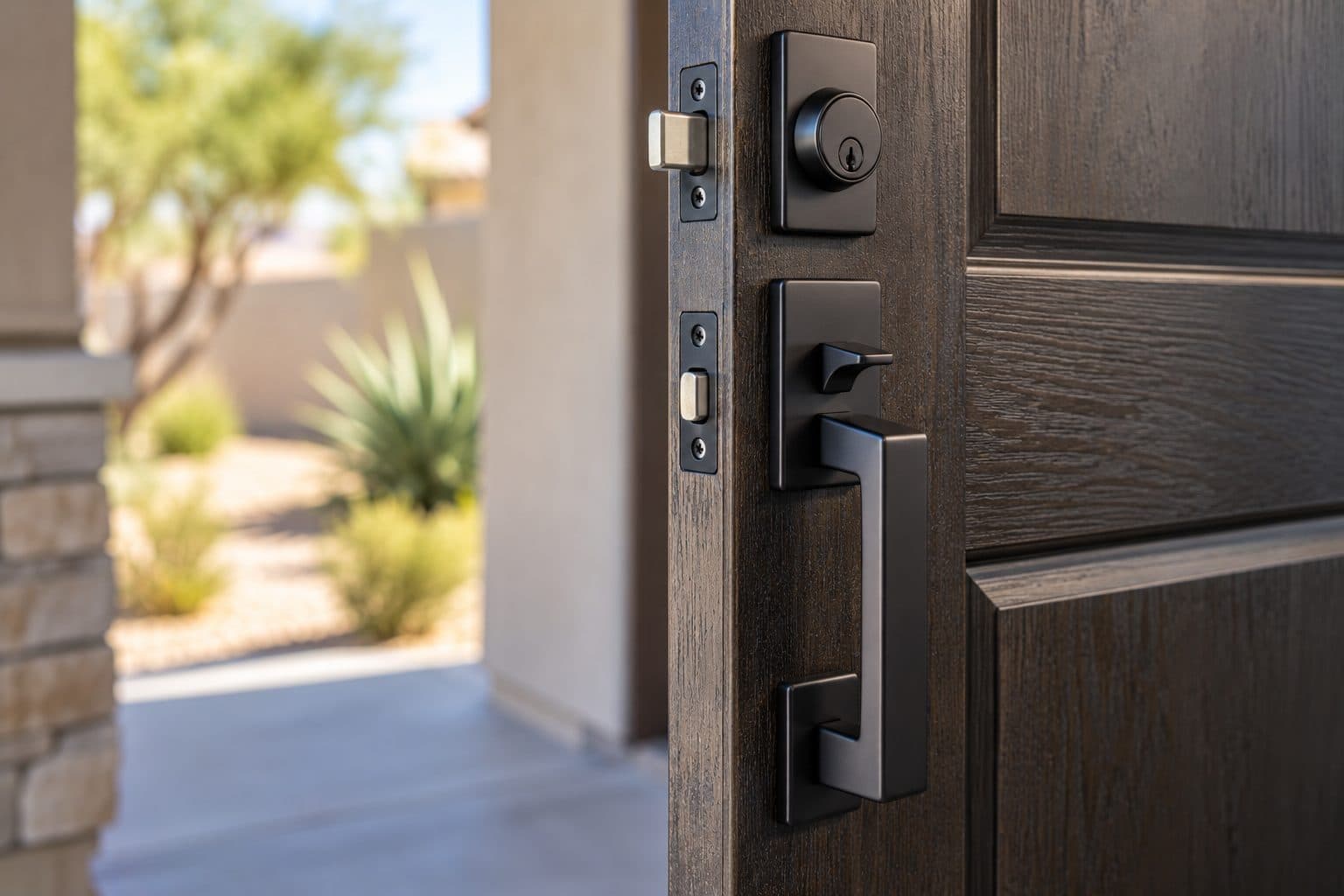
Fiberglass faces still have product-specific finish and care requirements, and surrounding components need attention. Steel surfaces require appropriate coating protection, including assessment of damaged areas. Wood selection should include a realistic finish and maintenance plan, with any exposure or overhang requirements checked for the specific construction.
Avoid fixed universal maintenance intervals. The product, coating, exposure, and condition influence what is needed. Ask what to inspect and which instructions apply rather than relying on an unqualified maintenance-free label.
Understand the care concern behind each material
Wood exchanges moisture with the surrounding environment. The USDA Forest Service explains that this relationship depends on humidity, temperature and the wood's existing moisture content, with consequences for its physical behavior. That gives finish protection and exposure management a practical purpose; it does not establish that every wood door will change shape or fail in a particular climate.
For a wood candidate, the useful evidence is its construction, permitted exposure and finish instructions. For a coated steel candidate, distinguish an ordinary surface mark from damage that exposes the underlying metal, and obtain the approved care response. For fiberglass, understand the specified coating and the needs of edges, frame and glazing components. None of these can be reduced to a single maintenance-free score.
Describe the owner's task for each actual candidate: what to inspect, what changes warrant attention, what finish system is compatible and who can carry out necessary work. If the required upkeep is unrealistic for the household, that is a valid reason to reject that candidate. The choice should reflect a task you are willing to perform, not just a reassuring material label.
how we install
The Part Behind the Glass

Measured before anything is ordered

Hung, aligned and latched
Use one entrance specification for the three-way comparison
A fair comparison starts with a common brief, which the entry door buying guide helps you write. Keep the opening, operating arrangement, glass area, privacy goal, hardware function and finish responsibility consistent wherever the candidates permit. Then record unavoidable differences rather than pretending the alternatives are identical.
| Comparison item | Keep consistent where possible | Record when different |
|---|---|---|
| Appearance | Same design goal and sample lighting | Natural grain versus molded texture; accepted variation |
| Daylight and privacy | Similar glass area and required privacy | Glass pattern, covering need and verified optical information |
| Installation | Same retained and replaced components | Additional frame, sill or finish work |
| Ownership | Same household care expectations | Specific inspection and refinishing responsibilities |
| Performance evidence | Same configuration and test subject | Missing documentation or a genuinely different assembly |
For a hypothetical painted front entry with a small upper lite, compare actual painted candidates with that layout first. A large stained-wood glass entrance answers a different design question, even if its brochure sits beside the other quotes. Once the shared brief is stable, a price or appearance preference has a much clearer meaning.
Compare thermal information consistently
Insulated cores and material properties can be useful construction facts, but whole-product information is the better basis for comparing complete entrances. Glass area, glazing package, frame, seals, and configuration can change the result.
Review U-factor and solar heat gain coefficient for the actual proposed assemblies where available. U-factor concerns heat transfer; solar heat gain coefficient concerns admitted solar energy. Match the glazing and sidelight assumptions before interpreting a difference.
A solid door and a glass entry door with heavy glazing are not equivalent comparisons merely because their leaves share a material. Nor does a material ranking predict a specific reduction in a homeowner's energy bill. Discuss the actual room concern and keep expected outcomes tied to evidence.
Treat security as an assembly question
No material name alone proves forced-entry performance. The lock, strike support, frame, glass, fasteners, and installation belong in the assessment. Ask which specific claim has been tested and whether the documentation applies to the proposed assembly.
Do not infer a fire rating from steel or assume that decorative glass proves a particular security level. Ratings have defined applications and conditions. If a special rating is required, make it part of the specification from the start.
Usability matters too. The entrance should close and latch as intended, with a locking sequence the household understands. A door that requires unusual force or lifting needs assessment regardless of its material.
Check customization and future changes
Available sizes, panel arrangements, glass, and finishes vary within every family. A manufacturer may offer many catalog configurations without providing unrestricted custom fabrication. Identify the actual nonstandard feature if the project needs something beyond those choices.
Hardware preparation should be settled before ordering, so review compatible door hardware early. Later changes to locks, viewers, pet openings, or mail slots may affect construction and coverage. Wood should not be assumed infinitely trimmable, and fiberglass or steel should not be assumed suitable for arbitrary cutting or drilling.
Ask how replacement parts and finish information will be identified later. Keeping documentation is useful for all three materials, especially where several components come from different suppliers.
Compare installed scope and coverage
There is no dependable universal price order without specific products and project conditions. A customized wood design, a basic steel assembly, and a highly glazed fiberglass entrance do not represent equivalent scopes. Compare the actual design you would buy in each material, using the entry door replacement cost guide to keep the scopes aligned.
The proposals should include the same assumptions about frame replacement, removal, opening preparation, hardware, glass, finishing, and surrounding repairs. If an option requires different work, identify it explicitly. Opening enlargement and structural work should be visible as separate project items.
Read product, finish, and installation coverage documents separately. Identify the issuer, exclusions, care conditions, and procedure for raising a concern. A material preference should not be based on a warranty phrase that has not been checked against the quoted assembly.
Narrow the choice through your priorities
If the goal is a smooth painted design, compare the actual smooth fiberglass and steel options that fit the opening. If natural grain is essential, evaluate wood with its finish obligations and compare any wood-look alternative honestly. If custom proportions are the main issue, establish which supported construction can deliver them.
Bring the shortlist, samples, and project priorities to Agave Windows and request an entry door estimate. The next step is a specific front entry door proposal with the material choice connected to the whole entrance.
This guide supports
Entry Doors →things people ask us
Frequently Asked Questions
Which material is best for Las Vegas heat?
There is no universal answer from the material name alone. Exposure, finish approval, glass, frame construction, whole-product ratings, and installation matter. Compare the actual assemblies suited to the entrance and explain the comfort concern you want to address. Avoid applying one product claim to every fiberglass, steel, or wood door.
Which option needs the least care?
Translate each candidate's care instructions into actual tasks: inspection, cleaning, coating attention and service for seals or hardware. Wood's moisture response makes its construction and finish plan relevant; coated steel and fiberglass also have product-specific protection needs. Compare the complete entrance and reject upkeep you cannot realistically provide, rather than choosing from a generic maintenance score.
Should warranty length decide the material?
Review coverage as part of the decision, but read the actual terms. Different documents may cover different components, finishes, labor, or conditions. A longer headline period does not automatically mean broader protection. Compare what is covered for the specific assemblies alongside appearance, function, maintenance, and installed scope.
Still have a question about your home?
Ask us directly. A quick description of the opening is enough.
keep going
Related Services and Guides
- Entry Doors
Front door replacement in Las Vegas: decide between a new door slab or a full frame, pick glass and hardware, and know what to check when it is installed.
- Explore fiberglass entry doors
Fiberglass entry doors in Las Vegas come in smooth or wood-look textures. Compare finish, glass, insulation and hardware options for your front door.
- Explore steel entry doors
Steel entry doors in Las Vegas: how they are built, what affects security and insulation, and how to handle scratches, dents, glass and lock options.
- Explore wood entry doors
Wood entry doors in Las Vegas bring natural grain to your entrance. Learn how sun exposure, porch cover, finish and upkeep should shape your choice.
- Use the entry buying guide
An entry door buying guide and checklist: rank your must-haves, shortlist two front door options, compare quotes fairly and confirm details before ordering.
- Plan entry replacement costs
What drives front door replacement cost in Las Vegas: slab or full framed unit, material, sidelights, hardware and finish work. See what to compare.
Sources referenced on this page
Independent references linked in the text above. A manufacturer source explains a product concept; it does not mean Agave Windows supplies that brand.
- Smooth-Star construction description (thermatru.com)
- USDA Forest Service explains (research.fs.usda.gov)

ready when you are
Have a Question About Your Own Home?
A guide can explain the choice. Your openings decide the answer. Tell us what you are seeing and we will help you work out the next step.
- Photos can follow once we reply; no measurements needed
- A written scope before anything is ordered
- Licensed, insured, and bonded
Request an Estimate