


- 7 min read
- Updated
- Supports: Energy-Efficient Windows
Choosing Windows for Las Vegas Heat
The best window for Las Vegas heat is the one whose documented performance fits the opening and the way you use the room. That decision involves sunlight, shade, glass area, daylight and installation. A material name or an extra pane does not settle it.
Start with the discomfort you want to change. Strong sun on a sofa, glare across a desk and a room that stays warm after sunset are related concerns, but they do not necessarily have the same explanation. A useful choice among energy-efficient window options connects a measurable product characteristic to the problem it can reasonably address.
The short version
For Las Vegas heat, look for a low solar heat gain coefficient where direct sun is the problem and compare whole-window U-factor. Frame material or pane count does not settle it; shade, glass area and daylight also matter.
On this page
Describe the heat before shopping for a solution
U-factor
How easily heat passes through the whole window. Lower keeps more heat out in summer and in during winter.
SHGC
Solar heat gain coefficient: how much of the sun's heat comes through. Lower means less heat from direct sun.
VT
Visible transmittance: how much daylight comes through. Higher means a brighter room.
Make a short record for the difficult room. Note when it feels uncomfortable, where direct sun lands, whether blinds are closed and whether the discomfort is concentrated near the glass. Include nearby glazed doors in the observation even if only windows are being considered for replacement.
Compare that room with another room at a similar time. If the entire home struggles, windows may be only one part of a broader building or cooling issue. If discomfort follows sunlight across a seating area, solar control and shading deserve closer attention, especially when you plan a west-facing room.
Do not use a single surface-temperature reading as a complete diagnosis. It can describe a condition at one moment, but it does not establish whole-product performance, installation quality or the source of every room-temperature difference. Use observations to guide the assessment and the questions you ask.
Match the mechanism to the pattern of discomfort
Sunlight entering a room carries energy that can be absorbed by people, floors and furnishings. Some of that energy later warms the room. Heat also moves through the window because the indoor and outdoor temperatures differ, even when direct sun is absent. Air leakage is a third path, involving moving air through gaps.
The selection follows the mechanism. Lower solar heat gain coefficient reduces the solar-energy component admitted by the product. Lower U-factor reduces heat flow associated with the temperature difference. Neither rating identifies an installation leak. Our guide explains how to read U-factor and SHGC ratings. The DOE's window-selection guidance treats thermal transfer and solar gain as separate characteristics.
| Observed pattern | First line of reasoning | What the observation does not prove |
|---|---|---|
| Discomfort follows a moving patch of sun | Direct solar exposure and glare deserve attention | That a darker frame or extra pane is the answer |
| Discomfort is strongest beside glass after dark | Surface temperature and thermal transfer may matter | That an air leak is present |
| Moving air is concentrated at a joint | Closure, seals or the installation perimeter merit assessment | That every window in the room is defective |
| Several rooms remain hot away from windows | Broader roof, insulation or cooling-system factors may matter | That a single window package will resolve the home |
Observations narrow the investigation; they are not a remote diagnosis. They are nevertheless useful because they prevent buying a feature that addresses the wrong mechanism.
Preserve useful daylight deliberately
Solar control does not mean every room must feel dark. Visible transmittance describes the daylight transmitted through a product, and it is different from SHGC. Appropriate coatings (compared in our guide to Low-E glass and window tint) can manage solar gain while retaining substantial visible light, but the result depends on the specific glazing.
Think about when the room needs daylight. A shaded kitchen may need a different balance from a bright media room. In a home office, glare control may matter even when the room temperature is acceptable. Ask to compare glass appearance and rating information together.
Also look through samples against a realistic background. Glass tint and reflectance can affect the view and exterior appearance. A small sample cannot reproduce the entire room, but it can reveal a visual preference that performance numbers alone do not capture.
Treat shade as part of the decision
Existing overhangs, patio covers, neighboring buildings and landscaping change how sunlight reaches an opening. Record those conditions before selecting glass. The same product can serve different rooms well for different reasons, but identical exposure should not be assumed across the house.
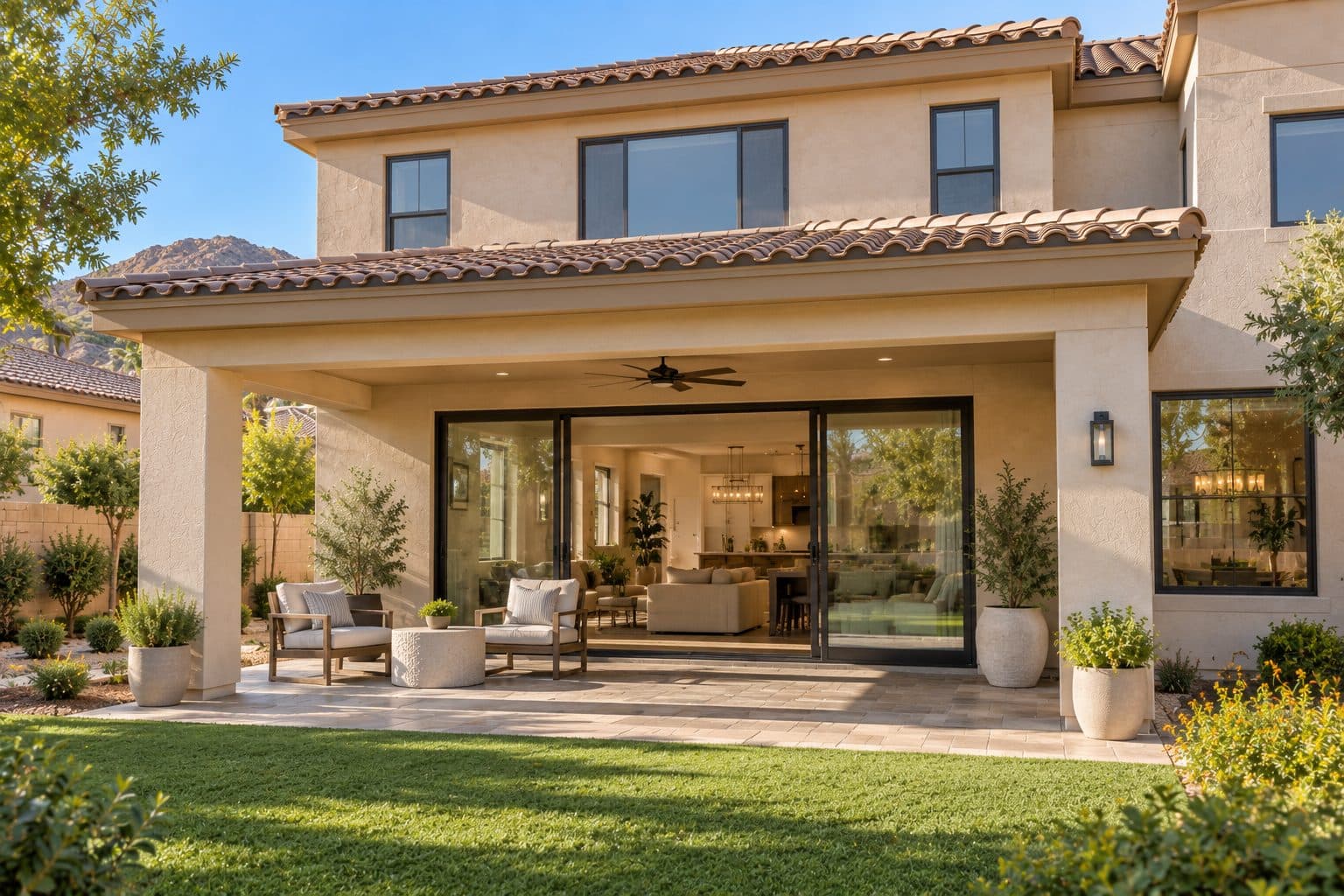
Consider the shade you will actually use. A proposed covering that would obstruct a favorite view or daily door access may not remain in use. Interior shades can help with glare and privacy; exterior shading raises its own attachment, maintenance and approval questions. Choose a workable combination rather than treating either glass or shading as a universal answer.
If you are planning a future patio cover or landscape change, mention it during selection. You do not need to predict every future condition, but a known change in exposure belongs in the conversation before the window order is fixed.
how we install
The Part Behind the Glass

Measured before anything is ordered
Flashed so water has a way out
Compare frames through the complete product
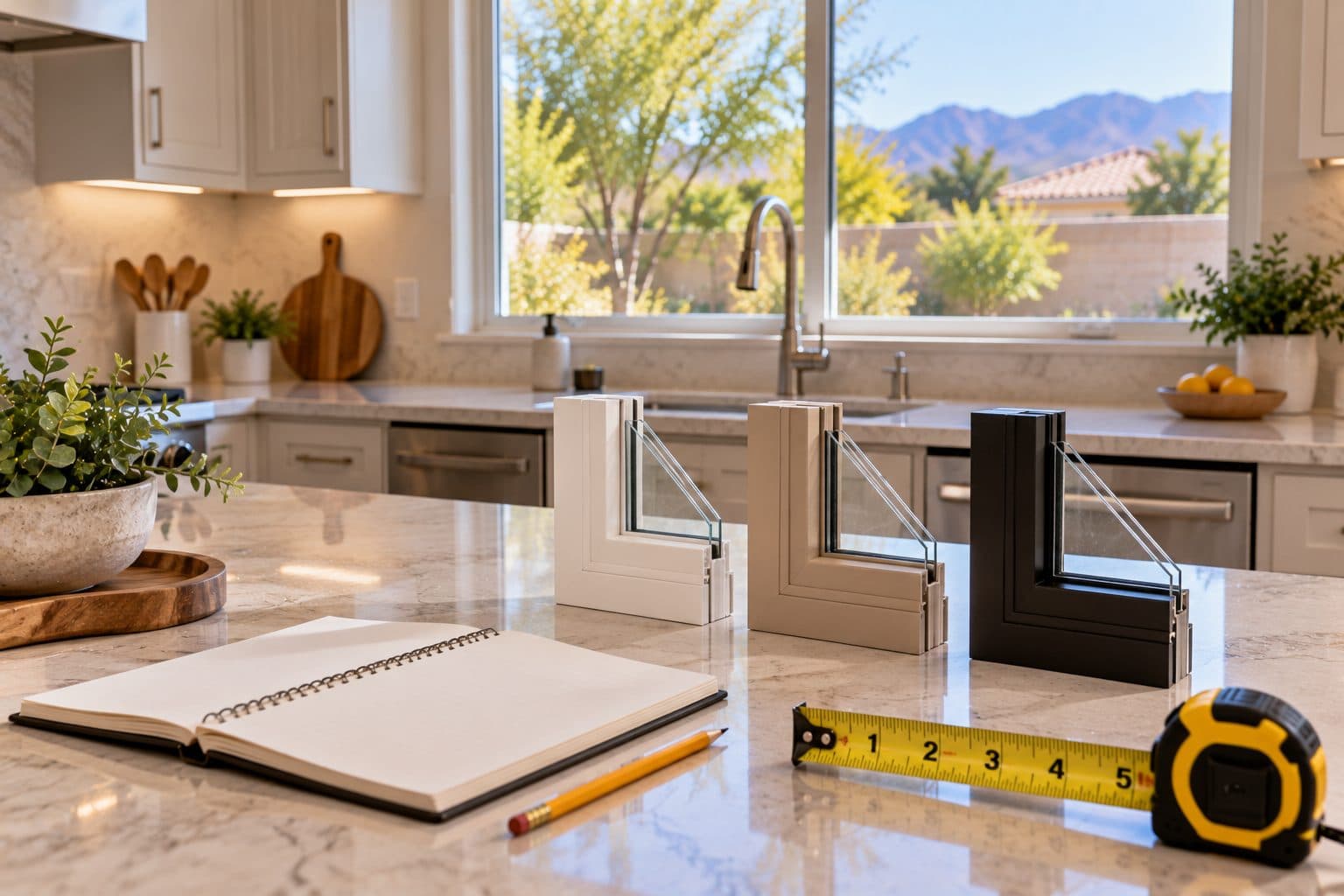
Vinyl, aluminum, fiberglass and other frame systems have different construction and finish choices. A frame material is useful information, but it does not establish the full window’s solar-control performance or guarantee a room outcome. Look at the actual rated assembly and the dimensions offered for your opening.
If aluminum is considered, ask about the thermal design of the proposed series rather than assuming all aluminum frames perform alike. With any material, including black frame finishes in heat, verify exterior finish suitability, care instructions and the manufacturer’s limitations for the application.
Large glass areas also make proportions important. A slimmer-looking frame may change sightlines, while a different replacement assembly may reduce clear glass. Compare the finished dimensions and performance together so one priority is not accidentally traded away.
Make installation part of the comfort discussion
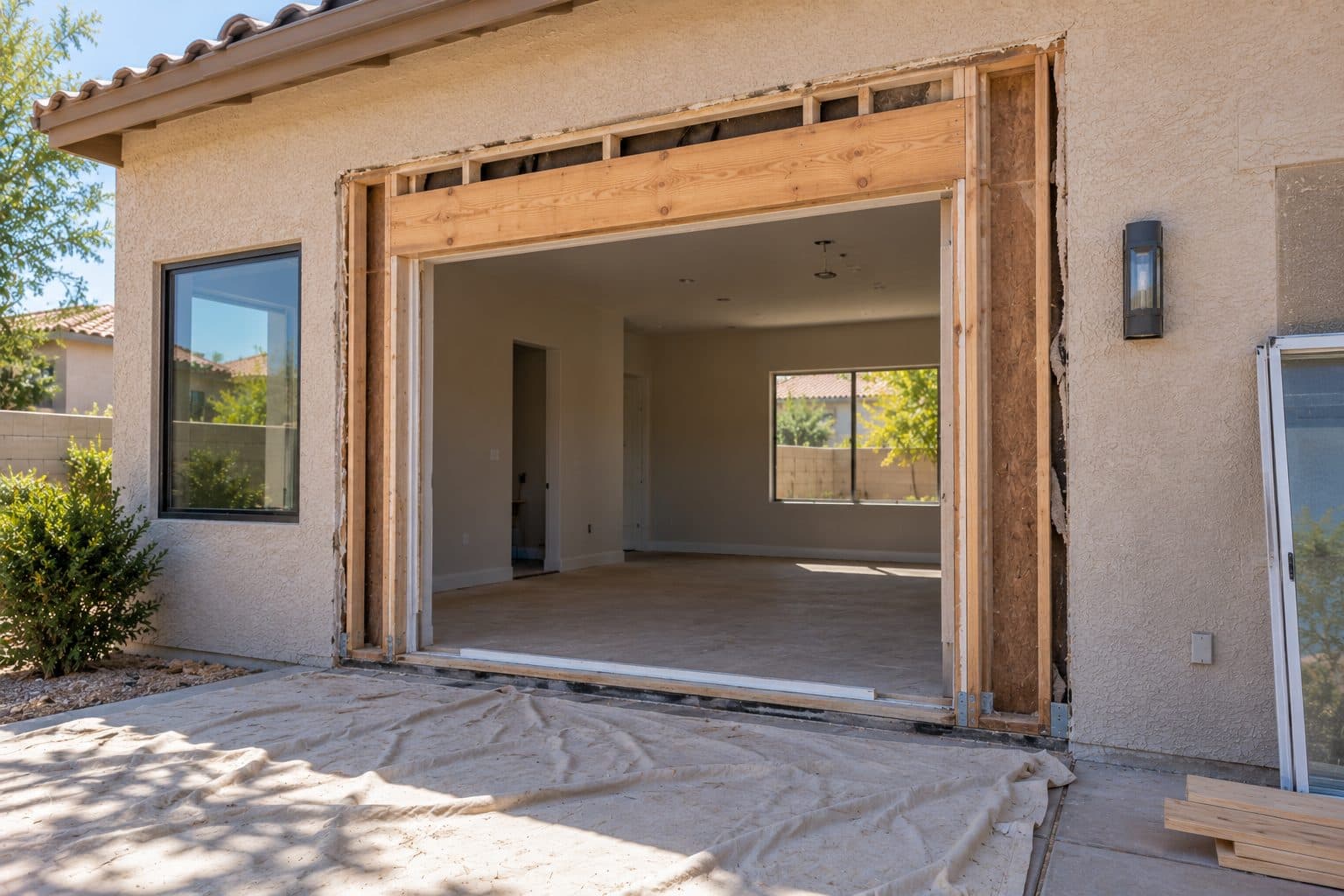
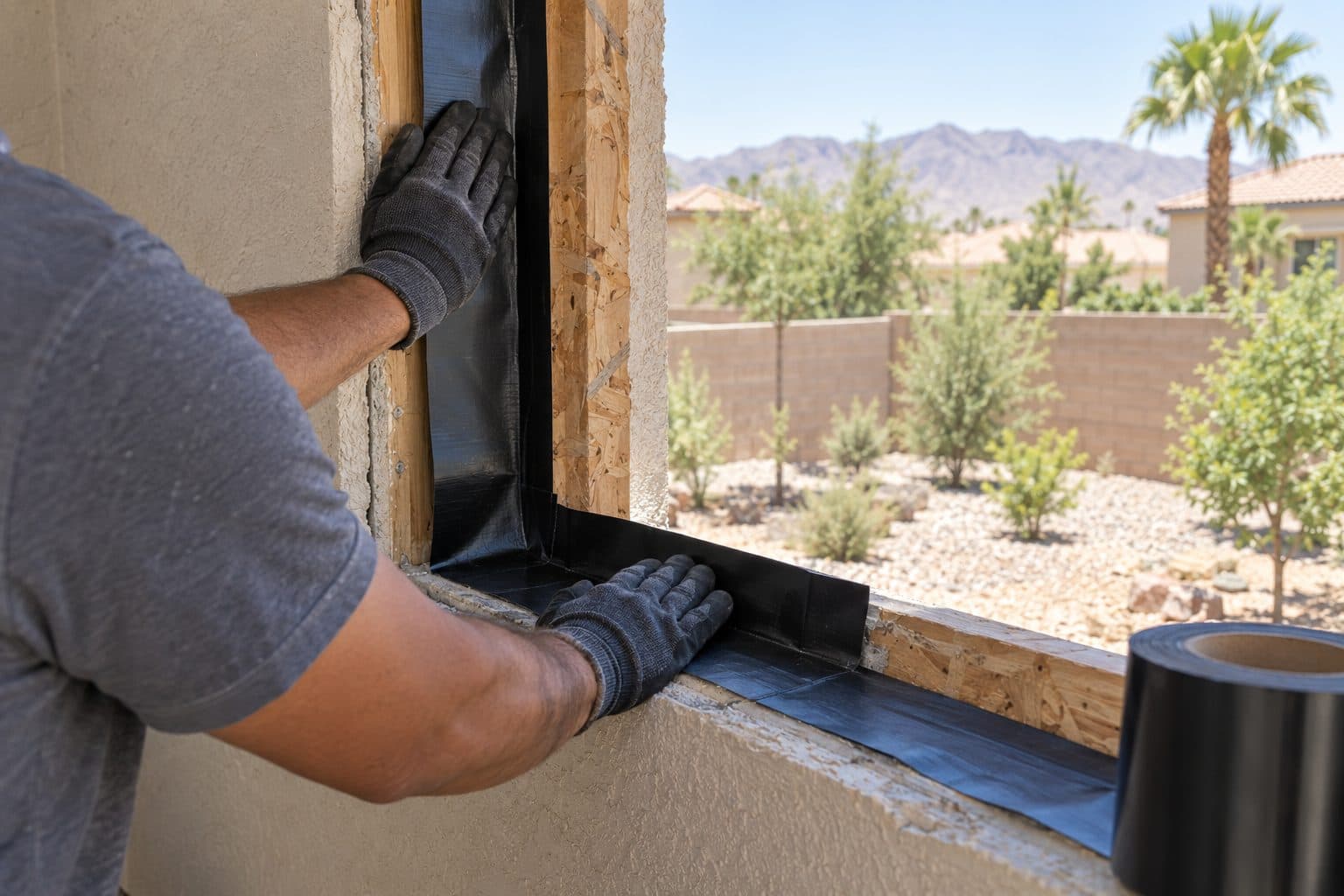
The product rating does not certify the quality of the installed perimeter. Air leakage around an opening and the condition of surrounding construction can affect comfort. Ask how the installation will address the existing assembly and how air sealing will integrate with water-management needs.
Designed drainage paths must remain functional. Sealing every visible opening is not a sound general instruction. The selected product’s installation details and the wall condition guide the work, especially where existing finishes limit access.
If there is staining, repeated moisture or damaged trim, disclose it before selecting an installation method. Those concerns may require investigation beyond the glass package. A replacement chosen for solar control should not conceal an unresolved opening problem.
Compare equal glass areas before comparing labels
A coefficient describes performance per a defined product basis; the amount of glazing still matters. A larger glazed opening can admit more total solar energy than a smaller one even when its SHGC is lower. Likewise, changing a window group can change the balance of opaque frame and glass.
For a same-size replacement, compare the documented assembly ratings and the resulting visible glass area. For an enlargement, revisit exposure and shading as part of the design. A better coefficient should not be used as proof that adding much more glass leaves the room's solar load unchanged.
Consider a hypothetical choice between two same-size products with similar thermal ratings. The room receives direct afternoon sun, but the owners want a useful view at other times. They can first compare solar-control glazing, then evaluate an adjustable shade for the direct-beam period. If the shade would remain closed all day because it is inconvenient to operate, its practical daylight tradeoff differs from a plan the household will actually use.
PNNL's attachment guidance explains that shades can address glare and solar gain and that operation matters. This supports considering glazing and shade together; it does not establish a bill-saving percentage for this home.
Build a performance brief for each exposure
| Room priority | Useful questions |
|---|---|
| Afternoon seating comfort | Where does direct sun land, and what SHGC is quoted? |
| A bright workspace | What daylight is preserved, and how will glare be managed? |
| A shaded interior | Will the proposed glass appearance and light transmission suit the room? |
| A large view opening | How do glass area, frame proportions and rated performance compare? |
| A room with drafts | Has product leakage been distinguished from the surrounding opening? |
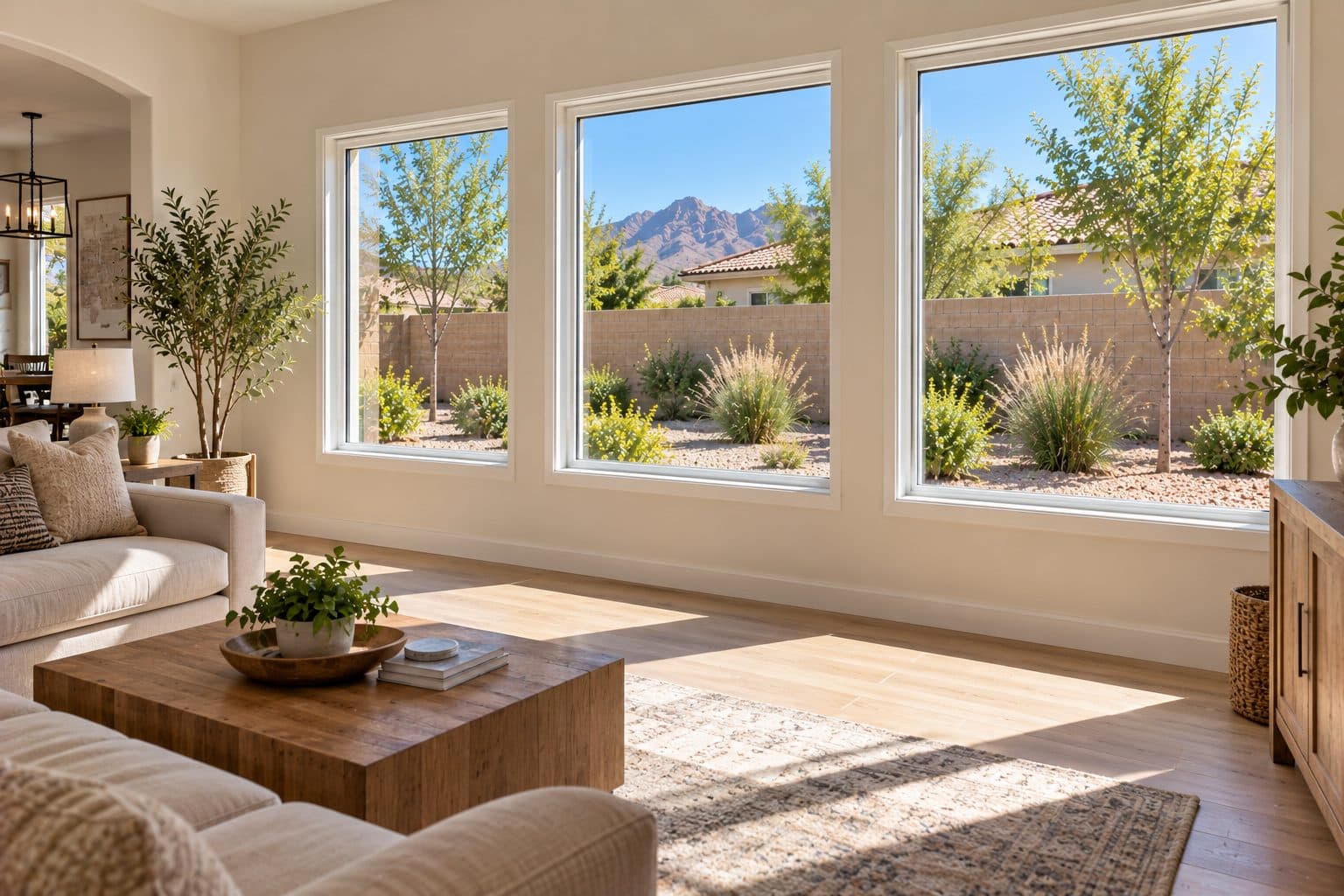
A hypothetical living room with intense afternoon sun may prioritize lower admitted solar heat while preserving a garden view. A shaded bedroom may prioritize usable daylight and easy operation. The point is a defensible room-by-room decision, not a single “desert window” label.
Bring your exposure notes and the rooms you want to improve to Agave Windows through the contact page. Ask for product options whose specifications can be connected to those priorities, with installation and finish work included in the discussion.
This guide supports
Energy-Efficient Windows →things people ask us
Frequently Asked Questions
Is the lowest SHGC always the best choice?
It can be valuable where reducing unwanted solar gain is the priority, but the final selection also involves daylight, appearance and the room’s exposure. Compare suitable products as complete assemblies. A lower number alone does not explain whether the chosen balance will make the room more useful to you.
Are triple-pane windows required for a hot climate?
Pane count does not establish the right answer for a particular opening. Compare the actual U-factor, SHGC, daylight transmission, size and price of the proposed packages, as our double-pane and triple-pane comparison explains. Decide whether the documented difference addresses your goal rather than assuming an additional pane is always necessary.
Will replacing my windows fix an upstairs room that is always hot?
Windows may contribute, particularly with strong sun exposure, but roof conditions, insulation, air distribution and other building factors can also matter. Describe when and where discomfort occurs. A broader assessment may be appropriate before expecting a window replacement to resolve the entire room condition.
Should every elevation use the same performance package?
Consistency can simplify appearance and ordering, while different exposures can justify different priorities. Compare the visual effect of any mixed glazing and document the selection for each opening. The decision should account for adjacent windows and how the home looks from both inside and outside.
Still have a question about your home?
Ask us directly. A quick description of the opening is enough.
keep going
Related Services and Guides
- Energy-Efficient Windows
Energy-efficient windows for Las Vegas homes: how U-factor, SHGC and sun exposure guide the right glass for each room. Request a window estimate.
- Read U-factor and SHGC ratings
U-factor and SHGC explained in plain terms: what each window energy rating measures, how to read an NFRC label, and which numbers to compare on a quote.
- Plan a west-facing room
West-facing windows take low afternoon sun that overhangs often miss. See how to plan glass, shading and glare control for a hot Las Vegas room.
- Compare double and triple panes
Double-pane vs triple-pane windows: what a third pane changes for insulation, sun heat, noise and weight, and how to tell if it is worth it for a room.
- Black frame finishes in heat
Thinking about black windows in Las Vegas heat? Learn how dark frame finishes handle sun exposure, what to ask about the finish, and how glass affects heat.
- Low-E Glass vs Window Tint
Low-E glass vs window tint: how a factory coating differs from film added later, when each makes sense, and what film cannot fix on double-pane windows.
- Can Replacement Windows Reduce Noise?
Can replacement windows reduce noise? Yes, within limits. Learn what STC and OITC ratings mean, how laminated glass helps, and where else sound gets in.
Sources referenced on this page
Independent references linked in the text above. A manufacturer source explains a product concept; it does not mean Agave Windows supplies that brand.
- DOE's window-selection guidance (energy.gov)
- PNNL's attachment guidance (basc.pnnl.gov)

ready when you are
Have a Question About Your Own Home?
A guide can explain the choice. Your openings decide the answer. Tell us what you are seeing and we will help you work out the next step.
- Photos can follow once we reply; no measurements needed
- A written scope before anything is ordered
- Licensed, insured, and bonded
Request an Estimate