


- 7 min read
- Updated
- Supports: Replacement Windows
Black Windows in Las Vegas Heat
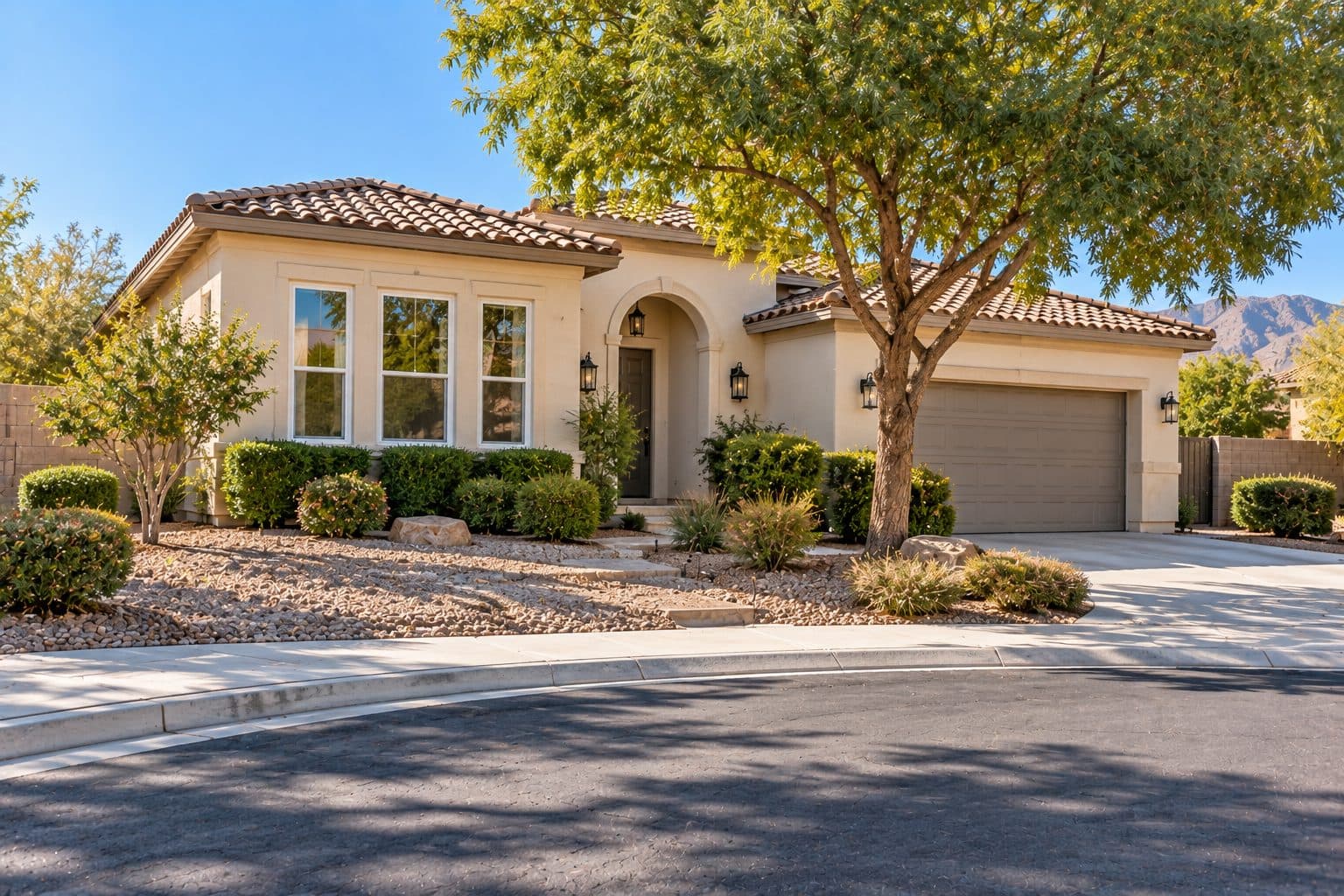
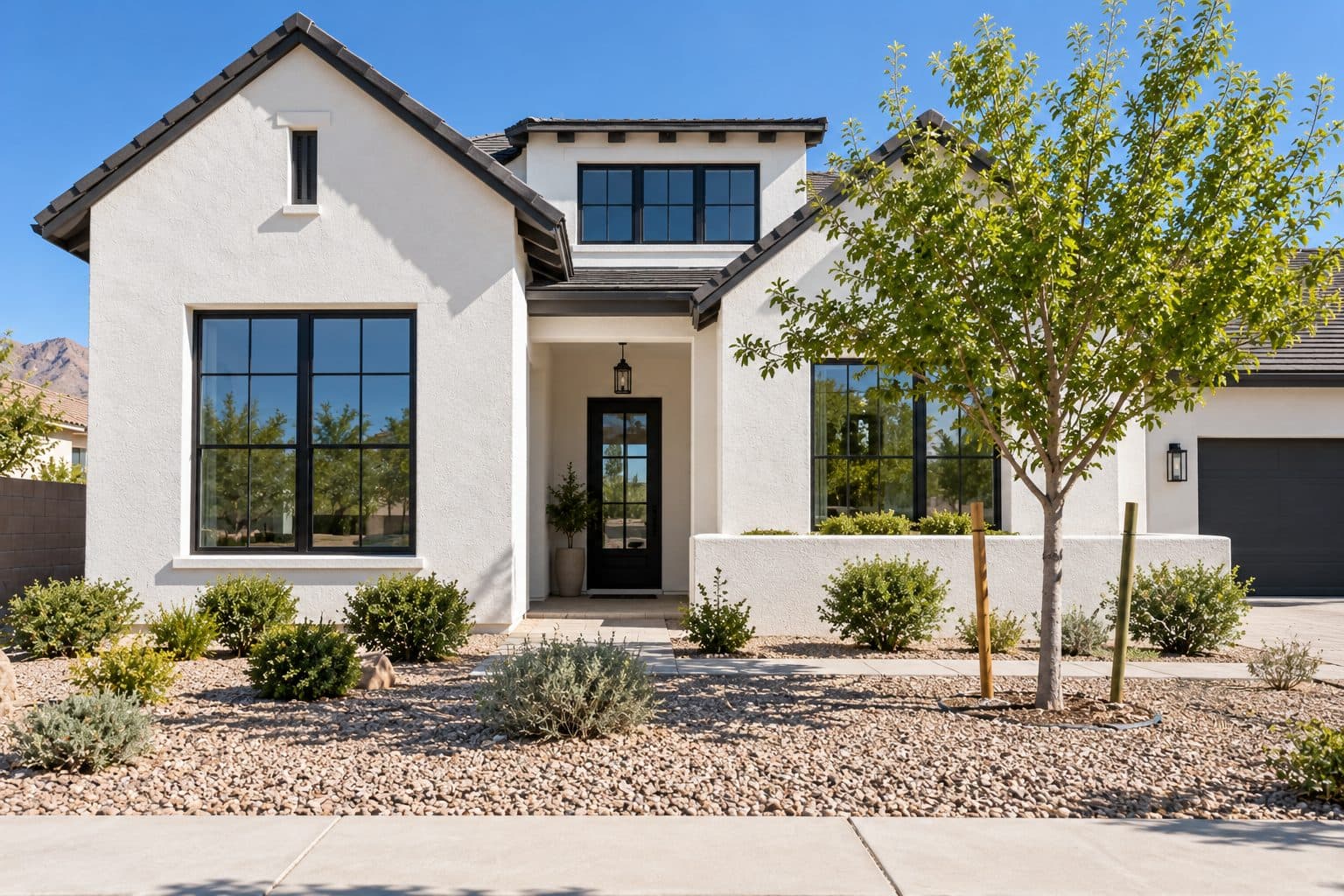
Black window frames can create a strong outline around the view and coordinate with a contemporary exterior. When you plan replacement windows for a sun-exposed Las Vegas opening, the selection should also include a careful look at the actual finish system, frame construction and manufacturer requirements.
The useful question is whether the exact black-finished product is designed and documented for your application. Factory options, frame materials and field-applied paint are different decisions. A color name alone cannot establish performance or durability.
The short version
Black window frames can work in Las Vegas when the exact frame and factory finish are made for strong sun exposure. Check the manufacturer's finish guidance and finish warranty; room heat depends mostly on the glass.
On this page
Identify what makes the frame black
The visible color describes appearance. The finish specification describes how that appearance is made and supported. A factory coating, capstock or laminated surface is not interchangeable with paint applied later to a completed window. The underlying material, preparation and manufacturer-approved combination matter alongside the color name.
Record three identities together: frame series, finish system and exact color code. A sample labeled only “black” leaves two of those unanswered. Even within one manufacturer, an option on one series is not proof of availability on another. Milgard's finish page, for example, describes its finish formulation and explicitly notes that options vary by product and location.
Distinguish factory finishes from repainting
An existing white frame repainted black has a different evidence trail from a window manufactured with an approved dark exterior. A paint can adhere well yet still be outside the window manufacturer's permitted alterations. Adhesion alone does not establish compatibility or continued product coverage.
As a concrete example of why the original instructions matter, Milgard's FAQ restricts painting its vinyl windows. That is a named manufacturer's position, not a rule establishing the terms for every window. Before repainting, identify the existing product and obtain its actual alteration and touch-up guidance. A painter's recommendation and a window manufacturer's approval answer different questions.
Why visible color is only part of the heat question
U-factor
How easily heat passes through the whole window. Lower keeps more heat out in summer and in during winter.
SHGC
Solar heat gain coefficient: how much of the sun's heat comes through. Lower means less heat from direct sun.
VT
Visible transmittance: how much daylight comes through. Higher means a brighter room.
A sunlit surface warms by absorbing solar energy. Its visible color tells you about the visible portion of that interaction, but sunlight also includes wavelengths you cannot see. Two finishes that look similarly dark can have different solar-reflectance behavior because their formulations differ.
Berkeley Lab's explanation of cool-colored surfaces demonstrates that principle using roofing pigments that reflect more near-infrared energy while remaining visually dark. The lesson for evaluating a window finish is limited but useful: appearance alone is insufficient evidence of its solar behavior. Roofing temperature examples are not temperature predictions for window frames.
A frame's solar exposure, material and construction still belong in the product-specific assessment. The room outcome also involves glazing and the complete assembly. A frame that feels warm to the touch does not reveal the window's SHGC or prove the finish has exceeded a permitted service condition.
Evaluate exposure and the evidence behind a heat claim
Separate three claims that are often blended together: the finish is approved for the product, the product is suitable for the proposed application, and the assembly has a particular energy rating. One document may not establish all three. A favorable NFRC label, for example, does not describe the finish's appearance after years of exposure.
Use the actual opening to define the application: direction, time in direct sun, existing cover, nearby reflective surfaces and whether surrounding work will change that exposure. A west opening beneath a cover and an uncovered west opening are not identical simply because both face the same direction. Our guide to west-facing windows in Las Vegas covers that exposure in more detail.
When a heat-resistance figure appears in a sales discussion, identify its meaning before comparing it:
| Claim offered | Evidence needed to interpret it |
|---|---|
| “Tested at this temperature” | What component was tested, for how long, under which conditions and with what acceptance criterion? |
| “Approved dark finish” | Which frame series, finish code and applications does the approval cover? |
| “Reflective coating” | What measurement is reported, and does it apply to this exact finish? |
| “Covered against fading” | Which document, definition, time period and remedy apply? |
A laboratory exposure temperature is not automatically the maximum permitted outdoor air temperature. A finish result also cannot prove the performance of an altered frame or a different coating. Avoid universal conclusions that all black windows fail in heat or that any material is immune to it. The useful decision is whether the identified system has applicable documentation and acceptable care and coverage terms.
Separate frame finish from glass performance
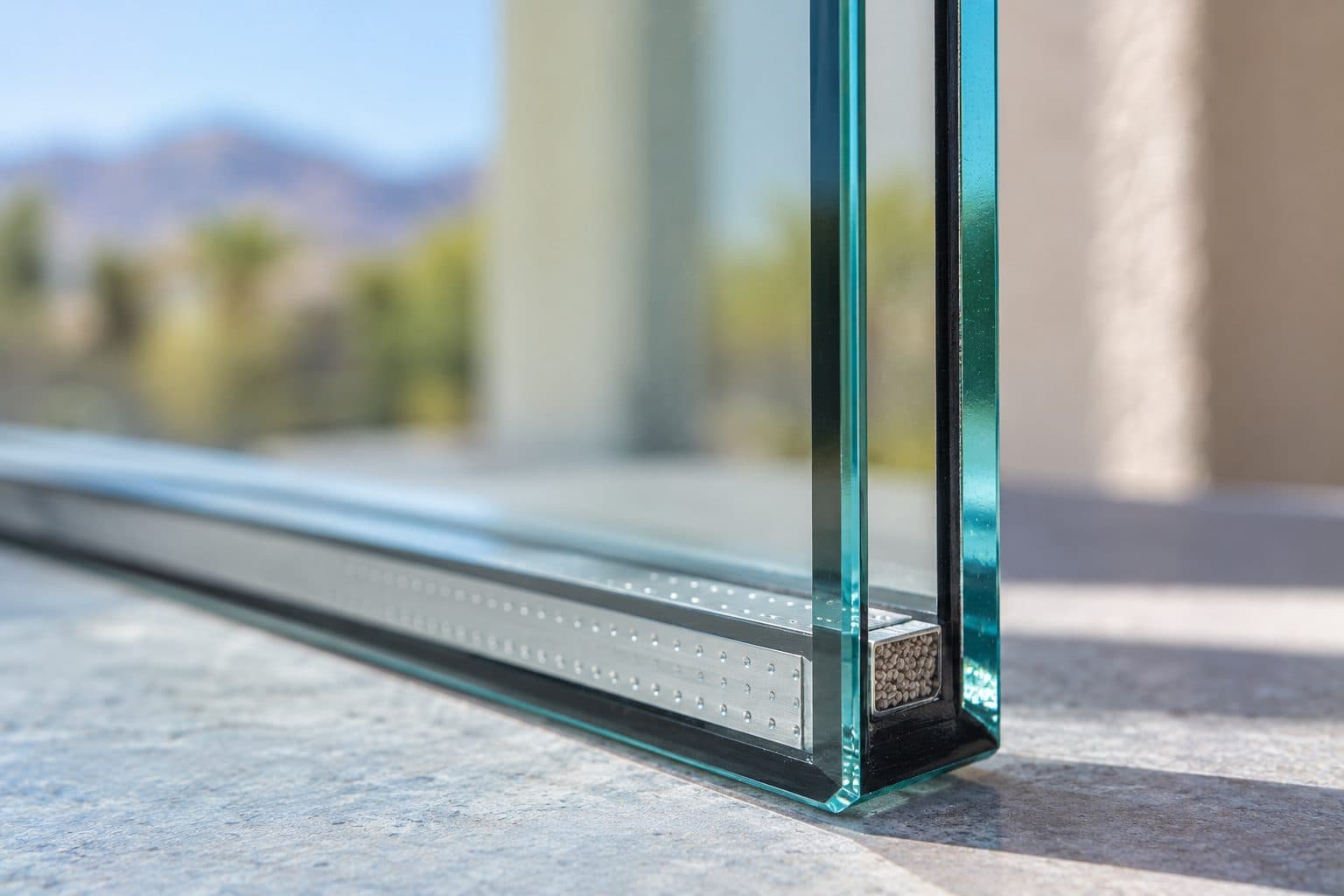
Black frames do not determine SHGC, and a light frame does not establish whole-window efficiency. Request the U-factor and solar heat gain coefficient for the actual assembly, including the selected glazing.
For a sunny room, glass solar control may be an important part of the comfort discussion. Compare visible transmittance too if you want to preserve daylight. These measurements answer different questions from the finish’s appearance and care.
A complete proposal should show both: the documented black finish option and the relevant window ratings. Do not accept a visual upgrade as evidence of reduced cooling demand, or assume a favorable energy label answers every finish-durability question.
how we install
The Part Behind the Glass

Measured before anything is ordered
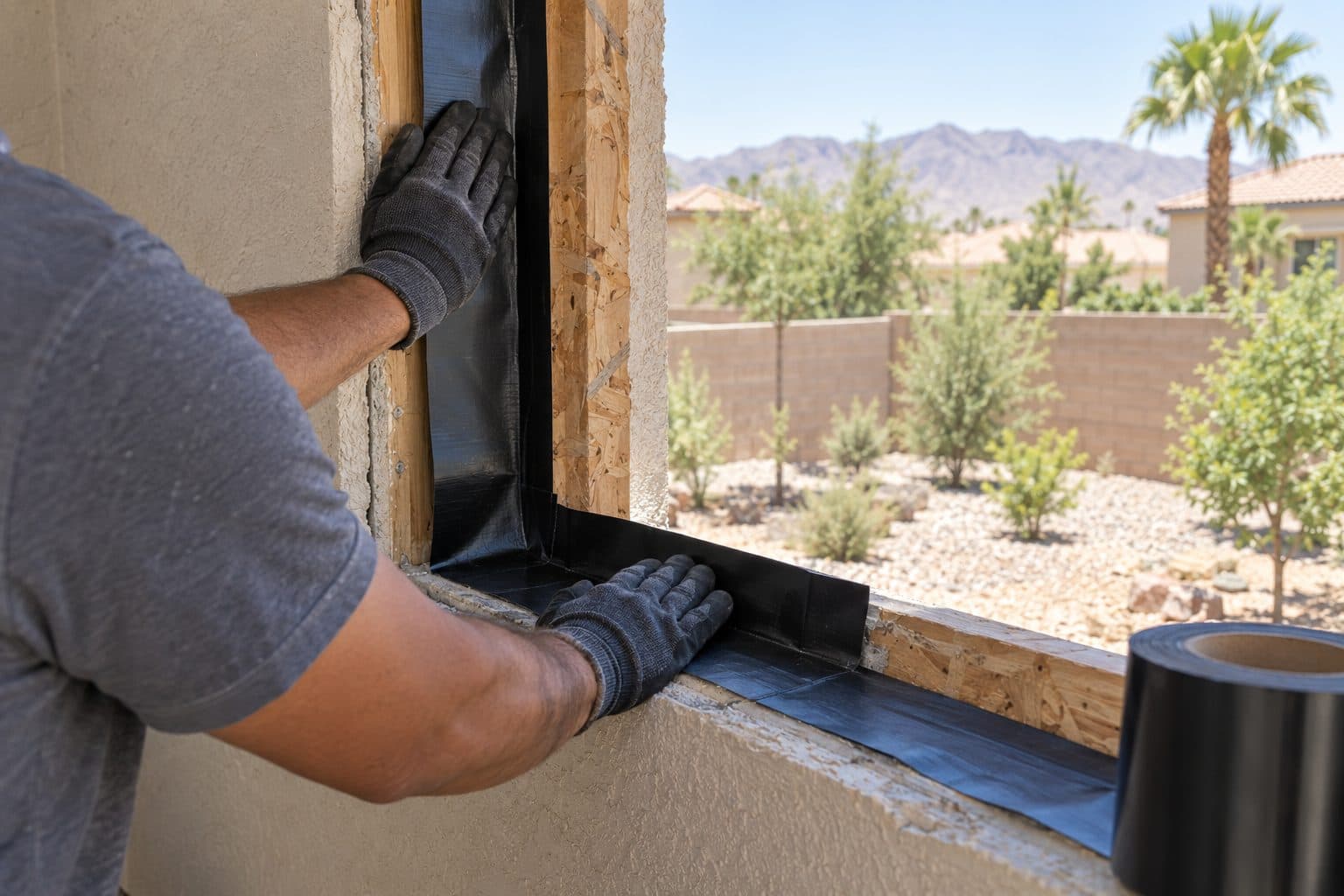
Flashed so water has a way out
Review the whole elevation in consistent light
Black frames can emphasize differences in size, division and visible profile. Compare meeting rails, fixed units and perimeter trim across the group, especially if some existing windows will remain. An exterior fin or trim piece can become visually prominent in a dark finish.
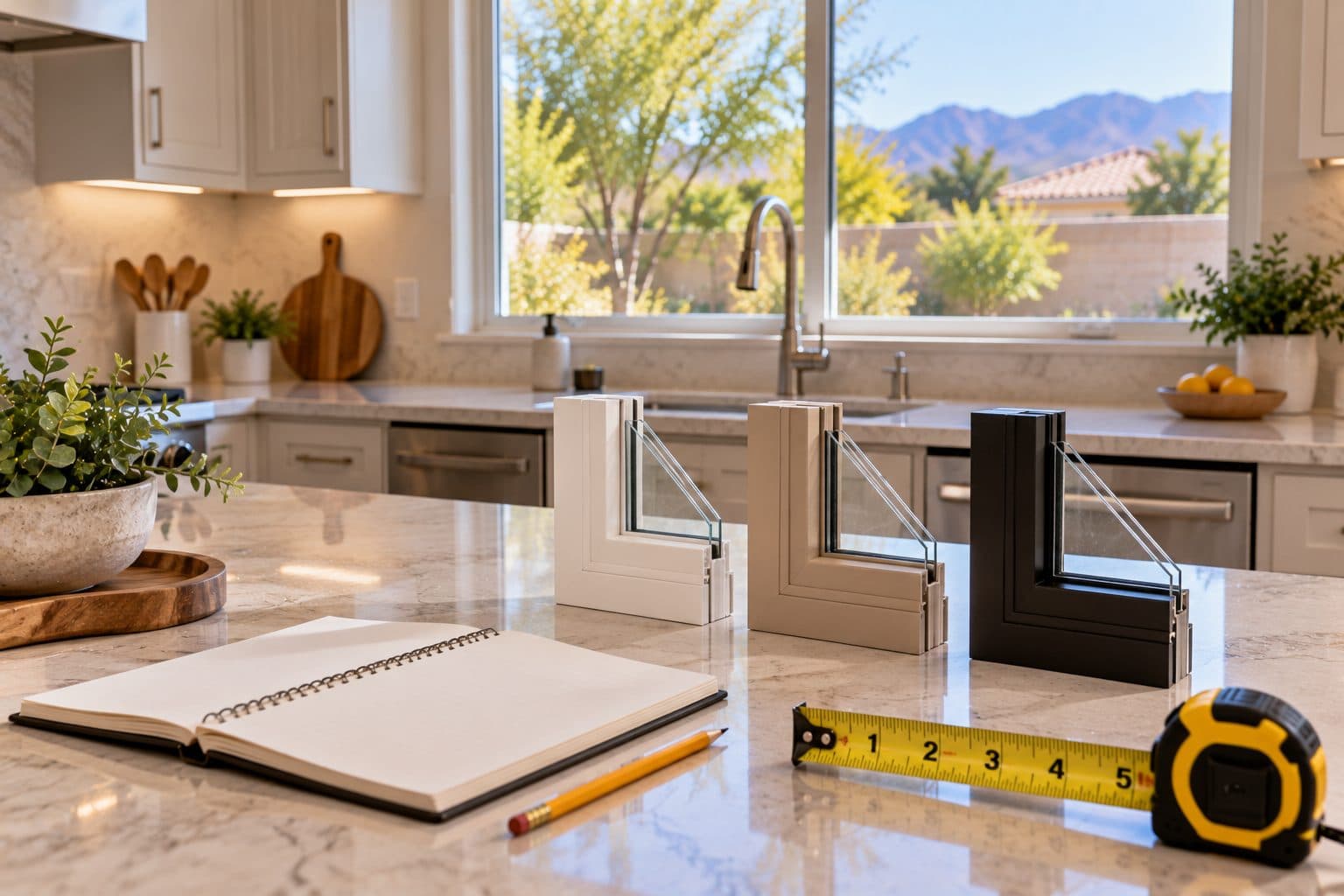
Use actual samples of the available window colors and finishes alongside the wall color, doors and other dark metalwork. Finishes called black or bronze can differ in undertone and sheen. Look in natural light rather than relying on separate photographs taken under different conditions.
Ask whether the interior and exterior colors can differ in the proposed series. A dark exterior with a lighter interior may support a different room design from black on both sides. Confirm matching screens, grids and hardware rather than assuming all accessories follow the frame color.
Read finish coverage separately from other coverage
A product warranty may distinguish the finish from glass, hardware or frame components. Ask which document applies to the chosen finish and what events it covers. General phrases such as lifetime warranty do not explain every component or remedy, which is why it helps to know how to read a window warranty.
Read the exclusions and care obligations. Clarify how surface changes, damage, cleaning methods and unauthorized alterations are addressed. Ask whether a covered finish remedy includes labor and related work or supplies only a replacement component.
Keep the written finish reference with the order. If a touch-up is needed later, the precise product and color information can matter. Do not assume a generic black paint is an approved repair method or a visual match.
Plan cleaning and inspection realistically
Dark surfaces can make some dust, water spots or surface marks easier to notice under particular lighting. Decide how the finish will be accessed for routine care, especially at upper-level openings or behind landscaping.
Follow the manufacturer’s cleaning instructions for both finish and glass. Abrasives, solvents and aggressive washing methods can have product-specific restrictions. Ask for approved maintenance information rather than accepting the phrase maintenance-free as a substitute for care guidance.
Keep designed drainage features and operating areas accessible. Decorative additions should not obstruct the window’s function. If a painter or exterior-cleaning service works nearby, give them the relevant product restrictions before the work starts.
Make the replacement scope part of the visual choice
Installation method can affect how much frame and perimeter trim remains visible. Ask for an opening drawing showing the black frame in its final position. A slim catalog profile may look different when combined with retained framing or exterior trim.
Discuss stucco patching and painting boundaries where relevant. A dark window can draw attention to the edge detail, so the finish scope deserves the same clarity as the product color. Coordinate any required association review with the exact proposed appearance.
For a hypothetical home with black patio doors already installed, the priority may be a close visual relationship rather than an identical color name. The homeowner should compare real samples and profiles, then choose an approved window finish that also meets the opening’s performance needs.
Put the answers into the order
Record the series, frame material, exact finish, interior/exterior color arrangement, glazing and ratings. Include any finish-specific instructions and agreed surrounding work. Resolve an unavailable color substitution before fabrication rather than treating two dark finishes as automatically equivalent.
Bring your preferred appearance and exposure concerns to Agave Windows when you request an estimate. A useful proposal makes the black-frame choice concrete: an identified product, a documented finish and a clear installation result.
This guide supports
Replacement Windows →things people ask us
Frequently Asked Questions
Can black vinyl windows be suitable in Las Vegas?
Suitability depends on the actual product, factory finish, application and manufacturer requirements. Do not infer it from the material and color names alone. Ask for the offered combination’s documentation and relevant exposure guidance, then compare whole-product ratings for the glazing and frame assembly.
Can I paint existing white windows black?
Check the original manufacturer’s instructions and warranty before planning it. Some manufacturers restrict painting vinyl or altering factory finishes. A field-applied dark coating is not equivalent to a factory-approved black product. Obtain product-specific guidance rather than relying on generic paint advice.
Will black frames make my rooms hotter?
Frame color alone does not establish the room outcome. Compare the actual whole-product U-factor and SHGC, along with exposure and shading. Ask separately about finish suitability and solar-control glazing. Avoid a temperature or energy-bill prediction based only on the exterior color.
Should exterior trim match the frame?
That is a design and scope decision. Review the actual perimeter drawing, wall color and retained windows. Matching trim can emphasize the opening differently from wall-colored trim. Confirm available materials, finish compatibility and any HOA approval requirements before making the final choice.
Still have a question about your home?
Ask us directly. A quick description of the opening is enough.
keep going
Related Services and Guides
- Replacement Windows
Replacement windows in Las Vegas, planned room by room. See how to choose glass, frames and installation method, and what a clear estimate should include.
- Available window colors and finishes
Window colors and frame finishes: how to pick interior and exterior colors, compare real samples at home, and coordinate with stucco, trim and roofing.
- West-facing room planning
West-facing windows take low afternoon sun that overhangs often miss. See how to plan glass, shading and glare control for a hot Las Vegas room.
- Window performance ratings
U-factor and SHGC explained in plain terms: what each window energy rating measures, how to read an NFRC label, and which numbers to compare on a quote.
- Stucco finish planning
Replacing windows in a stucco home: when stucco must be cut, how water is managed behind it, and what to expect from patching, texture and paint.
- HOA appearance review
How to get HOA approval for replacement windows and doors in Las Vegas: find the current guidelines, show colors and frames, and keep the written decision.
- Best Windows for Las Vegas Heat
The best windows for Las Vegas heat depend on sun exposure, glass coating and SHGC, not frame material alone. See what to compare room by room.
- Low-E Glass vs Window Tint
Low-E glass vs window tint: how a factory coating differs from film added later, when each makes sense, and what film cannot fix on double-pane windows.
- Can Replacement Windows Reduce Noise?
Can replacement windows reduce noise? Yes, within limits. Learn what STC and OITC ratings mean, how laminated glass helps, and where else sound gets in.
- Double-Pane vs Triple-Pane Windows
Double-pane vs triple-pane windows: what a third pane changes for insulation, sun heat, noise and weight, and how to tell if it is worth it for a room.
Sources referenced on this page
Independent references linked in the text above. A manufacturer source explains a product concept; it does not mean Agave Windows supplies that brand.
- Milgard's finish page (milgard.com)
- Milgard's FAQ (milgard.com)
- Berkeley Lab's explanation of cool-colored surfaces (heatisland.lbl.gov)

ready when you are
Have a Question About Your Own Home?
A guide can explain the choice. Your openings decide the answer. Tell us what you are seeing and we will help you work out the next step.
- Photos can follow once we reply; no measurements needed
- A written scope before anything is ordered
- Licensed, insured, and bonded
Request an Estimate