


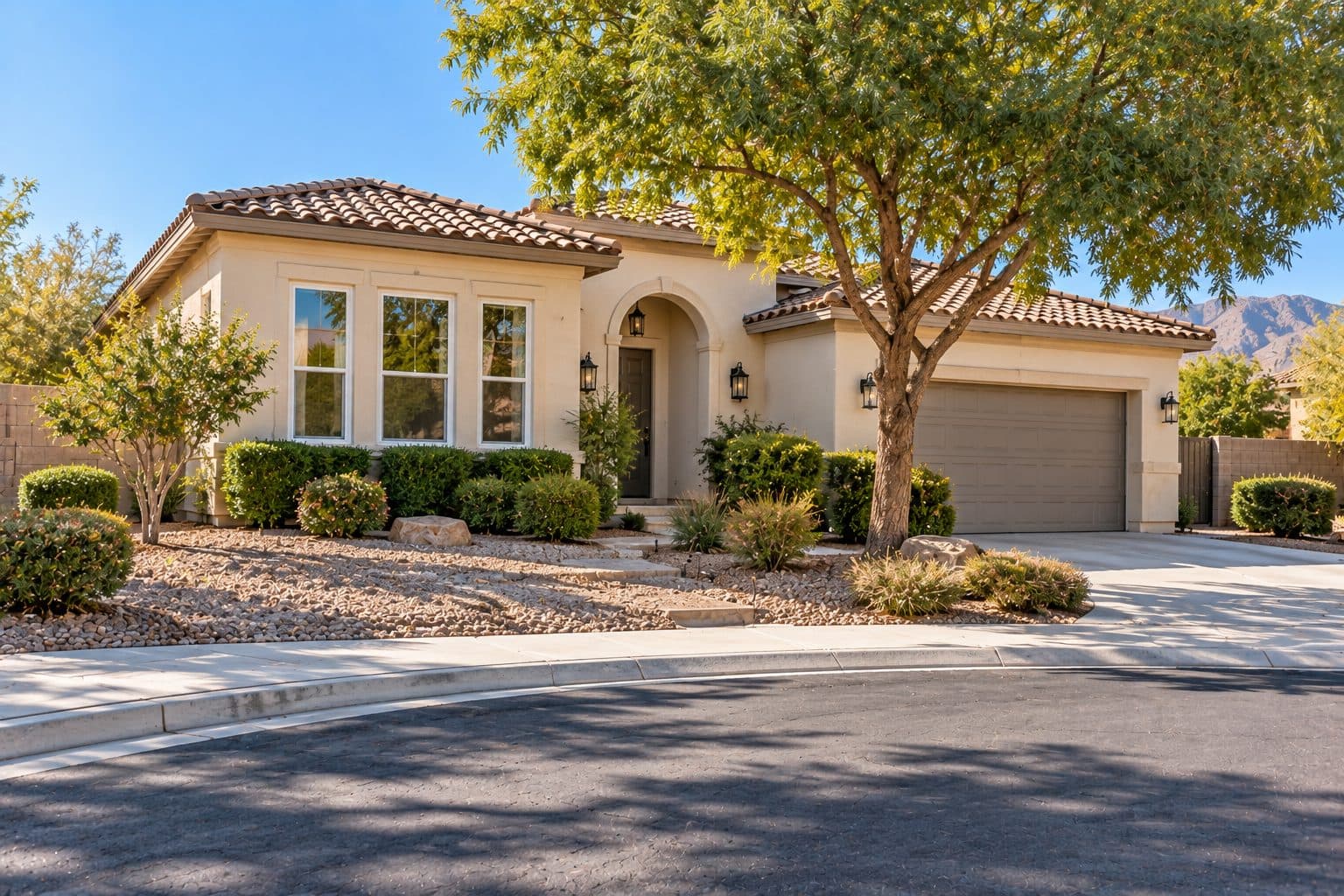
Steel Entry Doors in Las Vegas
A steel entry door can suit a homeowner who wants a defined panel design, a painted appearance, and a front entrance specified as a complete working system. Choosing it well means looking beyond the metal face to the frame, core, finish, glazing, and hardware that make up the assembly.
Agave Windows helps Las Vegas homeowners evaluate steel front-door options around the actual opening and the way the entrance is used. We start with your priorities and work toward a proposal that identifies the product and the installation responsibilities clearly. The entry door replacement page describes the wider project.
- Licensed, insured, bonded
- Written scope before ordering
- Las Vegas valley
The short version
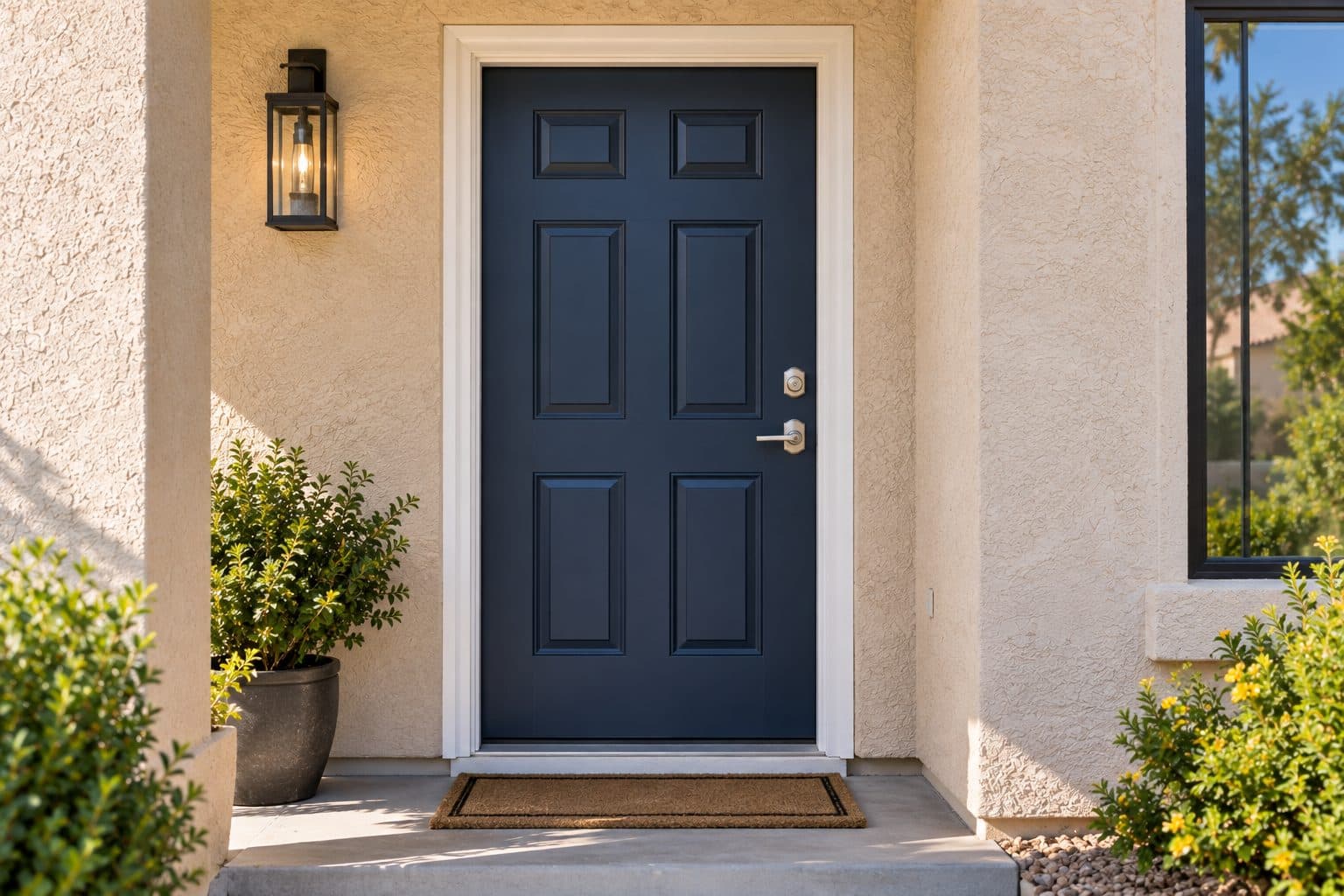
A steel entry door is a steel skin over an inner core, not a solid metal slab. Security depends on the lock, frame and installation as well as the door, and steel alone does not make it fire-rated.
01 of 13
Understand what steel describes
The term steel entry door generally identifies a material used in the leaf construction. It does not mean the entire entrance is a solid block of metal. Ask for the construction information for the proposed product, including its core, edges, frame, and prepared hardware locations.
Those details matter when comparing assemblies. Two doors with steel faces may differ in configuration, finish system, glazing, and available components. A material name alone is not a specification, an energy rating, or a statement of security performance. Our comparison of steel, fiberglass and wood doors covers the family-level differences.
Keep the intended application clear. This page concerns a residential front entrance. A commercial hollow-metal assembly, a fire-rated opening, and another specialized application have their own requirements. Do not assume that a residential steel door carries a particular rating because of its material or appearance.
how it works
Hinged door in a prehung frame
- 1
The slab hangs on hinges in its own frame with a sill and weatherstrip
- 2
Sidelites and transoms are separate glazed frames beside or above it
- 3
Handle, deadbolt and strike are set to the frame, not just the slab
Illustration of the operating principle, not a drawing of a specific product.

at a glance
Steel Entry Doors
A steel entry door is a steel skin over an inner core, not a solid metal slab. Security depends on the lock, frame and installation as well as the door, and steel alone does not make it fire-rated.
- Measured on site before ordering
- Written scope with product and finish details
- Installed, sealed and reviewed with you
02 of 13
Choose a painted appearance with realistic samples
Panel embossing, surface smoothness, color, and sheen shape the way a steel door looks. Review the design in relation to the porch, siding or stucco, and nearby windows. A simple panel layout can read differently on a narrow recessed entrance than on a wide, open facade.
View an actual finish sample where possible. Strong side lighting can reveal surface details that are less visible in a flat catalog photograph. If the project includes sidelights or a new frame, compare those finishes together so the full entrance has the intended visual relationship.
Ask whether the supplied door is factory finished or requires a site finish. A primed surface is not necessarily the finished exterior surface you have selected. The written scope should identify the coating condition at delivery and who completes any required preparation and final finish.
four steps, in order
How a Project Runs
- 1
Tell us about the project
Send your location, the approximate number of openings, and what you want to improve.
- 2
Review the openings and options
We discuss your priorities and assess the details that affect product selection and installation.
- 3
Define the work in writing
The proposal identifies the products and agreed installation scope so you can understand what the project includes.
- 4
Install and review the result
At completion, we review the installed products, operation, visible finish, and care information with you.

03 of 13
Distinguish finish damage from deformation of the leaf
A scratch in a coating and a dent in the steel face are different conditions. A surface repair may address exposed material without restoring a deformed panel. A deeper impact may also affect an edge, hardware or closing geometry. The assessment should identify the extent rather than treating every blemish as either harmless or a reason for complete replacement.
The finish protects the underlying surface as well as providing color. If damage exposes steel, follow the selected product's repair guidance promptly; an unrelated automotive or household touch-up product is not automatically compatible. Keep the coating system and sheen information, not only a color name.
Review likely contact points at the entrance. A door stop that concentrates force at one spot, a bicycle stored behind the leaf or a handle striking a wall can create avoidable damage. A compatible stop and clear operating path should manage the movement without compromising seals, hardware or the assembly.
Maintenance is not identical across the entrance. The slab coating, frame finish, hinges, threshold and lock can have different instructions. Therma-Tru's care and finishing guidance illustrates the importance of using the selected system's requirements. Decide who completes any required site finish before treating a primed delivery as a finished front door.
04 of 13
Compare insulation at the assembly level
A steel-faced door can include an insulated core, but the core is only part of a complete entrance. Glass, frame, seals, and configuration also affect documented thermal performance. Ask for whole-product ratings associated with the actual assembly being quoted.
For glazed options, solar heat gain coefficient and U-factor answer different questions. The former describes solar heat admitted; the latter describes heat transfer. Review them alongside the amount of daylight, exposure, and existing shade at the front entrance.
Avoid using the feel of the exposed metal surface as a complete energy assessment. Likewise, do not assume a solid-looking door and a heavily glazed version have identical performance. Compare the proposed specifications consistently and ask what changes when you choose a different glass area or sidelight arrangement.
how we install
The Part Behind the Glass

Measured before anything is ordered

Hung, aligned and latched
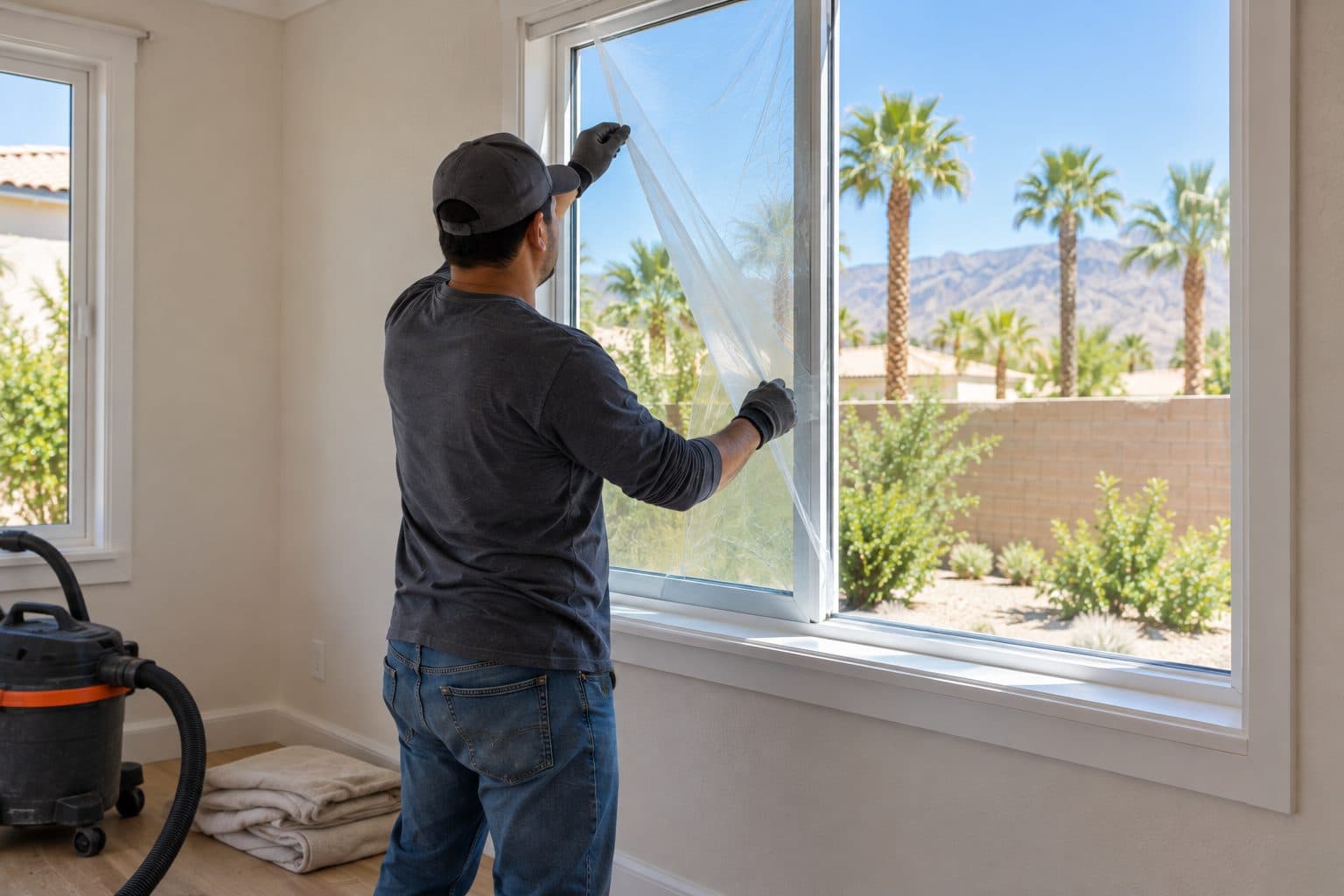
Cleaned up and reviewed with you
05 of 13
Select glass without losing the purpose of the door
If the goal is a brighter foyer, decide how much glazing is useful and where it should be located. A small upper lite, a larger central insert, and a sidelight create different sightlines. Consider the view from the public approach as carefully as the view from inside.
Review actual privacy samples. Textures and decorative patterns can obscure detail without eliminating all visibility. The result can change when indoor lights are on after dark. Ask which parts of a pattern are clearer and whether an additional covering is compatible with the design.
The glazing must be suitable for the selected assembly and application. Safety glazing documentation is separate from security or forced-entry evidence. A glass designation should be stated accurately rather than turned into a broad promise that the entrance cannot be broken or entered. The glass entry doors page covers glazing choices in depth.
06 of 13
Prepare for the chosen hardware
Steel-door hardware preparation should be established before the order is finalized. Identify the lock, handle, hinge arrangement, and any electronic access device, starting from the door hardware options in the design center. Provide model information if reusing existing hardware is important, because fit cannot be established from a photograph alone.
Changes after manufacture may require product-specific review. A different lock location, additional opening, viewer, or mail slot can affect construction and coverage. Ask before cutting or drilling rather than assuming a metal face can accept any accessory without consequence.
Also evaluate the operating motion. A handle should be easy to grasp and the locking sequence clear to regular users. For a paired entrance, learn how the secondary leaf is secured. The hardware must fit the way the household enters and exits as well as the visual style of the door.
07 of 13
Assess security through the complete entrance
Steel is not a substitute for evidence about a specific assembly. Locks, strike support, frame connections, glass, and correct installation all belong in a security discussion. Ask for documentation if a tested performance claim is important to the purchase.
The installation should allow the door to close and latch as intended without lifting, slamming, or unusual force. A latch that only appears to engage deserves assessment. Adding devices to an ill-fitting entrance does not resolve the underlying condition.
Review safe exit operation whenever supplemental hardware is proposed. A front entrance needs a usable everyday locking arrangement, with applicable project requirements considered. The objective is a coherent system that the household understands, rather than a collection of unrelated devices.
08 of 13
Read steel construction without using weight as a rating
A residential steel-faced door generally combines a skin with internal construction rather than being a solid metal plate. Ask what the proposal means by steel: skin, core, edge construction and reinforcement should be identified. The frame may use another material and needs its own specification.
Heft is not a dependable substitute for documented performance. A heavier-looking leaf does not tell you how its lock receiver is supported, what glass is used or how the frame attaches to the building. Likewise, a surface that feels warm in sun is not a whole-door U-factor measurement.
If a supplier emphasizes a gauge, core or reinforcement feature, ask what practical requirement it satisfies in the actual unit. The useful evidence connects construction to a named function or tested configuration. It should not end at a material adjective or a demonstration on a different assembly.
09 of 13
Separate four different claims before approving the product
| Claim | What evidence should address | What it does not establish by itself |
|---|---|---|
| Insulated construction | Documented core and complete thermal data | The performance of every glazed configuration |
| Safety glazing | Applicable impact-safety documentation for the glass | Forced-entry resistance of the entrance |
| Security performance | The relevant tested assembly and installation conditions | Compliance with a fire-rated opening requirement |
| Fire rating, if required | Identified rated assembly and application documentation | A property of all doors made with steel |
These categories can coexist, but none substitutes for another. For example, the federal architectural-glazing standard addresses safety requirements for glazing in doors and other listed products. It is not evidence that an attractive glazed steel front door resists a burglary attempt or is approved for a rated separation.
For an ordinary front-entry project, only make the claims relevant to the actual requirement. If the opening has a special requirement, identify it before selection. Adding a rating word after ordering cannot change the construction already supplied.
10 of 13
Evaluate the receiver side of the lock
A lock's moving component must engage its intended receiver in a supported frame. That is why steel at the leaf face does not settle the security conversation. Hardware preparation, receiver support and the connection to the surrounding opening need to work together.
During selection, confirm the normal release from inside and any outside keyed access. If supplemental hardware is proposed, check compatibility and applicable exit requirements. A device that adds an unfamiliar step or prevents ordinary release may create a new problem while appearing to add protection.
At completion, close and lock the door through normal operation. Unusual lifting, pressing or slamming should prompt an explanation and assessment rather than being taught as the permanent technique. The objective is an assembly whose intended hardware can engage consistently, not a collection of strong-looking components.
11 of 13
Compare a painted steel option on equal scope
To compare it with another product, such as a fiberglass entry door, hold the opening, glazing, hardware and finish responsibilities steady. A factory-finished steel assembly and an unfinished alternative do not describe the same completed work. Include frame finish, touch-up obligations and any surrounding restoration in the comparison.
If retaining an old frame lowers the quoted total, identify the compatibility and condition assessment behind that choice. If replacing the frame improves the documented fit, state what changes. This makes the price discussion about the actual entrance rather than an assumption that steel always represents one cost or performance level. The entry door replacement cost guide explains the main budget factors.
12 of 13
Decide whether to replace the leaf or the assembly
Keeping the existing frame requires a compatible leaf and a frame worth retaining. Dimensions, hinge locations, latch preparation, seals, alignment, and threshold condition need assessment. A new leaf alone will not establish that the surrounding opening is sound.
A complete assembly replacement includes different work at the wall and finishes. Ask how the old frame will be removed and how the new one meets the exterior and interior. The scope should address the sill support and water-management details appropriate to the selected product.
If the entrance has staining, deteriorated trim, or a history of water at the floor, describe it before estimating. Investigation may be needed to distinguish a door component issue from a surrounding-wall problem. Unexpected concealed conditions should have a defined review and approval process.
13 of 13
Review the proposal as a finished entrance
The proposal should identify the door construction, panel design, size, swing, frame, finish, glass, hardware, threshold, and seals. Include sidelights or transom work where applicable. Make sure the written selection matches any drawings and samples you approved.
Finish restoration deserves its own attention. Interior casing, exterior trim, stucco, paint, flooring, and nearby fixtures may be affected. Confirm which items are included and which require another trade. If the opening changes size, separately establish construction, structural review, and approval responsibilities.
At handoff, operate the entrance yourself and retain the product and finish information. Ask how to care for surfaces and components and where to direct future questions. Request a steel door estimate and share your current entrance photographs and priorities to begin a steel-door selection grounded in the whole project.
things people ask us
Frequently Asked Questions
Is a steel entry door automatically a fire-rated door?
No. A fire rating belongs to a documented assembly and application, not to the word steel alone. If a project requires a rated opening, tell the provider before selection and request the appropriate documentation. A residential front-door description should not be used to infer compliance for a garage separation, commercial opening, or other specialized condition.
Can a steel front door include insulated glass?
Available glazed configurations depend on the product. Ask for the exact insert, safety glazing information, and whole-assembly performance documentation. The amount and type of glass can change appearance, privacy, and thermal characteristics. Compare the complete quoted design rather than assuming every steel door uses the same glass or carries the same ratings.
What happens if the painted surface is scratched?
Follow the selected product care instructions and have the extent of damage assessed when necessary. Finish damage and deeper leaf damage are different issues. Keep the finish identification so an appropriate repair can be discussed. Avoid using abrasive tools or an unrelated coating on the assumption that any metal touch-up method is suitable for the door.
Does steel mean I can reuse any existing lock?
No. Lock preparation, dimensions, and assembly requirements determine compatibility. Provide the exact existing lock model before ordering and ask whether it can be reused with the proposed door. A change in hardware may require different preparation. Confirm who installs and demonstrates the hardware and how any electronic features are handled.
Still have a question about your home?
Ask us directly. A quick description of the opening is enough.
keep going
Related Pages
- Plan the front door replacement
Front door replacement in Las Vegas: decide between a new door slab or a full frame, pick glass and hardware, and know what to check when it is installed.
- Compare steel, fiberglass and wood
Fiberglass vs steel vs wood entry doors: how the three materials compare on looks, upkeep, sun exposure and security, and how to choose for your entrance.
- Explore fiberglass entry doors
Fiberglass entry doors in Las Vegas come in smooth or wood-look textures. Compare finish, glass, insulation and hardware options for your front door.
- Review door hardware options
Door hardware options for entry, sliding, folding and multi-slide doors: handles, locks, finishes and smart locks, and how to confirm they fit your door.
- Plan the entry replacement budget
What drives front door replacement cost in Las Vegas: slab or full framed unit, material, sidelights, hardware and finish work. See what to compare.
Sources referenced on this page
Independent references linked in the text above. A manufacturer source explains a product concept; it does not mean Agave Windows supplies that brand.
- Therma-Tru's care and finishing guidance (thermatru.com)
- Federal architectural-glazing standard (ecfr.gov)

ready when you are
Request a Steel Entry Door Estimate
Tell us your location, the approximate number of openings, and what matters most to you. You do not need to arrive with a product already selected.
- Photos can follow once we reply; no measurements needed
- A written scope before anything is ordered
- Licensed, insured, and bonded
Request an Estimate