




- 7 min read
- Updated
- Supports: Replacement Windows
Signs Your Windows Need an Assessment
A window does not need to be new to do its job well. Age can be useful background, but operation, condition and how the opening serves your home are more useful starting points. A sticking sash, cloudy glass and a hot seat beside a window can point to different decisions.
Use the signs below to organize an assessment. Some concerns may lead to a component repair, others to glass replacement, and others to a complete plan built from our replacement window options. The first task is to describe the symptom accurately enough that the proposed solution addresses it.
The short version
Common signs include fog between the panes, windows that stick or will not lock, drafts, and stains or damaged trim nearby. Age alone is not a reason, and some problems need only a repair or new glass.
On this page
First separate an immediate problem from a planning concern
Broken or unstable glass, a loose assembly or a window that cannot close securely deserves prompt attention. Keep people away from damaged areas and arrange appropriate professional help. Do not force a damaged sash or attempt to stabilize glass by leaning objects against it.
A room that feels uncomfortable on sunny afternoons is also worth investigating, but it calls for a different conversation. Record when the discomfort occurs and whether glare, warmth near the glass or moving air is the main issue. That evidence is more useful than a general statement that the windows are bad.
Record active water separately
If water is actively entering, document its location and protect nearby belongings where you can do so safely. Have the source assessed. The visible wet area is not always where water first entered the building.
Notice changes in opening, closing and locking
A window that formerly moved smoothly but now binds may have an operating or alignment problem. Dirt, hardware, seals, the sash and the surrounding opening are possible areas to inspect. Difficulty moving a window does not establish which of those is responsible.
Describe the point where resistance occurs. Does the sash catch at the beginning, stop partway or reach the closed position without locking? Does the concern affect one unit or a group? Avoid repeated force; the way the movement changes is useful diagnostic information.
Ask whether the affected component can be identified and replaced, and whether the rest of the assembly remains suitable. Where several components or the frame have deteriorated, a broader replacement assessment may make sense. The condition should explain the scope.
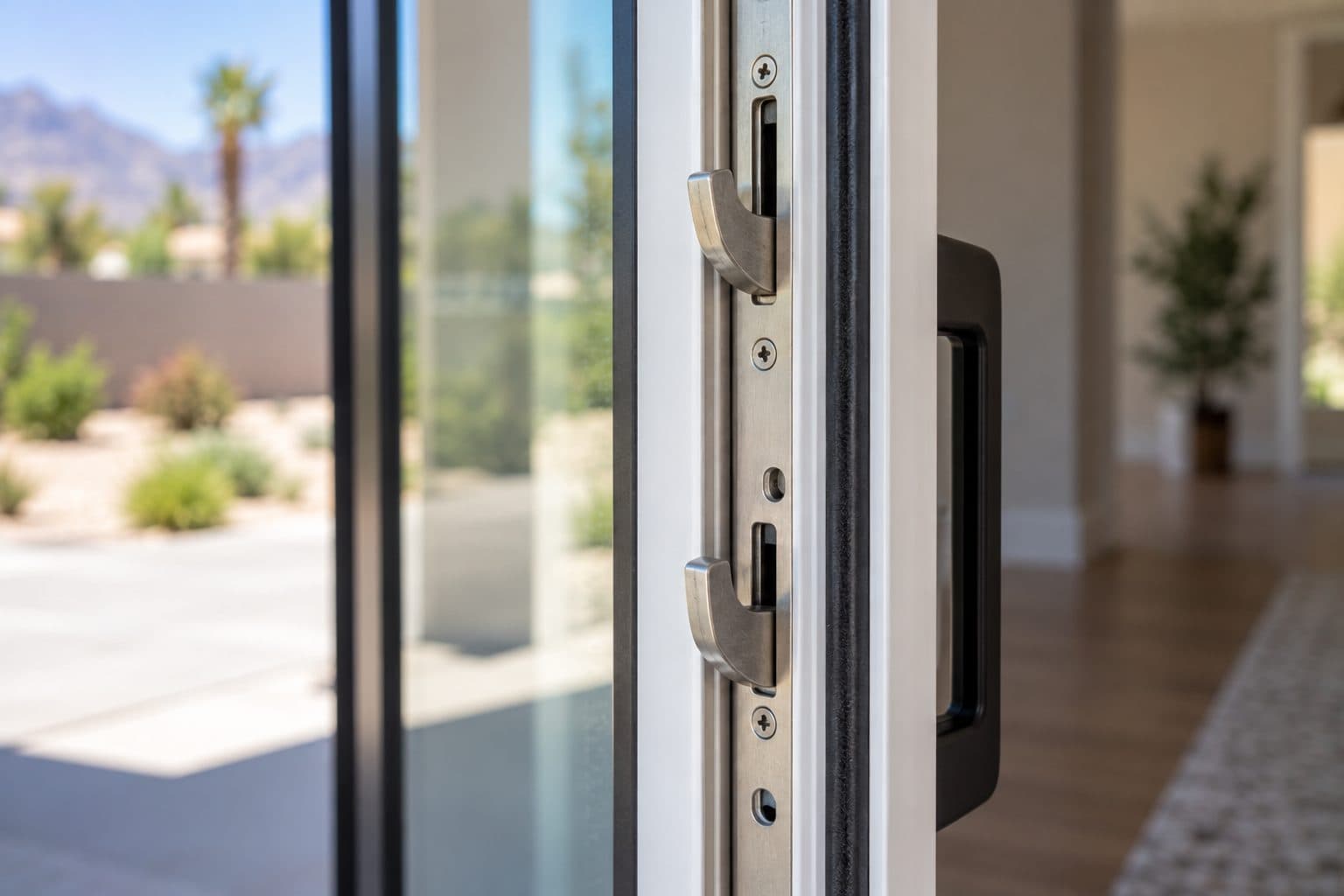
Locate cloudy glass before deciding what it means
Moisture on the roomside surface, dew outside and fog trapped between panes are different observations, and our guide to locating window condensation explains each. Wipe an accessible surface gently to see whether the moisture clears; do not climb or reach outside to prove the location.
Persistent moisture inside a sealed insulating-glass unit commonly points to a seal problem. That finding does not automatically mean the entire frame needs replacement, as our guide to fog between double panes explains. Product identity, glass availability and the condition of the retained assembly help determine the options.
A hazy view can also be difficult to distinguish from surface deposits or a coating issue. Photograph the window in more than one lighting condition and explain whether the haze changes during the day. A useful evaluation should separate appearance from moisture location.
Give drafts and room discomfort their own description
Feeling cool or warm near glass is not the same as confirming air leakage. Heat transfer through the window can create discomfort even without an obvious gap. Air may also enter at the sash joints or around the frame-to-wall connection. Our guide to drafty window causes and fixes goes further.
Note whether the sensation changes with wind and where it seems strongest. Describe any visible damaged weatherstripping, loose trim or incomplete closure without covering the area before it can be examined. Do not use an open flame to look for leaks.
For a sunny room, record window direction, shading and the hours when direct sun reaches occupied areas. Solar-control glazing may be relevant (see windows suited to Las Vegas heat), but the room can also be affected by shading, other walls and cooling-system conditions. A window recommendation should fit that broader picture.
how we install
The Part Behind the Glass

Measured before anything is ordered
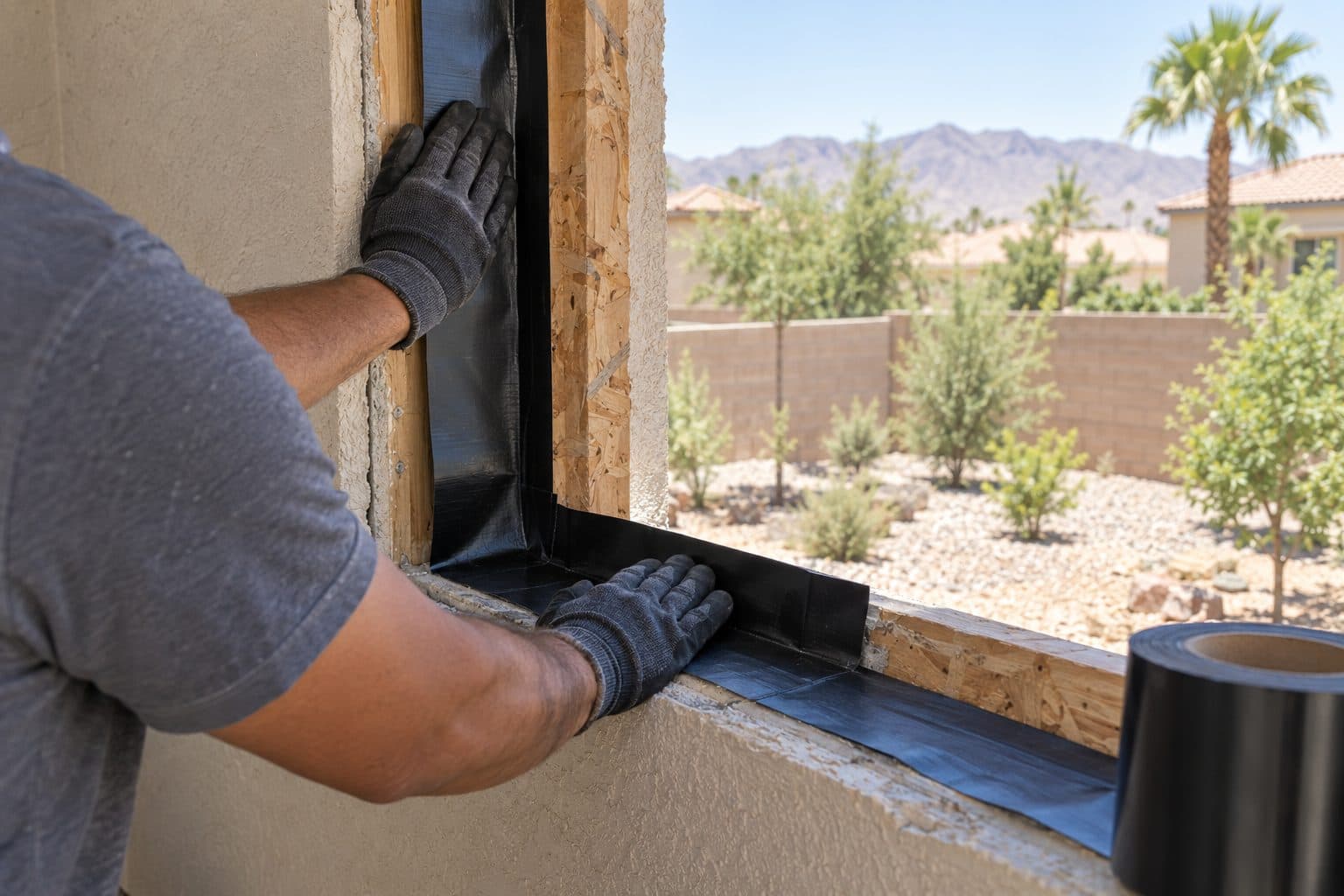
Flashed so water has a way out
Read stains and finish damage as clues
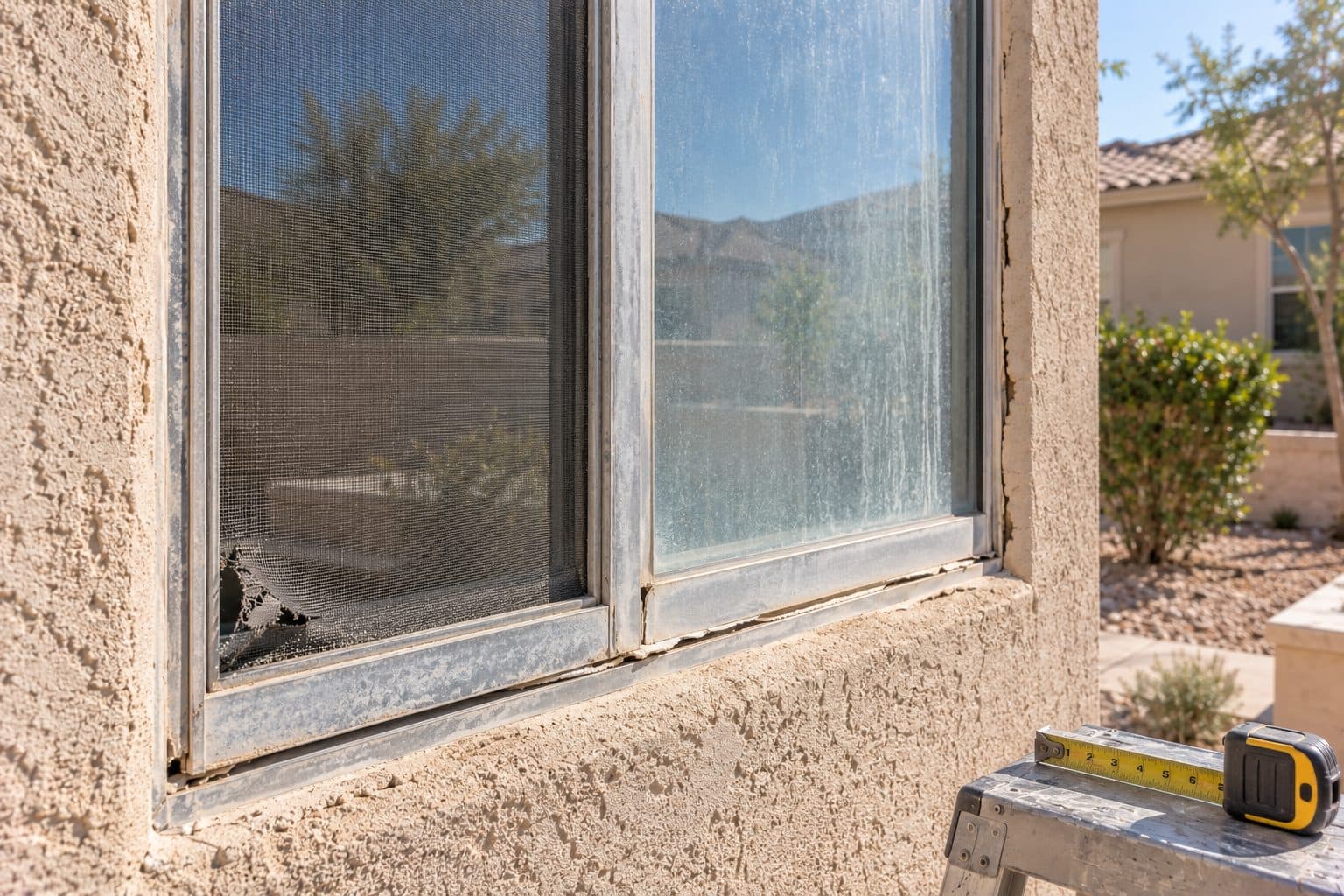
Staining, peeling finishes and swollen trim near a window warrant attention. They can help identify a moisture history, but they do not prove the window itself is the source. Include exterior observations and any connection with rain, irrigation or interior humidity.
If the surrounding wall has been patched before, mention it. An evaluator may need to understand that repair to judge the present condition. Covering the evidence with another finish coat before the source is addressed can make the problem harder to follow.
Ask what can be seen without removal and what remains concealed. A responsible scope can acknowledge those limits while explaining the next assessment step and how any newly discovered work would be approved.
Avoid treating correlation as a diagnosis
A higher bill, a colder week or a recent change in room use can make a window concern more noticeable without proving a new defect. Utility costs also change with rates and household demand. A symptom that appears during wind suggests a different investigation from one that tracks direct sun, but either observation needs confirmation.
Similarly, a stain below a window establishes where moisture became visible, not necessarily where it entered. Repeatedly painting it or replacing the nearest component can obscure useful evidence. Preserve a simple dated record and investigate the path before selecting a remedy.
The goal is proportionate evidence. You do not need a laboratory investigation for every cosmetic issue, but an expensive replacement recommendation should have a clearer basis than age, a bill change or one photograph.
Decide whether the window still fits the room
Replacement can be a design decision even when a window is operable. You may want a clearer view, a different operating style or coordinated exterior appearance. Those goals are valid, but they should be distinguished from claims that the existing window has failed.
Changing style or opening size can introduce additional requirements. Ask how the new configuration affects usable opening space, access, furnishings and any applicable safety or approval considerations. Do not choose solely from a photograph of a different home.
A hypothetical homeowner with one fogged bedroom window and otherwise sound matching units may first investigate a compatible glass solution, weighing glass versus whole-window replacement. Another homeowner with difficult operation throughout the house and a planned exterior renovation may find a coordinated replacement proposal more useful. Neither result follows from age alone.
Sort by consequence and confidence
Use two separate judgments: how consequential the condition is, and how confidently you know its cause. An unstable pane can require prompt attention even when its cause is unknown. A cosmetic mark can be well understood yet remain a low-priority improvement.
| Observation | Useful priority | What evidence would narrow the next step? |
|---|---|---|
| Broken/unstable glass or unsecured opening | Arrange appropriate help and limit use | Safe whole-opening photo and description of current condition |
| Active or recurring water | Investigate source before covering damage | Date, weather/irrigation conditions and where water first appeared |
| Sash movement or lock failure | Assess the affected operating assembly | Point of resistance, affected panel and previous repairs |
| Persistent between-pane haze | Verify glazing condition and component options | Safe moisture-location check and product identity |
| Heat, glare or appearance concern | Plan around use and preferences | Time pattern, sunlight, shade and desired result |
Do not turn this into a numerical condition score. Different consequences cannot be averaged meaningfully, and the table is not a remote diagnosis. It helps you communicate why one opening needs attention before another.
Test a recommendation against the finding
A useful recommendation can complete this sentence: “The proposed work addresses this observed condition by changing these components; these other concerns remain outside the work.” If the explanation jumps from a symptom to whole-house replacement, ask what additional findings support that larger scope.
Imagine three matching windows. One has persistent between-pane moisture, one binds near the end of travel and one works normally but looks dated. Their appearance does not make the symptoms equivalent. The first needs a glazing assessment, the second an operating-system assessment, and the third is a design choice. A coordinated replacement could still be chosen, but it would combine different reasons rather than prove all three had failed.
Create a list with room names, observations, priorities and photos. Add product labels and previous repairs. Record what can be established during the first assessment and what requires further investigation. This allows the proposal to be specific without pretending concealed conditions are already known. Bring the list when you request an estimate.
This guide supports
Replacement Windows →things people ask us
Frequently Asked Questions
Is there a fixed age when windows must be replaced?
Age alone does not establish condition or suitability. Look at operation, glazing, frame condition, moisture history and whether the window meets your needs. Product availability and prior care also influence repair options. An assessment should explain why a particular scope is appropriate for the actual opening.
Are higher energy bills proof that windows have failed?
No. Bills reflect weather, usage, rates and many building conditions. Window performance can contribute to comfort and energy demand, but a bill change is not a diagnosis. Identify room-specific concerns and compare documented product ratings if replacement becomes part of the plan.
Should every foggy window be replaced completely?
Not automatically. First establish whether the moisture is between sealed panes. Then evaluate the glass or sash options and the retained frame. The broader scope becomes relevant when condition, compatibility or project goals make a component-only approach unsuitable.
What should I photograph before an appointment?
Take a wider room or wall view, a full view of the affected window and close-ups of visible symptoms. Include product labels if accessible. Note the time and conditions for intermittent concerns, and avoid unsafe access or moving damaged glass for a better photograph.
Still have a question about your home?
Ask us directly. A quick description of the opening is enough.
keep going
Related Services and Guides
- Replacement Windows
Replacement windows in Las Vegas, planned room by room. See how to choose glass, frames and installation method, and what a clear estimate should include.
- Glass versus whole-window replacement
Should you replace the glass or the whole window? Learn when new glass is enough, when a sash swap works and when full window replacement makes sense.
- Fog between panes
Foggy double-pane windows usually mean a failed glass seal. Learn how to confirm it, whether the glass alone can be replaced, and what defogging cannot do.
- Drafty window causes
Drafty windows: repair or replace? Learn how to find where the air comes in, which causes can be repaired, and when replacement is worth pricing.
- Locating condensation
Window condensation guide: what moisture on the inside, on the outside, or between the panes means, and when a wet window needs service.
- Window Buying Guide
How to choose replacement windows in Las Vegas: list what each room needs, pick a style, compare glass ratings and installation, then line up quotes.
- Window Replacement Cost
What affects window replacement cost in Las Vegas: window size and type, glass, installation method and stucco or trim repair. Learn how to compare quotes.
- Replacing Windows in Stucco Homes
Replacing windows in a stucco home: when stucco must be cut, how water is managed behind it, and what to expect from patching, texture and paint.
- Window Replacement Timeline
How long does window replacement take? See each stage, from measuring and ordering to delivery, installation and finish work, and what can cause delays.
- Retrofit vs Full-Frame Replacement
Retrofit vs full-frame window replacement: what stays in the wall, what comes out, how each affects glass size and finish work, and when each one fits.
- Replacement vs New-Construction Windows
Replacement vs new-construction windows: how nail-fin, flush-fin and block-frame windows differ, and which one fits the wall work planned for your home.

ready when you are
Have a Question About Your Own Home?
A guide can explain the choice. Your openings decide the answer. Tell us what you are seeing and we will help you work out the next step.
- Photos can follow once we reply; no measurements needed
- A written scope before anything is ordered
- Licensed, insured, and bonded
Request an Estimate