







- 7 min read
- Updated
- Supports: Replacement Windows
Window Condensation: Where Is the Moisture?
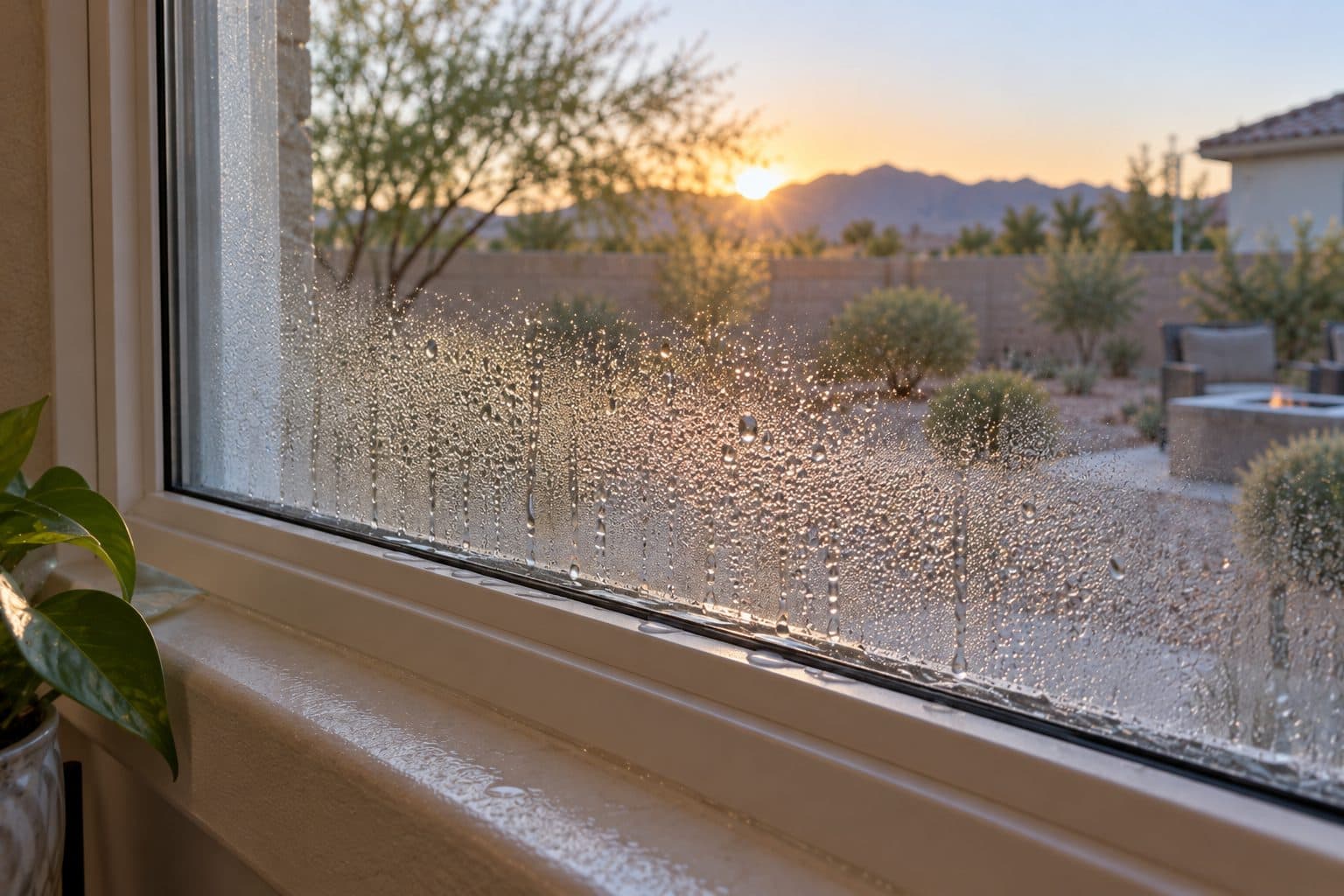
Water on a window can mean several different things. Moisture on the roomside glass, dew on the exterior and fog trapped between sealed panes have different explanations. Locating it is the most useful first step before deciding whether the window needs service.
Do not begin by assuming the glass is leaking or the entire unit has failed. Observe which surface is wet, when the moisture appears and whether there is water on nearby trim or walls. Those details shape the next assessment.
The short version
Moisture on the room side of the glass comes from indoor humidity meeting cool glass, and dew on the outside is weather related. Fog trapped between the panes points to a failed glass seal that needs service.
On this page
Start with a safe surface check
If the roomside glass is accessible and undamaged, gently wipe a small area with a suitable cloth. If the moisture clears there, you have identified an interior surface condition. Follow the product’s cleaning instructions and avoid scraping or abrasive methods.
Exterior moisture may be visible from outside at ground level. Do not lean out of an upper window or climb merely to confirm it. If the location remains uncertain, record what you can see and ask for help identifying it.
Record uncertain moisture location
Haze that remains behind clean accessible surfaces may be between panes, but reflections and deposits can make the location confusing. Photograph the window in different light and note whether the appearance changes. Do not separate glass or remove parts to investigate.
Understand why surface condensation forms
The key comparison is between the glass surface temperature and the dew point of the air touching it. Dew point is the temperature at which that air becomes saturated as it cools. When a surface is below that point, moisture can condense on it. Pella's condensation guidance explains why both glass temperature and moisture conditions matter.
This gives two routes to changing a recurring surface condition: reduce the moisture in the relevant air or change the conditions keeping the surface cold. Which route is useful depends on whether the water is inside, outside or within a sealed cavity. Wiping droplets removes today's visible water but does not, by itself, change either cause.
Imagine two windows exposed to similar room air. One glass surface is above that air's dew point and stays dry; the other is below it and becomes wet. The difference does not require a leak through either window. Conversely, adding moisture to the room can raise the dew point so a previously dry surface begins to collect water without any physical change to the window.
Relative humidity readings need context because relative humidity depends on air temperature. Record the room temperature with a humidity reading and the time of the observation. A single number from a different room cannot establish conditions at the glass. A condensation-resistance rating, like the other window energy ratings on the label, cannot guarantee dry glass under every household and weather condition.
If the moisture is on the roomside glass
Note what is happening in the room when moisture appears. Cooking, bathing, laundry, indoor plants and changes in ventilation or household use can provide context. These observations help identify possible moisture sources without assuming a particular appliance or activity is responsible.
Look at whether the concern affects one room or several windows across the house. Note the position of shades or coverings and whether the area has normal air circulation. A single affected corner can require a different evaluation from widespread condensation.
Wipe accessible moisture so it does not remain on vulnerable nearby finishes, then address the recurring conditions. Use existing ventilation as intended and consider a qualified indoor-environment or building assessment if the cause is unclear or the problem persists.
Do not adopt a universal humidity target from a window sales page. Appropriate conditions depend on the home and situation. If you use a humidity monitor, record its readings with the time and room rather than treating one number as a complete diagnosis.
If the moisture is on the exterior glass
Outdoor dew can form when the exposed glass cools below the outdoor dew point. One mechanism is heat radiating from the exterior surface toward a clear night sky; suitable humidity and still-air conditions can allow dew to collect. Cardinal's technical bulletin explains this behavior, including why well-insulating glass can show exterior condensation.
That means outside dew is not, by itself, evidence of an insulating-glass defect. It is also not a complete performance test proving the whole installation is correct. Observe which surface is wet and whether it clears as conditions change.
Exposure and shelter can differ across neighboring windows, so one wet exterior pane beside a dry one does not settle which product performs better. Note time, shade and location instead of replacing glass based on that comparison alone.
Keep interior water entry separate. Wet indoor trim, a spreading wall stain or water appearing during rain needs its own assessment. An explanation for exterior dew cannot dismiss evidence that water is reaching the room.
how we install
The Part Behind the Glass

Measured before anything is ordered
Flashed so water has a way out
If the moisture appears between sealed panes
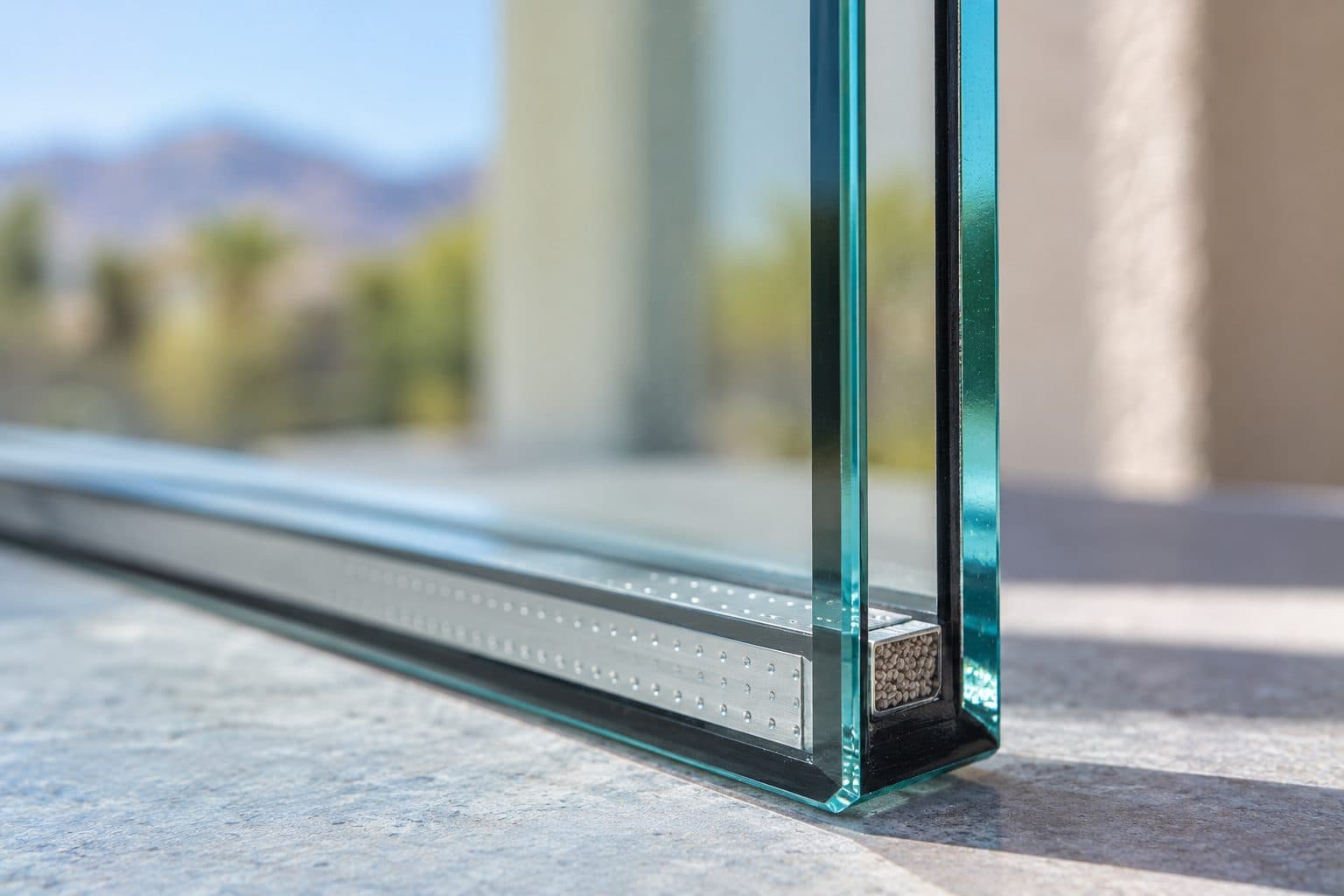
Persistent moisture inside an insulating-glass unit commonly points to a seal problem. The first question for a window glass replacement assessment is which product and glass assembly are affected. Gather accessible labels, original paperwork and clear photographs.
The suitable scope can involve a compatible glass unit, a replacement sash or a complete window depending on construction, availability and condition. Between-pane moisture does not automatically establish that the surrounding frame must also be replaced. Our guide to glass versus whole-window replacement compares those scopes.
Use our guide to persistent fog between panes for that next decision. Keep this location assessment separate from selecting a repair. A correct description of the symptom should come before a recommendation about how much of the assembly to change.
Distinguish condensation from water traveling through the opening
A wet sill can receive water from several sources. Surface condensation may run downward, while water intrusion can arrive through the unit, its perimeter or another part of the wall. Location alone does not always reveal the original path.
Note the connection with rain, wind, irrigation or interior activities. Photograph the first visible wet area if possible, then any spreading stain. Mention prior sealant work or wall repairs that could help an evaluator understand the history.
Avoid sealing every visible exterior opening in response. Designed drainage features need to remain functional. An appropriate assessment should identify the path and the relevant product or wall detail before selecting a repair.
Use a controlled comparison for recurring roomside moisture
Once you have confirmed moisture on an accessible indoor surface, keep a short record over comparable conditions. Note the room's use, existing ventilation operation, covering position and any available temperature/humidity readings. Change one ordinary household factor at a time where practical, using the home and window systems as intended.
For example, a bedroom pane may be wet after a night with a close-fitting shade shut, then show less moisture when normal air circulation around the window is available under otherwise similar conditions. That pattern suggests a local surface-condition contribution; it does not prove the home's overall humidity is appropriate or that every window component is sound. Pella's guidance identifies circulation as one relevant factor.
Similarly, moisture after bathing that diminishes when the room returns to its normal conditions has a different pattern from haze that stays inside the sealed cavity. Recording that distinction makes the next assessment more focused. Do not disable ventilation, create excess humidity or make unsafe access changes as an experiment.
If moisture persists, affects vulnerable finishes or has an unclear source, bring the observations to a suitable building or window assessment. The point of the comparison is to replace a vague “foggy window” report with usable evidence, not to turn a household observation into a guaranteed diagnosis.
Use a simple observation table
| Observation | Useful next step |
|---|---|
| Moisture wipes from the roomside surface | Review indoor conditions and recurrence |
| Dew is visible on the outside only | Observe changing outdoor conditions |
| Haze remains between clean surfaces | Identify the insulating-glass unit and assess it |
| Trim or wall becomes wet during rain | Investigate possible water intrusion separately |
| Location is uncertain | Photograph safely and request assessment |
A hypothetical bathroom window that clears when the room returns to normal conditions tells a different story from a living-room unit with persistent haze inside the glass cavity. Both may be called foggy, but the next questions are different.
The table is a way to organize observations, not a remote diagnosis. If the condition is persistent, widespread or accompanied by damage, arrange an assessment suited to the actual concern and review the other window condition signs.
Keep records that support a useful next step
Write down the room, time, weather, visible surface and any related indoor activity. Save a full-window photo and a close-up. Note whether wiping an accessible surface changes the appearance and whether nearby finishes are wet.
Bring product information and any prior repair history to the discussion. If a warranty may apply, retain the window warranty records and follow the stated claim process before making alterations that could affect assessment.
Agave Windows can discuss what the observed condition means for a window replacement project when you request an estimate. Start with where the moisture is, then choose the appropriate assessment and scope based on the evidence.
This guide supports
Replacement Windows →things people ask us
Frequently Asked Questions
Is condensation inside the house proof of bad windows?
No. Roomside surface condensation involves temperature and humidity conditions at the glass. Window performance can be part of the picture, but the observation alone does not establish a defective product. Record recurrence, room conditions and any related damage before choosing a replacement scope.
Why does only one window have exterior dew?
Exposure, shade, air movement and local surface conditions can differ even between nearby windows. Exterior dew on one unit does not by itself prove that it is defective. Observe whether the moisture remains outside and clears with changing conditions, and report any separate water-entry symptoms.
Can I clean moisture from between double panes?
A sealed insulating-glass cavity is not an ordinary cleaning surface. Do not disassemble or drill the unit to reach it. Confirm the location, identify the product and assess compatible service options. Persistent between-pane moisture is a different concern from dirt on accessible glass.
What if condensation is damaging the trim?
Address recurring moisture rather than only repainting the affected finish. Wipe accessible water safely, record the conditions and arrange an assessment when the cause is unclear or persistent. Have any possible water intrusion considered separately so a surface-condensation assumption does not hide another source.
Still have a question about your home?
Ask us directly. A quick description of the opening is enough.
keep going
Related Services and Guides
- Replacement Windows
Replacement windows in Las Vegas, planned room by room. See how to choose glass, frames and installation method, and what a clear estimate should include.
- Persistent fog between panes
Foggy double-pane windows usually mean a failed glass seal. Learn how to confirm it, whether the glass alone can be replaced, and what defogging cannot do.
- Glass versus whole-window replacement
Should you replace the glass or the whole window? Learn when new glass is enough, when a sash swap works and when full window replacement makes sense.
- Other window condition signs
Signs your windows may need replacement: fog between panes, sticking sashes, drafts, stains or damage. Learn what each one means and what to do next.
- Window warranty records
How to read a window warranty: what is covered, who pays for labor, what lifetime really means, whether it transfers, and which records you should keep.
- Condensation and energy ratings
U-factor and SHGC explained in plain terms: what each window energy rating measures, how to read an NFRC label, and which numbers to compare on a quote.
- Drafty Windows: Repair or Replace
Drafty windows: repair or replace? Learn how to find where the air comes in, which causes can be repaired, and when replacement is worth pricing.
- Why Sliding Glass Doors Are Hard to Open
Why is your sliding glass door hard to open? Common causes include a dirty track, worn rollers and misalignment. Learn what to check and what to avoid.
- Why Patio Doors Leak Air
Why patio doors leak air: worn seals, panels out of alignment, the threshold, or the gap around the frame. Learn how to find the draft and what fixes it.
Sources referenced on this page
Independent references linked in the text above. A manufacturer source explains a product concept; it does not mean Agave Windows supplies that brand.
- Pella's condensation guidance (pella.com)
- Cardinal's technical bulletin (cardinalcorp.com)

ready when you are
Have a Question About Your Own Home?
A guide can explain the choice. Your openings decide the answer. Tell us what you are seeing and we will help you work out the next step.
- Photos can follow once we reply; no measurements needed
- A written scope before anything is ordered
- Licensed, insured, and bonded
Request an Estimate