





- 7 min read
- Updated
- Supports: Patio Doors
Why Patio Doors Feel Drafty or Leak Air
A patio door connects a large exterior opening with a room you use every day. When it feels drafty, the cause may be at the moving panel’s seals, the meeting point between panels, the threshold or the frame-to-wall connection. The glass itself can also contribute to thermal discomfort without proving a gap.
Start with the door type and the exact location of the concern. A sliding door and a hinged patio door have different operating details, so a useful assessment needs more information than the statement that the door leaks.
The short version
Patio doors leak air through worn weatherstripping, the joint where panels meet, a misaligned panel, or the gap between frame and wall. Do not block the drainage holes at the bottom, since they let water out.
On this page
Describe air movement separately from water entry
Air leakage and water intrusion are different problems, even when they occur near the same opening. If you have both, record them separately. Note where each appears and whether it relates to wind, rain, irrigation or normal household operation.
A cold or warm sensation near the glass does not automatically prove outdoor air is entering. Heat transfer and room air movement can also affect comfort, as our guide to drafty window concerns explains. Describe the conditions so the evaluator can distinguish the likely mechanisms.
If water is actively entering or the door is damaged or insecure, arrange appropriate prompt help. Those conditions should not be treated as a routine draft complaint with a generic seal replacement.
Start with normal closure
Check whether the door reaches its normal closed position and the lock engages as intended. Do not force a misaligned panel or use the lock to pull an obviously resistant door into place. Report any difficulty moving or closing it. Our guide to hard-to-open slider causes covers that symptom.
On a slider, note whether resistance occurs along the track or only at the final closure. On a hinged door, describe whether a particular edge catches or the latch misses its normal position. Those observations can help direct the assessment.
Check operation and closure together
A door that looks closed may still have an operating or alignment concern. The solution should preserve normal movement, locking and seal engagement together rather than improving one action at the expense of another.
Map the suspected air path
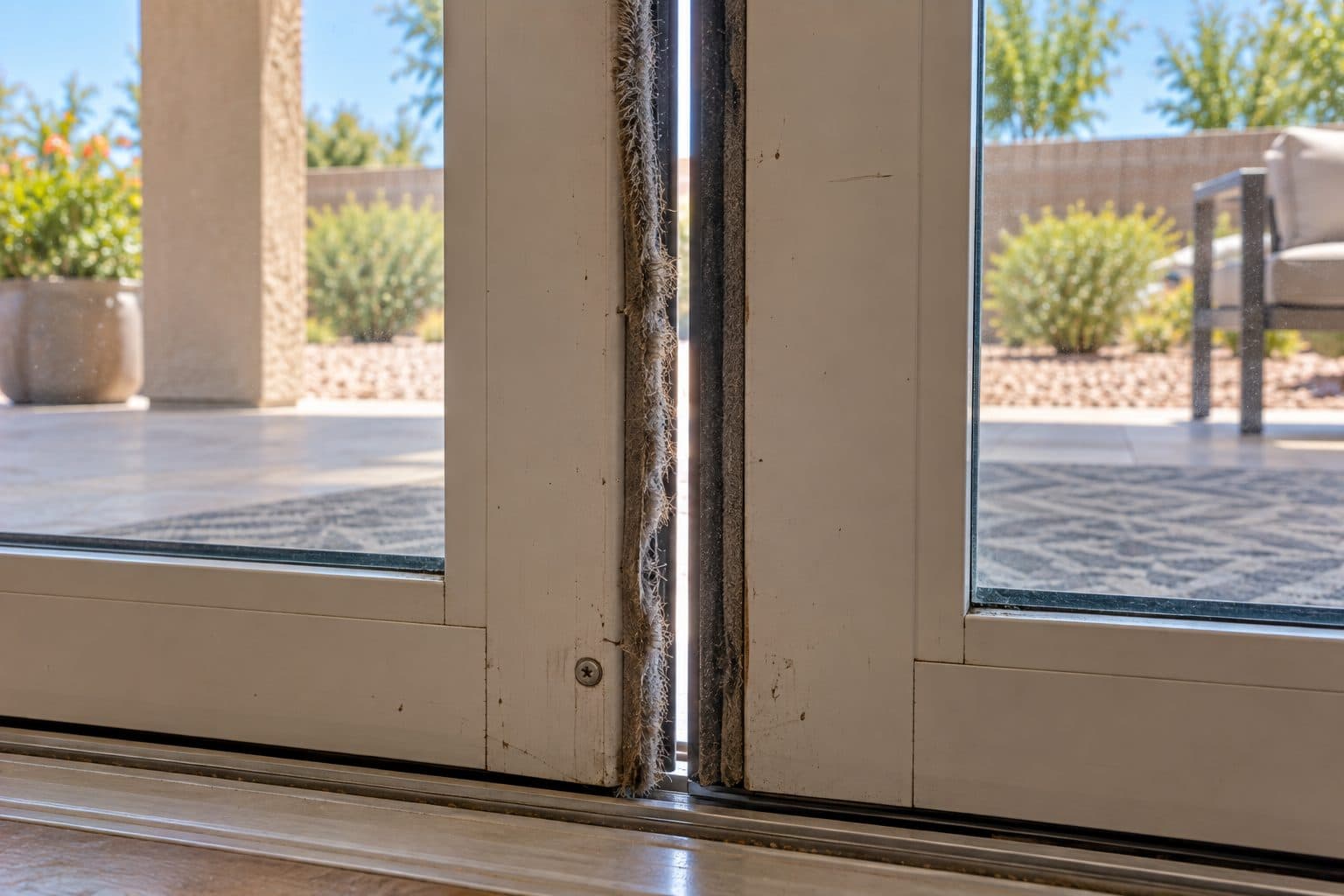
Mark the exact location on a full-door photograph before sending close-ups. On a slider, identify the closing jamb, head, sill and meeting stiles, the upright edges where panels meet or overlap. On a hinged door, identify the hinge side, latch side, head and threshold. Add whether the sensation changes with wind or with normal closure.
| Reported location or behavior | Product-specific area to investigate |
|---|---|
| Meeting point between slider panels | Overlap/interlock arrangement, seal condition and panel position |
| Closing edge after difficult movement | Whether the panel reaches its intended position and seals engage |
| Lower corner or threshold | Seal continuity, panel position and the separate drainage arrangement |
| Interior trim around the frame | Frame-to-wall connection and possible concealed air route |
| Broad discomfort beside glass without a located joint stream | Thermal surface conditions and room-air movement |
The observed location is a starting point, not a verified hidden path. Air can travel behind trim before emerging into the room. A photo of the exit point therefore does not prove that sealant at the nearest exterior joint will address it.
For an illustrative slider, a complaint at the panel meeting point plus difficulty reaching full closure gives the evaluator a reason to check panel position and that joint together. By contrast, normal operation with a concern at interior perimeter trim calls for attention to the installation connection. The same replacement weatherstrip cannot be assumed to solve both cases.
Keep checks safe and reversible. Do not use an open flame or remove panels, seals or trim to find a path. Where ordinary observation is inconclusive, the next step is an assessment method suited to the opening, not stronger pressure on the door.
Consider seals, rollers and alignment together
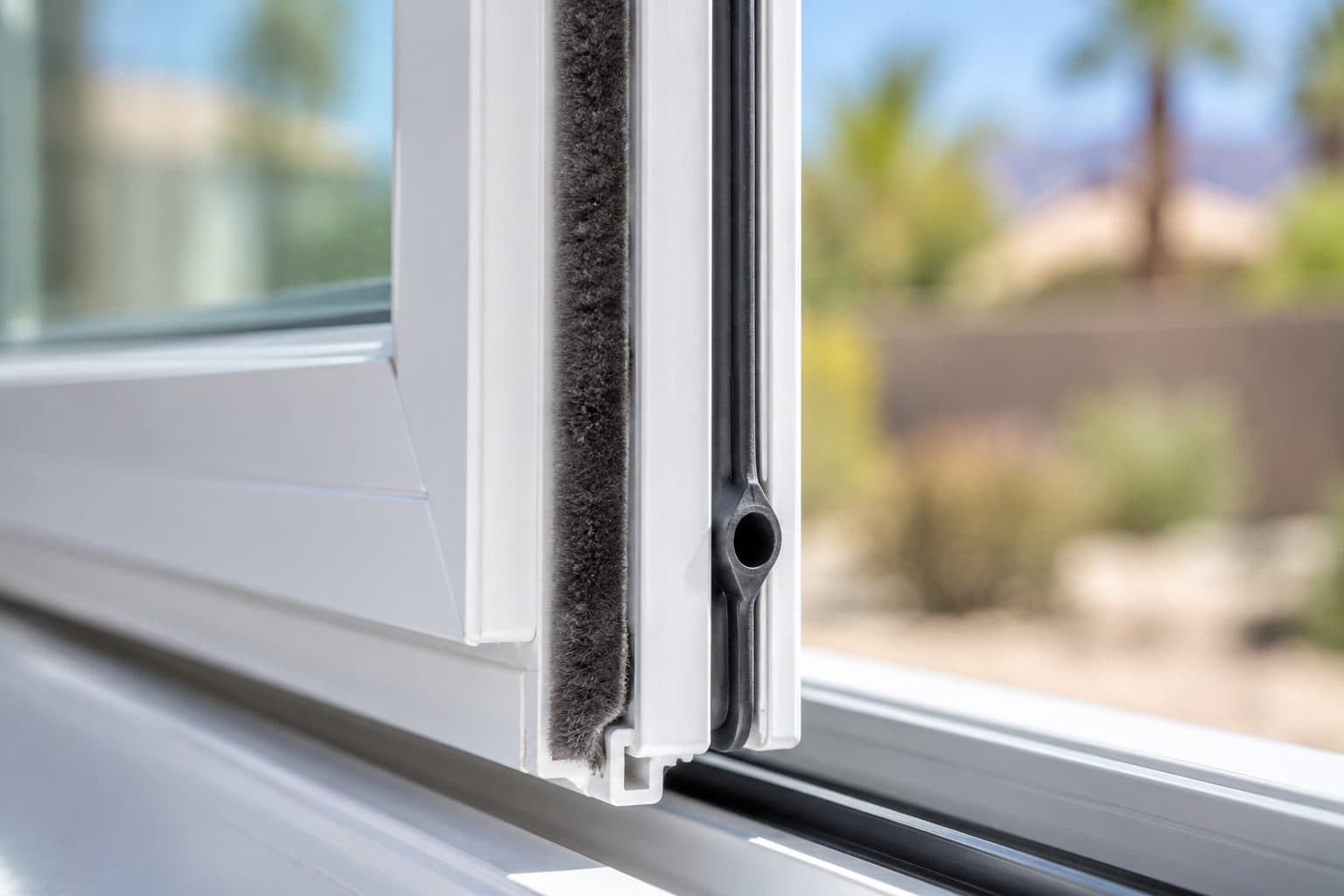
A seal works at an intended interface. It must have the correct profile, remain in the correct location and meet the opposing surface when the door closes. Replacing visibly worn material may help an identified seal problem, but a new strip cannot be assumed to compensate for a panel that does not reach the designed position.
On an adjustable roller system, changing panel position can affect both travel and weather tightness; Milgard's guide describes that relationship for its covered door. This is why movement, locking and seal engagement belong in the same assessment. Adjustment is not complete merely because one corner appears tighter.
“Thicker” is not a reliable substitute for “compatible.” Added material could interfere with movement or full closure while failing to match the intended interface. Identify the actual replacement part and check the installed behavior rather than filling a visible space with an arbitrary strip.
Hinged French patio doors have a different geometry: hinges, latch and the specified threshold arrangement help establish how the leaf meets its perimeter seals. Roller advice for a slider does not apply to that system. Keep the model's instructions and the actual observed condition together when choosing the next step.
how we install
The Part Behind the Glass

Measured before anything is ordered
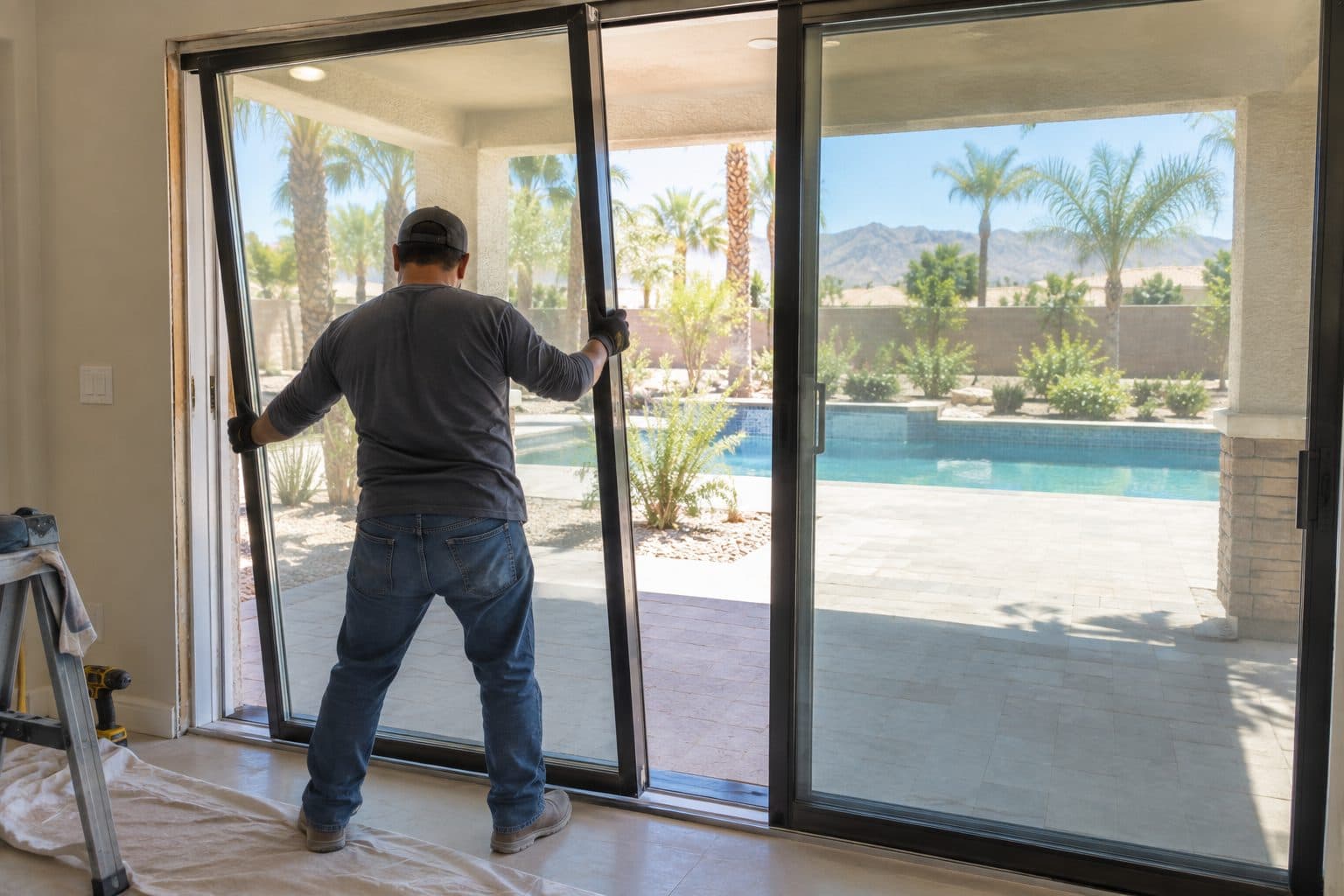
Panels set and adjusted
Keep drainage features functional
Some patio-door frames collect water in exterior portions of the sill or track and provide a route back outside. That drainage route is a deliberate water-management feature, not evidence by itself of an unintended air path into the room. Milgard's care guidance explains the role of its exterior weep system.
Blocking an outlet can obstruct water leaving the assembly without addressing the actual source of indoor air movement. Before sealing a suspected gap, establish whether it is an intended opening, what it connects to and which product detail applies. The air-sealing and drainage provisions must work together.
Follow the actual care instructions for accessible debris. Do not enlarge outlets, remove covers or redesign the sealant arrangement from a generic online diagram. If water is entering the room or wetting nearby finishes, report that separately. Designed exterior drainage is not a reason to dismiss interior leakage, and an air-leak repair is not proof that the water concern has been resolved.
Evaluate the frame-to-wall connection
The installed frame meets the wall around the opening. Air sealing at that connection is separate from the seals between panels. Concealed conditions can limit what is visible before selected trim or materials are removed.
Ask the evaluator where the evidence points and what additional access is needed, if any. The proposal should identify whether it addresses a product component, the installation perimeter or both. A vague promise to reseal the door leaves too much unanswered.
If replacement is proposed, ask how the new scope will address the identified perimeter condition. Installing a new panel or frame does not, by itself, explain the surrounding air and water-management details.
Read performance ratings with their limits
Product air-leakage data describe performance under defined test conditions. They are useful for comparing relevant assemblies, but they do not measure every path through the completed wall or guarantee that a room will never feel uncomfortable.
U-factor and SHGC ratings describe different thermal characteristics. If the primary concern is solar warmth or heat transfer near a large glass area, those measurements may belong in the discussion. Keep that decision separate from repairing a confirmed air path.
Ask for evidence for the actual proposed configuration. A rating from another series or a different operating type should not be used as though it describes the door being offered.
Choose the smallest supported scope that meets the goal
A targeted repair may make sense when the cause is identified, compatible parts are available and the retained assembly is suitable. Ask what the work changes and how operation and the original concern will be checked. Our sliding-door repair service page explains how we assess a request.
A broader replacement discussion may be appropriate when the frame and multiple components are unsuitable, dependable repair options are unavailable or your project includes a deliberate design change. The recommendation should explain that reasoning, and our guide to sliding-door replacement decisions can help you weigh it.
Prepare a useful inquiry
Send a full-door photo, the marked concern location, door type and accessible product information. Include whether the lock works normally and whether the issue changes with wind. List past adjustments, repairs or added sealant.
When replacement is relevant, patio door replacement planning with Agave Windows connects the selected product with the condition of the entire opening. To start, request an estimate.
This guide supports
Patio Doors →things people ask us
Frequently Asked Questions
Should I block the holes at the bottom of the frame?
Do not block features until their purpose is identified. Some systems use exterior openings and channels for drainage. Follow the product’s care instructions and ask an evaluator to distinguish a designed feature from an unintended leakage path before applying sealant or another obstruction.
Can roller adjustment affect a sliding door’s seals?
In a product designed with adjustable rollers, panel position can affect how the door moves and meets its seals. The correct method is product specific. Have operation, locking and seal engagement checked together rather than changing the height without understanding the system.
Does an air leak mean the door will leak rainwater?
It does not establish that conclusion. Air and water performance involve different conditions and paths. Record both symptoms if present and have each assessed. A repair intended for one concern should not be advertised as resolving the other without supporting evidence.
Will replacing weatherstripping always solve the draft?
Only if the identified problem is addressed by a compatible seal replacement. Alignment, closure, the frame perimeter or thermal discomfort may require different consideration. A useful assessment locates the concern before choosing parts or recommending a complete door replacement.
Still have a question about your home?
Ask us directly. A quick description of the opening is enough.
keep going
Related Services and Guides
- Patio Doors
Patio door replacement in Las Vegas: compare sliding, French, bifold and multi-slide doors, threshold options and what a complete estimate should cover.
- Hard-to-open slider causes
Why is your sliding glass door hard to open? Common causes include a dirty track, worn rollers and misalignment. Learn what to check and what to avoid.
- Drafty window concerns
Drafty windows: repair or replace? Learn how to find where the air comes in, which causes can be repaired, and when replacement is worth pricing.
- Sliding-door replacement decisions
When should you replace a sliding glass door instead of repairing it? Learn which problems can be fixed, which point to replacement, and how to decide.
- Sliding-door repair availability
Sliding glass door repair in Las Vegas for doors that drag, close unevenly or will not latch. See how rollers, track and locks are checked together.
- Foggy Double-Pane Windows
Foggy double-pane windows usually mean a failed glass seal. Learn how to confirm it, whether the glass alone can be replaced, and what defogging cannot do.
- Window Condensation Guide
Window condensation guide: what moisture on the inside, on the outside, or between the panes means, and when a wet window needs service.
Sources referenced on this page
Independent references linked in the text above. A manufacturer source explains a product concept; it does not mean Agave Windows supplies that brand.
- Milgard's guide describes that relationship for its covered door (milgard.com)
- Milgard's care guidance (milgard.com)

ready when you are
Have a Question About Your Own Home?
A guide can explain the choice. Your openings decide the answer. Tell us what you are seeing and we will help you work out the next step.
- Photos can follow once we reply; no measurements needed
- A written scope before anything is ordered
- Licensed, insured, and bonded
Request an Estimate