





- 7 min read
- Updated
- Supports: Sliding Glass Doors
Why Is Your Sliding Glass Door Hard to Open?
A sliding glass door should not require repeated force to move through its normal path. When operation changes, the cause may involve debris, rollers, the track, alignment or another part of the assembly. The symptom deserves attention, but it does not automatically mean the entire door must be replaced.
Start by describing how the movement has changed. A door that catches at one point gives different information from one that rolls smoothly but will not latch. Those observations help the next assessment focus on the right parts.

The short version
A sliding glass door usually becomes hard to open because of debris in the track, worn rollers, a damaged track, or a panel out of alignment. Many of these problems can be repaired without replacing the door.
On this page
Identify which panel has the problem
Make clear whether the difficult panel is the main glass door or the insect screen. They can use different tracks, rollers and adjustments. A sticking screen does not establish a problem with the heavier glass assembly beside it.
For a multi-panel system, identify the moving panel and the direction of travel. Use a photograph to mark it if the configuration is difficult to describe. Include whether the issue started suddenly or developed gradually.
Stop forcing an unstable or damaged panel
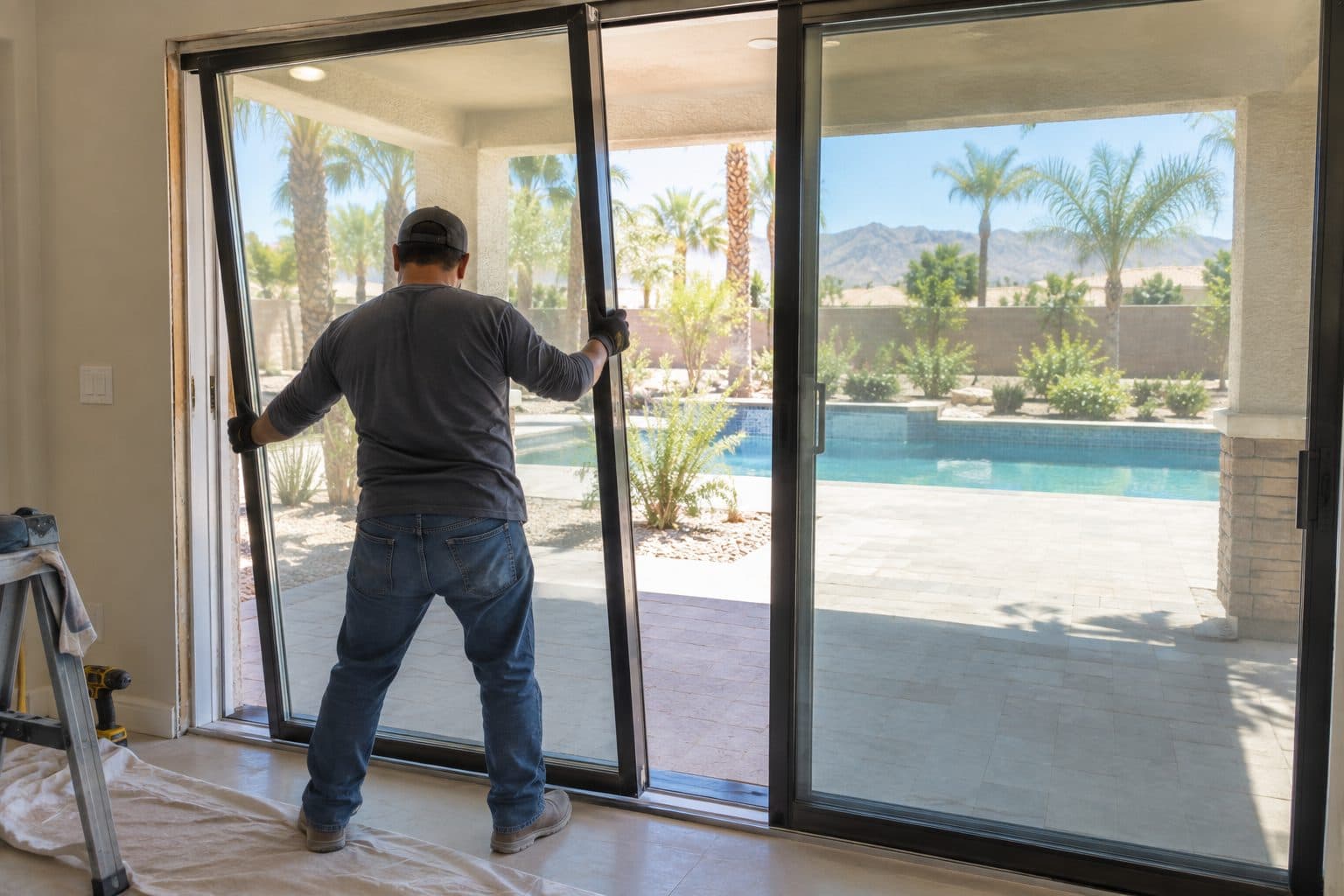
If the glass is damaged, the panel feels unstable or it appears to have left its intended track, stop forcing it and arrange appropriate help. Heavy panels need suitable handling; lifting one out is not a routine observation step for the homeowner.
Notice where resistance occurs
Observe normal movement only if the door is stable and undamaged. Identify whether the resistance occurs at the beginning, throughout travel, at one repeatable location or only as the door closes. A short safe video showing the panel and location can preserve the pattern without requiring repeated force.
The pattern helps separate parts that travel with the panel from conditions at a particular point in the opening:
| Movement pattern | Reason it helps the assessment |
|---|---|
| Catch at the same location along the track | Focuses attention on local track condition, obstruction or contact at that position |
| Dragging across much of the travel | Calls for checking rolling support, clearance and continuing contact, not just one visible spot |
| Smooth travel but difficulty at final closure | Focuses attention on closing alignment, seal engagement and the latch area |
| Glass panel moves normally but screen sticks | Directs inspection to the separate screen system |
These are inspection priorities, not remote diagnoses. A repeated bump can have more than one cause, and an apparently clean track does not prove its shape or supporting parts are sound. Record sounds such as scraping or grinding without turning them into a parts order.
Also note onset. A sudden change after an obstruction or previous adjustment has different context from gradual deterioration. Report what happened and when; do not infer house movement solely from a dragging panel.
Check accessible debris before assuming a mechanical failure
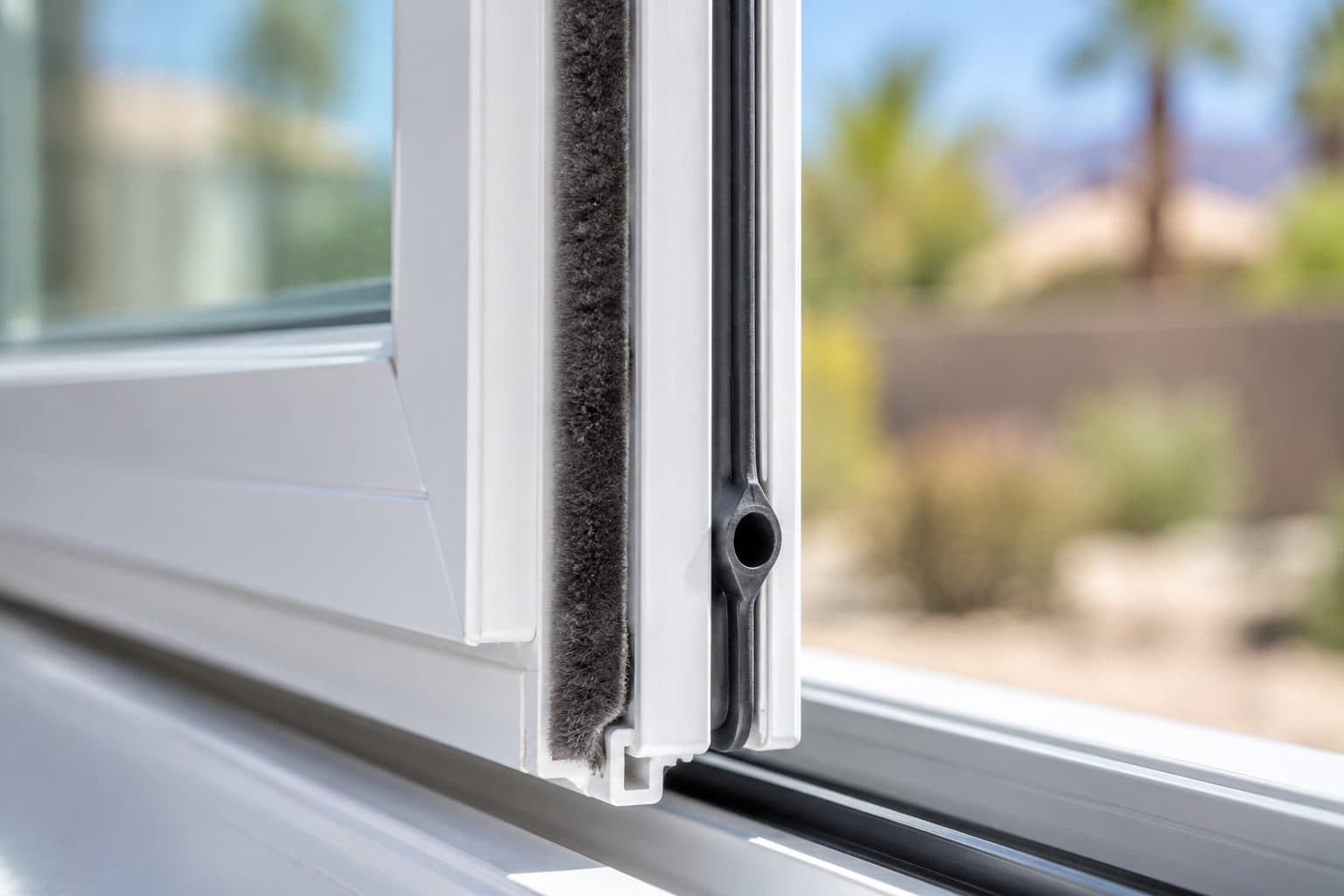
Sliding tracks can collect dirt and loose material. Follow the manufacturer’s routine care guidance for accessible cleaning. A careful removal of loose debris may improve operation where the travel path is obstructed.
Do not scrape aggressively, file the track or use an unapproved chemical to force a quick result. The running surface, finish and seals can have specific care requirements. Ask for the correct manual when the product is identifiable.
After appropriate cleaning, note whether the movement improves and whether any catch remains. A change is useful evidence, but ongoing resistance should not be dismissed because the track now looks clean.
Understand what rollers and alignment contribute
In many sliding systems, rollers carry the moving panel on a running surface. Their condition and position affect how the panel travels within the surrounding frame. A panel that is no longer held in the intended position may rub where it should clear or meet the closing jamb unevenly.
This explains why roller adjustment can change more than operating effort. Milgard's roller guide connects adjustment with smooth operation and weather tightness for the product it covers. The appropriate method remains specific to the door; different hardware and access points cannot be assumed to use the same sequence.
Adjustment and replacement also solve different problems. An adjustment changes position. Replacing a compatible roller changes the component. Neither action automatically corrects a damaged running surface or an unsuitable frame. The assessment should establish which condition exists before selecting the repair.
The final check is broader than “it slides now.” The panel should travel through its intended path, reach normal closure, engage the lock and meet its seals as designed, because a poorly seated panel is a common source of patio-door air leakage. If improved movement leaves poor closure, the connected system still needs attention. Ask the evaluator to identify the part, explain the retained track's condition and describe those completion checks.
how we install
The Part Behind the Glass

Measured before anything is ordered
Panels set and adjusted
Keep the track and the supporting opening in view
A visibly damaged running surface may require a different scope from routine cleaning or roller adjustment. Ask whether the proposed work addresses the track’s condition as well as the moving hardware.
The frame and supporting opening can also affect alignment. If the panel cannot sit correctly or the frame shows other concerns, the assessment should explain whether a component repair can provide a reliable result in the retained assembly.
Avoid a remote conclusion that the house has settled or the frame has failed because the door drags. Those are possibilities to assess where evidence supports them, not diagnoses that follow automatically from resistance.
Separate travel problems from latching problems
A panel may move easily yet fail to engage the latch. Conversely, a latch may work while the door requires excessive effort along the track. Report those as separate observations so the proposed repair can address both if needed.
Do not keep tightening or moving a strike plate without understanding the product’s requirements. The latch, panel position and seals need to work together. A repair should not improve one action by leaving the door difficult to secure or poorly aligned.
If the door cannot close securely, arrange a prompt assessment and discuss an appropriate interim plan. Do not rely on continued force as the solution to an operating problem that also affects normal closure.
Use the result of cleaning as evidence
Suppose loose debris is removed under the correct care instructions and a catch disappears. That supports an obstruction as a contributor at that location; it does not establish that every roller, seal and frame joint has been inspected. Continue normal use only if the door is otherwise stable and functioning, and record any remaining symptom.
If the same catch remains after accessible cleaning, repeating harsher cleaning or adding an arbitrary lubricant is not a diagnostic advance. The next useful information is the condition of the running surface, panel clearances and hardware. A before-and-after note helps the provider avoid starting with the same already-completed step.
Do not file down a high spot, bend the track or lift the panel to explore. Those changes can remove evidence and alter the assembly before the actual problem is identified.
Ask what a targeted repair would include
A useful repair proposal identifies the problem, parts, labor and the condition of retained components. Our sliding glass door repair service page explains how we assess a request. Ask whether cleaning, roller work, track work or alignment is included and how the result will be checked.
Confirm product compatibility before purchasing replacement hardware. Ask what happens if the exact part cannot be obtained and whether a supported alternative exists. An improvised fit should not be treated as equivalent without a sound basis.
For a hypothetical door with a localized obstruction and sound components, appropriate care may resolve the concern. For another with worn rollers and damaged track sections, a more involved repair may be needed. The inspection should determine which story fits.
Know when a replacement discussion becomes relevant
Replacement may deserve evaluation when several components or the frame are unsuitable, as our guide to when sliding-door replacement makes sense explains, or when reliable repairs are unavailable or the homeowner wants a different configuration. It is a broader project with product, installation and finish decisions of its own.
Ask why the proposed replacement is appropriate compared with a supported repair. The answer should explain the condition and intended outcome. A hard-to-open door is a reason for assessment, not an automatic sales conclusion.
If you choose one of our replacement sliding glass doors, test the proposed operating system and check the sliding glass door size guide for the size you will actually use. Daily movement, reach, thresholds and door hardware choices should remain central to the selection.
Send the information that helps
Provide a full-door photo, panel identification, movement description and accessible product labels. Include the onset of the problem, previous adjustments and any cleaning products or repairs already tried. Mention glass damage or inability to secure the opening clearly.
To have Agave Windows review the concern, request an estimate. We can help clarify the repair or replacement scope when a broader change is appropriate.
This guide supports
Sliding Glass Doors →things people ask us
Frequently Asked Questions
Should I lubricate the track immediately?
Use only the care method approved for the actual product. Lubricant type and application points can differ, and applying a product to the wrong surface may not address the cause. Start with accessible routine cleaning under the manufacturer’s instructions and seek assessment if resistance persists.
Does grinding always mean the rollers are worn out?
It can be a clue, but it does not establish one cause. Debris, the track, alignment and other components may be involved. Describe when the sound occurs and have the system inspected before ordering parts or assuming the complete door needs replacement.
Can I lift the panel out to check the rollers?
Large glass panels require appropriate handling and product-specific removal procedures. Do not make panel removal part of a casual home check, especially if the door is unstable or damaged. Ask a qualified provider to inspect the components and identify compatible parts.
Why does the door move but refuse to lock?
The latch, strike, panel position or another condition may need assessment. Smooth travel and correct closure are separate checks. Report both behaviors and avoid repeated force or unsystematic adjustments that could change alignment without resolving the actual issue.
Still have a question about your home?
Ask us directly. A quick description of the opening is enough.
keep going
Related Services and Guides
- Sliding Glass Doors
Sliding glass doors in Las Vegas: choose which panel opens, how wide the walkway is, and the right glass, screen and threshold for your patio opening.
- Sliding door repair availability
Sliding glass door repair in Las Vegas for doors that drag, close unevenly or will not latch. See how rollers, track and locks are checked together.
- When sliding-door replacement makes sense
When should you replace a sliding glass door instead of repairing it? Learn which problems can be fixed, which point to replacement, and how to decide.
- Patio-door air leakage
Why patio doors leak air: worn seals, panels out of alignment, the threshold, or the gap around the frame. Learn how to find the draft and what fixes it.
- Door hardware choices
Door hardware options for entry, sliding, folding and multi-slide doors: handles, locks, finishes and smart locks, and how to confirm they fit your door.
- Foggy Double-Pane Windows
Foggy double-pane windows usually mean a failed glass seal. Learn how to confirm it, whether the glass alone can be replaced, and what defogging cannot do.
- Drafty Windows: Repair or Replace
Drafty windows: repair or replace? Learn how to find where the air comes in, which causes can be repaired, and when replacement is worth pricing.
- Window Condensation Guide
Window condensation guide: what moisture on the inside, on the outside, or between the panes means, and when a wet window needs service.
Sources referenced on this page
Independent references linked in the text above. A manufacturer source explains a product concept; it does not mean Agave Windows supplies that brand.
- Milgard's roller guide (milgard.com)

ready when you are
Have a Question About Your Own Home?
A guide can explain the choice. Your openings decide the answer. Tell us what you are seeing and we will help you work out the next step.
- Photos can follow once we reply; no measurements needed
- A written scope before anything is ordered
- Licensed, insured, and bonded
Request an Estimate