




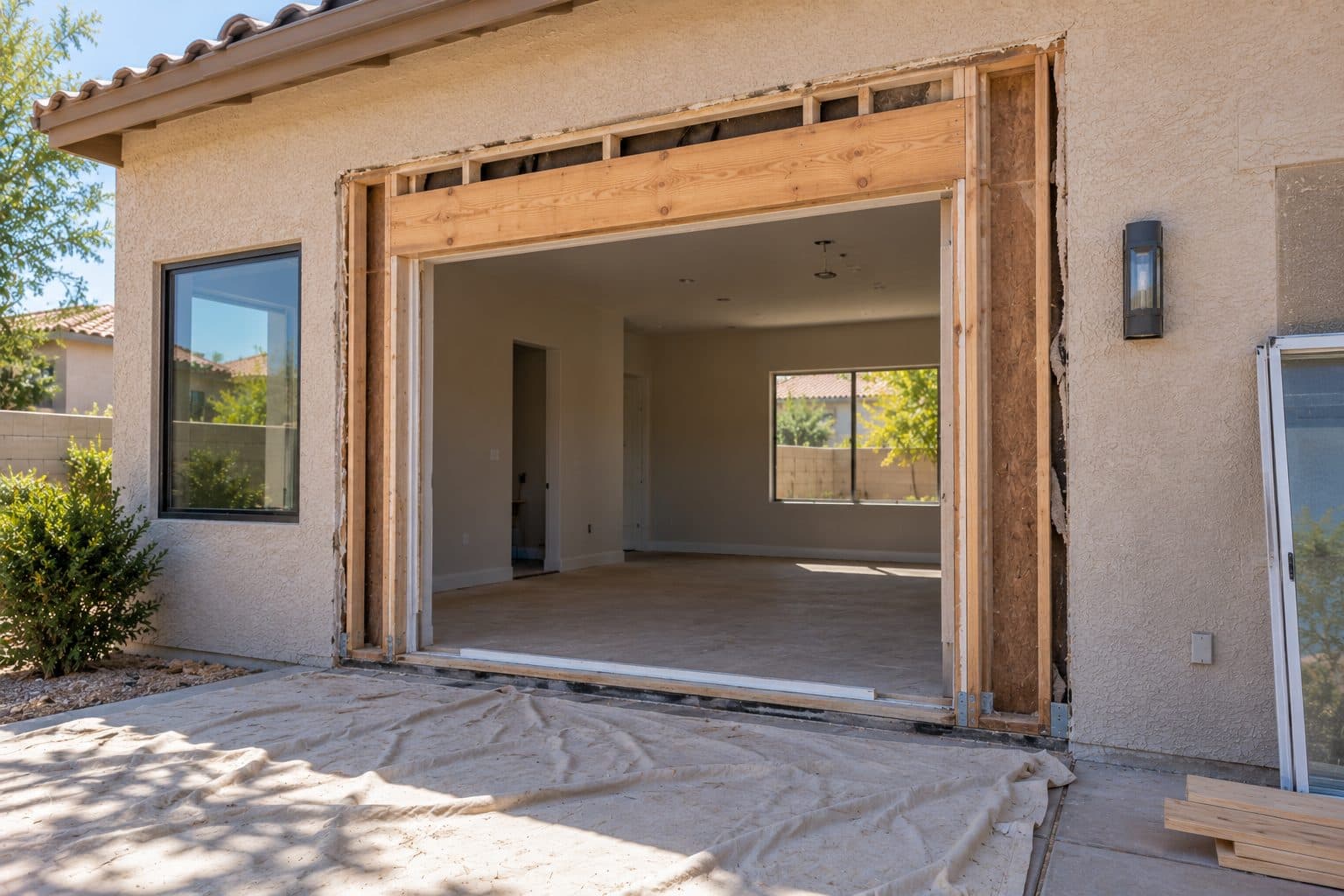

Sliding Glass Door Repair in Las Vegas
A patio door should support ordinary trips between the house and yard. When it drags, closes unevenly or no longer latches reliably, the useful next step is an assessment of the complete operating assembly.
Agave Windows reviews supported sliding glass-door repair requests in Las Vegas, alongside our other repair service options. Tell us whether the problem involves movement, closing, locking or the separate insect screen. We can discuss the information needed to identify an appropriate repair scope for your existing door.
- Licensed, insured, bonded
- Written scope before ordering
- Las Vegas valley

The short version
Sliding glass door problems such as dragging, uneven closing or a latch that will not catch usually come from rollers, track or alignment and can often be repaired. Agave Windows assesses the whole door before choosing parts.
01 of 12
Tell us what happens when you use the door
Does the panel resist movement from the start, become difficult at one position or scrape through its travel? Does it move normally but fail to meet the latch? Describe the behavior in ordinary language before trying to name the failed part.
Also note when the issue began and whether anything changed nearby. Previous repairs, a recent impact, persistent water or a history of repeated adjustments can be relevant. A short video may help if it can be recorded without forcing or repeatedly using an unstable panel.
If the door appears loose, damaged or at risk of leaving its normal position, stop operating it and describe that condition when you contact us. Do not remove a heavy glass panel to take measurements or inspect the underside. The service team should determine a safe assessment method.
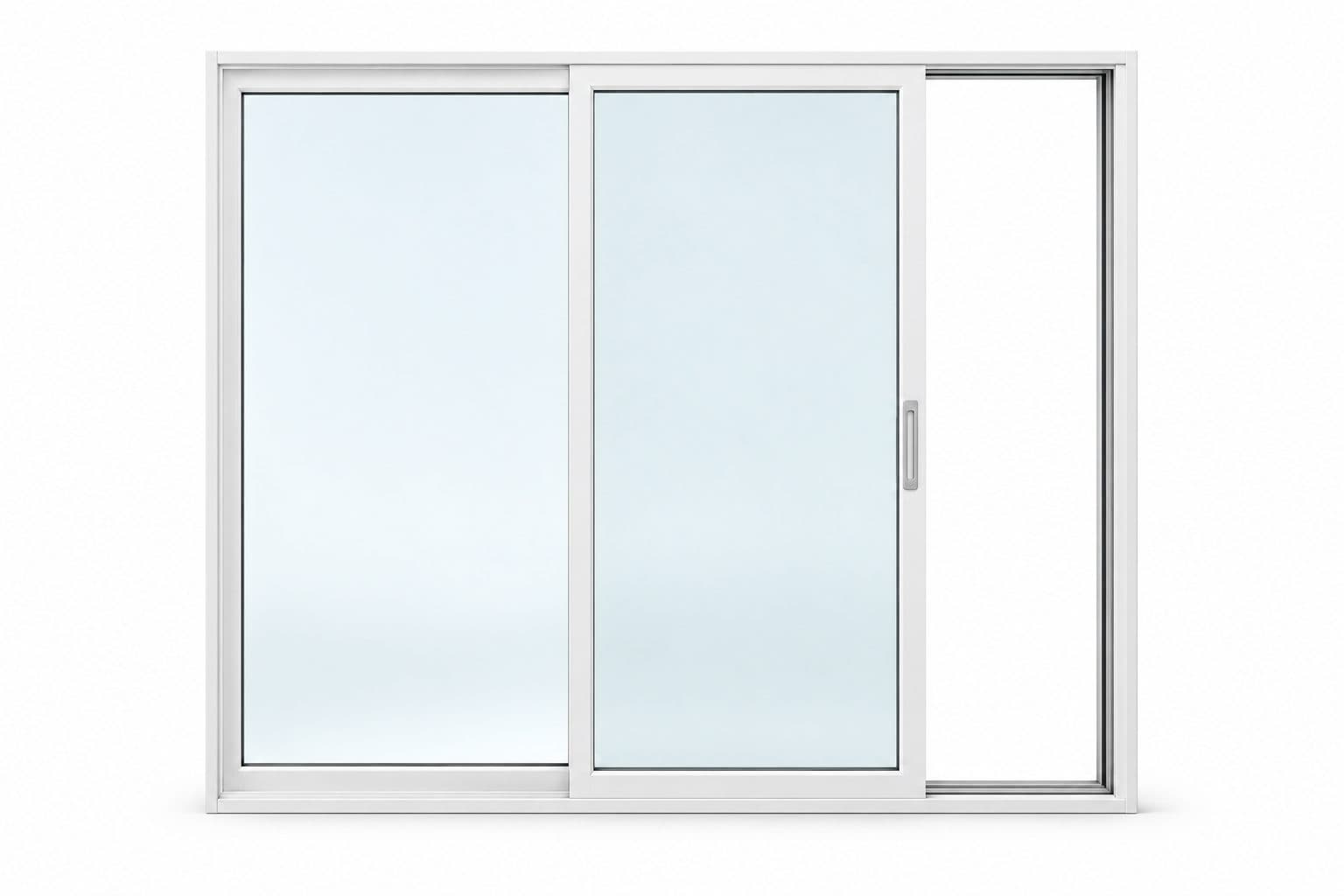
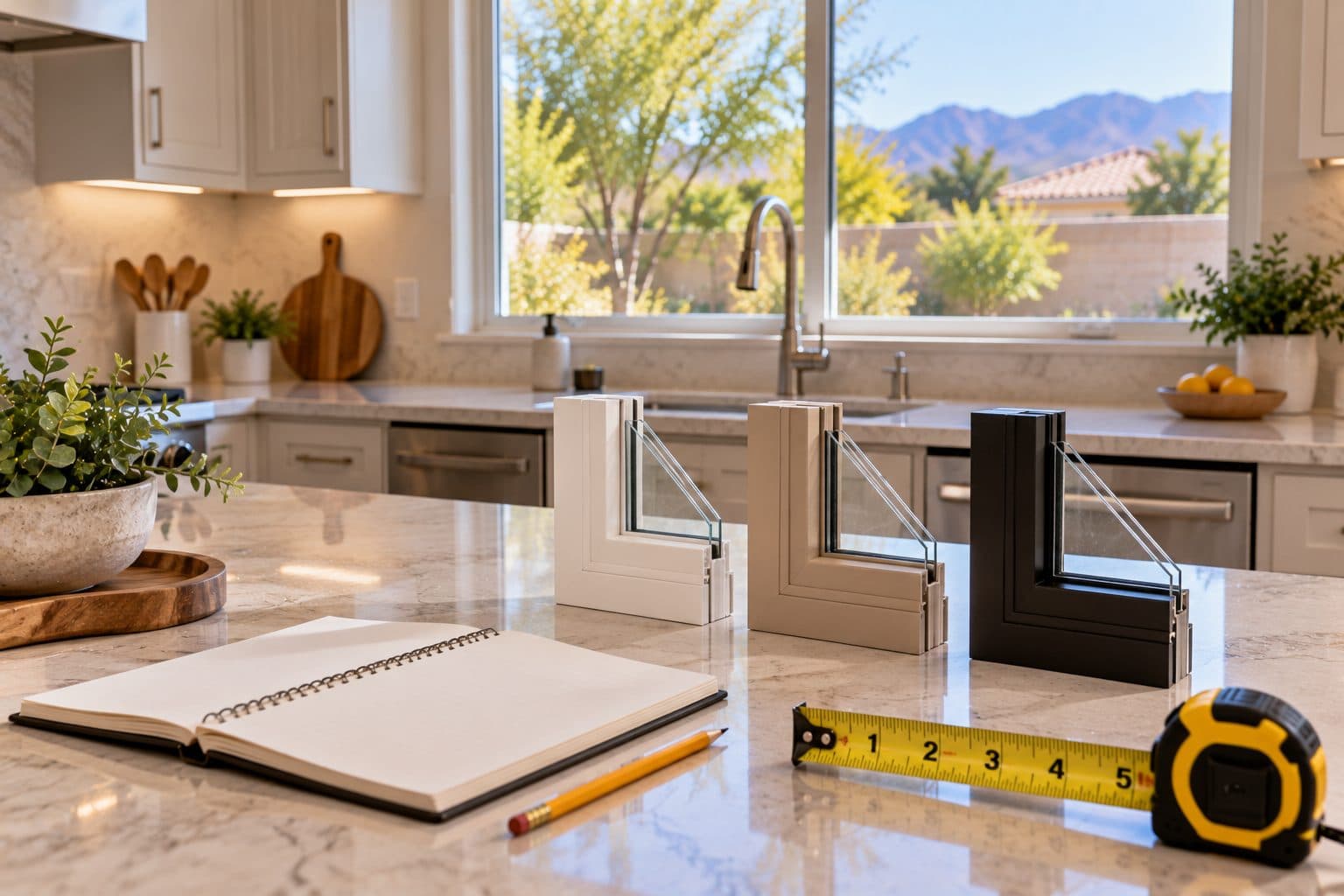
at a glance
Sliding Glass Door Repair
Sliding glass door problems such as dragging, uneven closing or a latch that will not catch usually come from rollers, track or alignment and can often be repaired. Agave Windows assesses the whole door before choosing parts.
- Measured on site before ordering
- Written scope with product and finish details
- Installed, sealed and reviewed with you
02 of 12
The glass door and screen are different assemblies
A sliding insect screen can have its own guides, rollers, latch and track arrangement. It is lighter than the glazed door but still needs compatible components. A screen that will not move does not prove the glass-panel rollers are worn.
Include the full doorway in your photos, and identify which panel gives you trouble. If both are affected, describe each separately. This helps avoid a repair request that names one component while the actual concern involves another assembly.
A screen repair should not be presented as a security upgrade or a repair to the heavy door's locking system. Keep the desired result specific: moving the screen, moving the glass panel, closing the door or engaging its lock.
four steps, in order
How a Project Runs
- 1
Tell us about the project
Send your location, the approximate number of openings, and what you want to improve.
- 2
Review the openings and options
We discuss your priorities and assess the details that affect product selection and installation.
- 3
Define the work in writing
The proposal identifies the products and agreed installation scope so you can understand what the project includes.
- 4
Install and review the result
At completion, we review the installed products, operation, visible finish, and care information with you.

03 of 12
Assess the door as a connected system
The handle is where you apply force, but it is not necessarily where resistance starts. Our guide to why sliding doors become hard to open walks through the usual sources. In a typical bottom-rolling patio door, the glazed panel loads its rollers, the rollers contact the running surface, and the frame holds that arrangement in position. Guides and other retainers keep movement within the intended path. The actual product may use a different support system, so identification comes first.
A useful assessment separates three stages of ordinary use:
| Stage | What the observation helps establish | What it does not prove by itself |
|---|---|---|
| Starting movement | Whether resistance appears as the closed panel releases | That the handle needs replacement |
| Travel along the track | Whether resistance is general or repeats at a location | That new rollers alone will resolve it |
| Final closure and locking | Whether the panel meets the frame and lock correctly | That easier travel has fixed the closed position |
The service team can then connect symptoms to the retained assembly. A roller running across a damaged portion of track and a panel rubbing continuously against another part are different possible causes of rough movement. A lock that aligns only when the handle is lifted can point to panel position as well as lock condition. None of these observations authorizes a diagnosis from a photo alone.
For example, imagine a door that starts easily, catches halfway across and then reaches the jamb without latching. A repair limited to spraying the track would not explain either the repeatable catch or the closure problem. The assessment should identify each condition and show whether one supported repair addresses both or separate work is needed.
This approach does not require replacing every component. It requires a reason for the proposed component and a check that the parts around it can support the result.
04 of 12
Rollers and tracks
A replacement roller has to match more than a visible wheel. Its housing occupies a particular space in the panel; its attachment must suit that panel; and the wheel must run on the intended surface. The adjustment arrangement also needs to work within the door's available clearances. An item that fits into an opening can still be unsuitable for the system.
Component identification therefore needs several connected checks:
| Compatibility question | Why it changes the repair decision |
|---|---|
| What door and operating panel is this? | Similar exterior frames may contain different internal hardware |
| How is the roller assembly attached? | A different fixing arrangement may not suit the retained panel |
| What running surface does the wheel contact? | The wheel and track must function as a compatible pair |
| What position and adjustment does the assembly provide? | Panel height affects clearances and final alignment |
| What previous modifications are present? | A cover or substitute component may change the original geometry |
The assessment may use manufacturer and series information, accessible markings, verified component dimensions and appropriate product documentation. Some details require professional panel access. A catalog photograph is a reference, not a complete compatibility finding, and a homeowner should not remove the glass panel to produce one.
A proposed alternate part deserves the same review as the original recommendation. “Fits most doors” is less useful than a specific explanation of how the replacement suits this housing, attachment and running surface. If compatibility remains uncertain, resolve that question before committing installation labor or modifying the panel.
Record what was identified, including a part number where available and any supported substitution. This creates a useful current repair record even when the original purchase paperwork has been lost.
Check the effect of earlier track work
For example, suppose rough travel began after a previous track-cover installation. The cover's condition matters, but so do the existing rollers and the resulting panel height. Adding another component without reviewing those relationships would leave the cause unresolved. This history should be part of the assessment, not merely a note on the customer's invoice.
A track cover or repair cap can alter the surface and its elevation. That makes the available adjustment, panel clearance and closing position relevant to suitability. It is not a universal treatment for any damaged sill. Product-specific approval or compatibility documentation should support the proposed method, and surrounding drainage paths must remain functional.
Milgard's care guidance distinguishes the running area from designed drainage openings. That distinction is useful during assessment: a slot intended to drain water should not be filled merely because it resembles a gap. The actual repair and drainage details must follow the identified assembly.
how we install
The Part Behind the Glass

Measured before anything is ordered
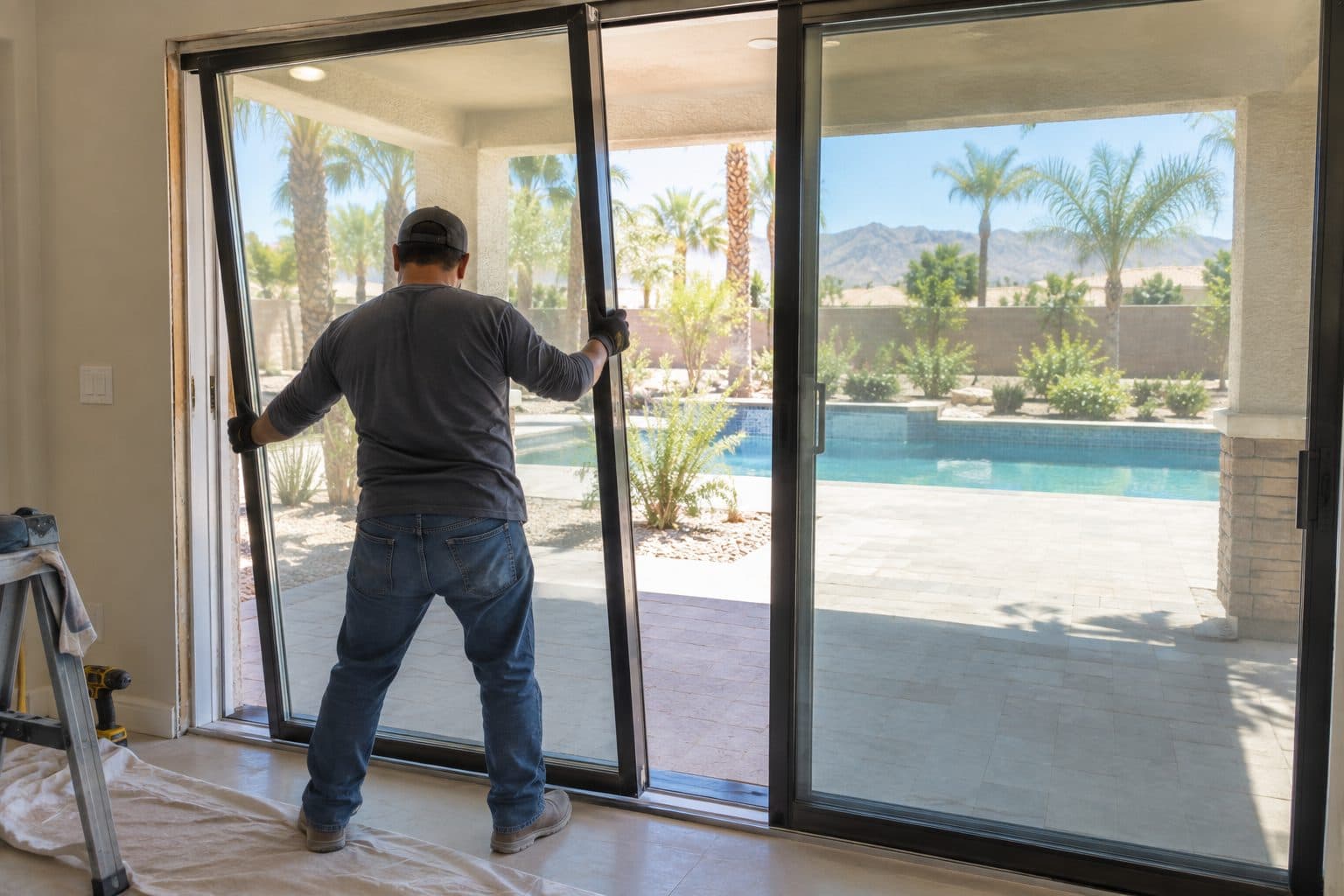
Panels set and adjusted
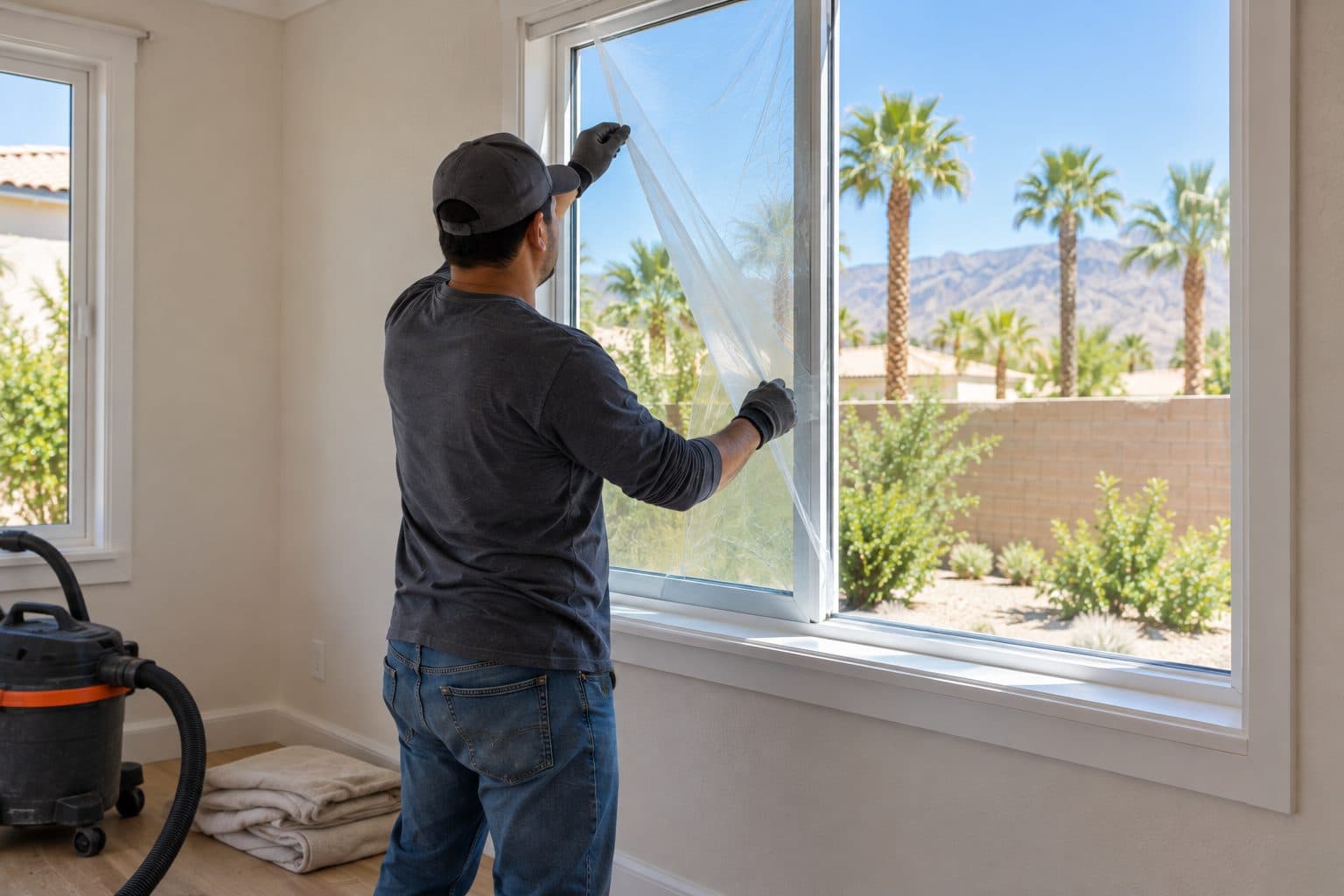
Cleaned up and reviewed with you
05 of 12
Closing and locking deserve a separate check
A smoother-moving panel is only one part of a successful operating repair. Its closed position also affects how it meets the jamb, adjacent panel, seals and latch. A setting that reduces one rubbing point can change another relationship, which is why the final review should consider the door through its normal movement and closure.
Milgard's roller-adjustment guidance connects adjustment with both smooth operation and weather tightness. The instructions are product-specific; they do not provide a universal screw setting or a method for an unidentified door.
Use a defined acceptance discussion:
- Travel: Does the repaired function operate through the intended path without the original binding, subject to any recorded limitation?
- Closure: Does the panel reach its designed closed position without needing to be lifted or forced?
- Locking: Does the affected lock engage and release as intended after the position is set?
- Related conditions: Are any remaining screen, weatherstrip, glass or perimeter-water concerns recorded separately?
The check should follow normal product operation. It is not a homeowner force test, a security certification or a water-pressure test. If a damaged latch is excluded from roller work, that exclusion belongs in the scope before the repair, not as a surprise at handover.
Tell us if you currently need to lift the handle to close the door or if the lock is being used to pull the panel into place. Avoid forcing it. Where different security hardware is desired, assess that selection separately for compatibility and operation, using our patio door security guide as background; a routine repair does not create a burglar-proof opening.
06 of 12
Distinguish drafts and water from motion problems
A hard-moving door may also have air leakage or water concerns, but those symptoms need to be documented separately. Tell us where you notice air, moisture or staining and when it occurs. Our guide to why patio doors leak air can help you locate it. Photos taken during the condition can be more useful than a general statement that the door leaks.
Replacing a roller is not a blanket treatment for a wall or flashing problem. The proposed work should identify which seal, component or installation condition is being addressed and which concerns remain outside the scope.
Door installations need water-management details appropriate to the product and surrounding wall. DOE/PNNL describes the role of integrated opening flashing. That principle does not establish that every leak can be fixed with additional surface sealant.
07 of 12
Identify the product and previous work
Share an accessible manufacturer label, model information or original invoice, together with a whole-frame view, the handle and the visible track. Leave concealed component access to the service team. A label from a nearby screen or an unrelated glass marking may not identify the door series, so include context with close-ups.
Previous work matters because the current assembly can differ from the original. A track cover, substitute roller, replacement handle or altered keeper can affect component selection and adjustment. Include the old repair description if available and say whether the improvement lasted or the symptom returned.
Identification should result in a traceable parts basis: the door information used, the proposed component and any unresolved compatibility question. Manufacturer manuals and parts documentation can help establish that basis. Pella's owner's-manual portal is one example of product-specific documentation. Use the identified system's guidance before deciding which components or maintenance instructions apply.
08 of 12
Decide whether repair meets your goals
A supported repair can focus on restoring a specific function of an existing door. It does not necessarily change the glass performance, frame appearance, panel arrangement or maximum clear passage. If those are priorities, explain them during the first conversation.
Replacement may deserve consideration when the needed repair is unsupported, the retained assembly cannot accept an appropriate component, or your desired result requires a different system. Ask for the reason rather than accepting age alone as the explanation. Our guide on when to replace a sliding door lists the conditions that matter.
If both routes are available for discussion, compare their complete scopes. A repair that addresses motion and a sliding glass door replacement that changes the whole opening experience are different decisions. You should be able to see what each option is intended to accomplish.
09 of 12
Know what the assessment appointment covers
The first visit may involve identifying components, checking the retained assembly and establishing whether parts must be ordered. Confirm its scope and any assessment charge before scheduling. An appointment should not be assumed to guarantee completion of every possible repair on the same day.
Tell us about narrow access, stairs, attached shades, alarm sensors and heavy furniture near the door. The location and configuration can affect the appropriate work method. These details are easier to plan around when included in the request.
If the door cannot close or be secured, make that clear. Use the contact page to confirm the available appointment and any interim arrangements with us before relying on a work date.
10 of 12
Review a written scope before parts are committed
The proposal should identify the door, the supported component work and the intended result. Ask which parts remain, which are supplied and whether any related screen or latch work is included. A general phrase such as tune-up should be explained.
If sourcing identifies an alternate component, compatibility should be confirmed before it is used. If the assessment reveals additional work, agree on the revised scope and price before proceeding. Keep the approval process clear when the door is already opened for inspection.
Review any component and labor coverage separately. A repair should not silently imply a renewed warranty for the entire existing door. Keep the work description and parts information for future service.
11 of 12
Prepare for the work and review the result
Arrange a secure place for pets and keep the immediate work area clear. Leave heavy-panel handling to the service team. Ask what furniture or coverings need to be moved and what the installer will handle under the agreement.
At completion, review the repaired function through normal operation. Confirm the door closes and the affected hardware works as described. Also review any remaining limitations and the appropriate care instructions for the identified product.
Maintenance recommendations should follow the actual component guidance. Do not apply an arbitrary lubricant to every track or seal; some products have specific cleaning and care requirements. Ask which surfaces need routine attention and which should be left alone.
12 of 12
Start with a complete-door photo
Send Agave Windows your property location, the main symptom and photos of the full opening and affected area. Tell us if the glass door, screen or both need attention. We can use those details to discuss the next assessment step and a defined repair plan.
things people ask us
Frequently Asked Questions
Does a dragging door always need new rollers?
No. The panel, track, support components and alignment should be assessed together. The symptom can help direct inspection, but it does not identify the correct part by itself.
Can a repair address the latch as well as movement?
The agreed scope can include supported latch work when the product and condition allow it. Ask for movement, closing and locking concerns to be listed separately so you know which functions the repair addresses.
Should I remove the glass panel before the appointment?
No. Leave heavy-panel handling and component access to the service team. Provide photos and clear the surrounding area as agreed; do not disassemble the door to make a repair request.
Will repair make the door feel exactly like a new one?
A repair should have a specific intended result based on the retained assembly. Existing wear, product design and other conditions may limit the outcome. Ask the technician to explain those limitations rather than promising an identical new-door feel.
Still have a question about your home?
Ask us directly. A quick description of the opening is enough.
keep going
Related Pages
- Repair service options
Window and door repair in Las Vegas for sticking windows, broken or foggy glass, dragging patio doors and torn screens. Describe the problem and send photos.
- Why sliding doors are hard to open
Why is your sliding glass door hard to open? Common causes include a dirty track, worn rollers and misalignment. Learn what to check and what to avoid.
- Why patio doors leak air
Why patio doors leak air: worn seals, panels out of alignment, the threshold, or the gap around the frame. Learn how to find the draft and what fixes it.
- When to replace a sliding door
When should you replace a sliding glass door instead of repairing it? Learn which problems can be fixed, which point to replacement, and how to decide.
- Sliding glass door replacement
Sliding glass doors in Las Vegas: choose which panel opens, how wide the walkway is, and the right glass, screen and threshold for your patio opening.
Sources referenced on this page
Independent references linked in the text above. A manufacturer source explains a product concept; it does not mean Agave Windows supplies that brand.
- Milgard's care guidance distinguishes the running area from designed drainage openings (milgard.com)
- Milgard's roller-adjustment guidance connects adjustment with both smooth operation and weather tightness (milgard.com)
- DOE/PNNL describes the role of integrated opening flashing (basc.pnnl.gov)
- Pella's owner's-manual portal is one example of product-specific documentation (pella.com)

ready when you are
Send Your Sliding Door Repair Details
Tell us your location, the approximate number of openings, and what matters most to you. You do not need to arrive with a product already selected.
- Photos can follow once we reply; no measurements needed
- A written scope before anything is ordered
- Licensed, insured, and bonded
Request an Estimate