



- 6 min read
- Updated
- Supports: Replacement Windows
Vinyl vs Aluminum Windows: What to Compare
Vinyl window options and aluminum ones can both be worth considering, but the material name is only the beginning of the comparison. You are buying a particular frame design, glass package and operating system installed in a particular opening. Compare those details before deciding which material better fits your home.
The most useful question is not whether vinyl or aluminum is universally better. It is which available assembly meets your priorities for comfort, appearance, operation and care, and what you are giving up or gaining with the alternative.
The short version
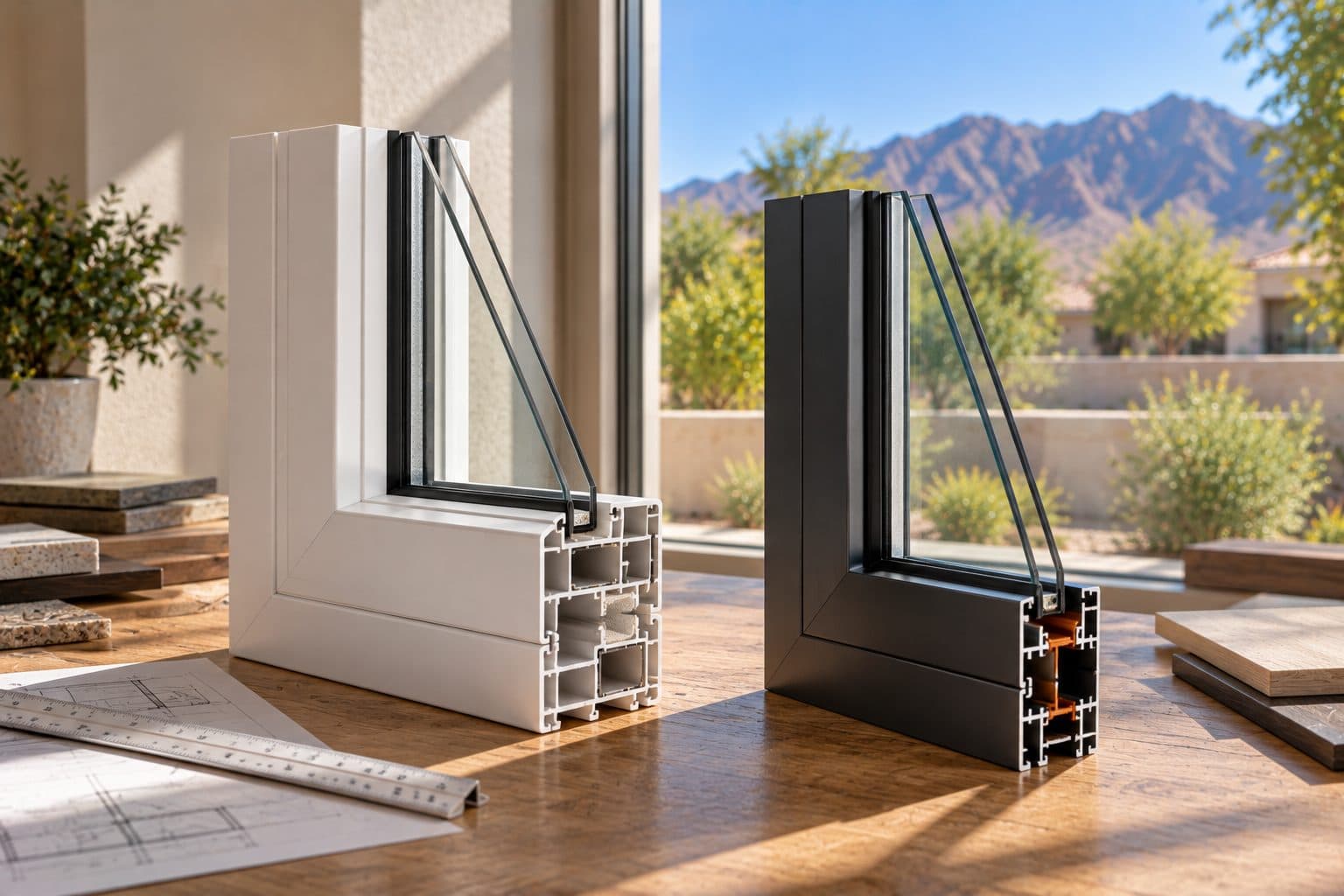
Vinyl frames insulate well and need little upkeep, while aluminum offers slim lines and strength but conducts heat unless it has a thermal break. Compare whole-window U-factor and SHGC for the specific products, not the material name.
On this page
Begin with two equivalent proposals
Ask for comparable size, operating style and glass specifications. If one proposal is for a fixed picture window and the other is an operable unit, their visible frame proportions and performance may differ for reasons beyond frame material. Identify those differences explicitly.
Do the same with installation. A quote retaining the existing frame is not directly comparable to one removing it and repairing surrounding finishes. First establish the desired installation result; then understand how each proposed product fits that approach.
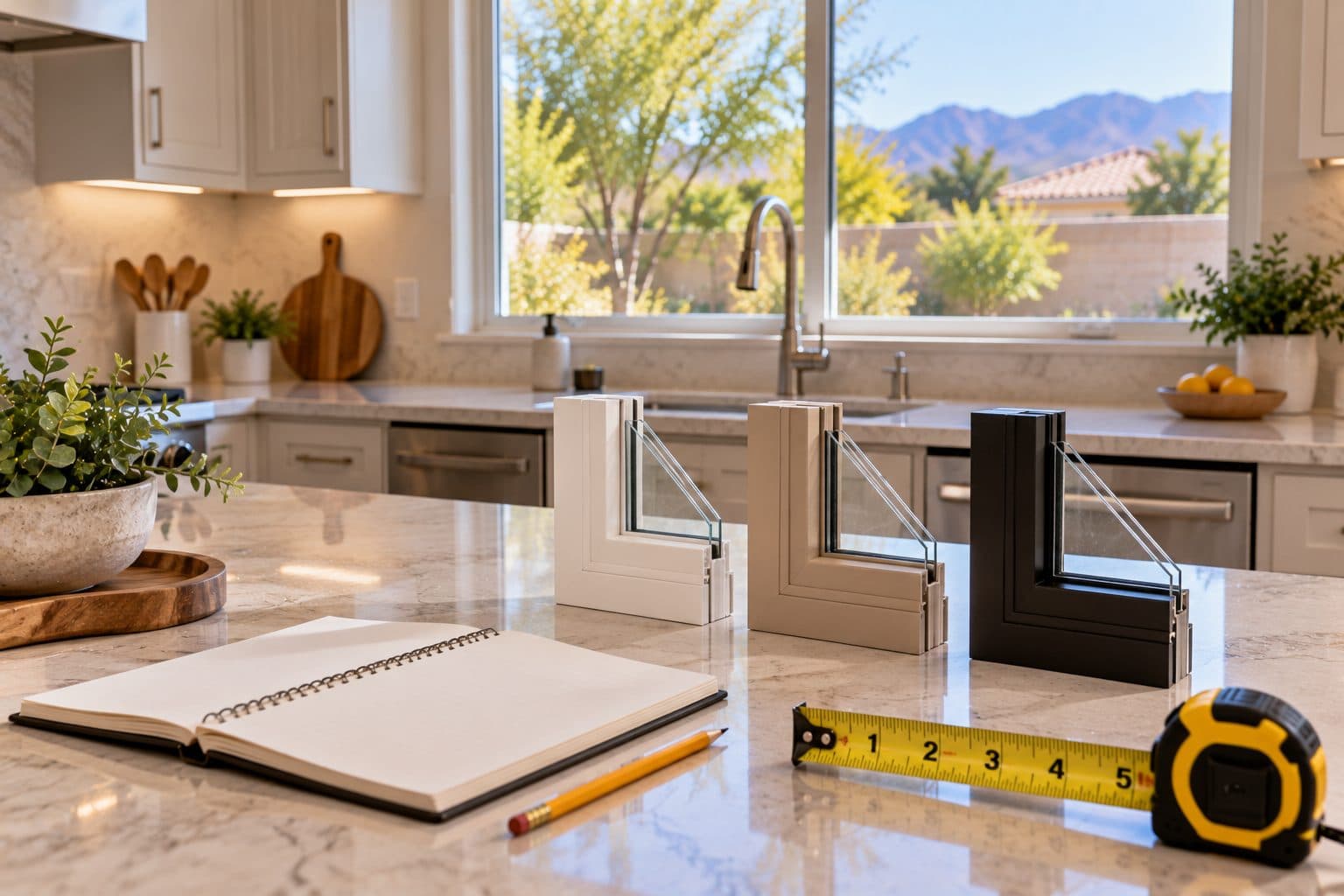
Use a short side-by-side schedule. Record series, frame material, operating configuration, exterior and interior finish, glazing, ratings and accessories. Empty cells reveal questions to resolve before the price comparison becomes useful.
Understand what a thermal break changes
U-factor
How easily heat passes through the whole window. Lower keeps more heat out in summer and in during winter.
SHGC
Solar heat gain coefficient: how much of the sun's heat comes through. Lower means less heat from direct sun.
VT
Visible transmittance: how much daylight comes through. Higher means a brighter room.
A continuous metal section creates a conductive path between exterior and interior portions of a frame. A thermal break interrupts that path with a less-conductive separation. It reduces the frame's heat-flow pathway; it does not remove heat transfer through glass, spacers or the rest of the assembly.
Vinyl is less conductive than aluminum, but the finished frame can also contain reinforcement and other components. The comparison therefore has two levels: understand the construction, then compare the documented whole-product result. The DOE's frame guidance specifically distinguishes metal frames with integrated thermal breaks from less-conductive frame materials.
This explains why neither shortcut works: “aluminum always performs badly” ignores thermally improved systems, while “vinyl automatically wins” ignores the actual assembly being compared. A thermal-break label is evidence of a design feature, not a substitute for the resulting rating. Ask about it for any aluminum window series you are quoted.
Hold operating style and glass package as similar as practical when investigating the frame's effect. If the aluminum quote uses different glass from the vinyl quote, the performance difference cannot be attributed to material alone. For the buying decision, the complete packages can still be compared; just state what changed.
In a sunny room, also keep solar control separate. A frame's conductive behavior and the glass package's admitted solar energy address different heat paths. A favorable U-factor does not answer the entire exposure question, which our guide to window choices for Las Vegas heat covers.
Compare the view using dimensions
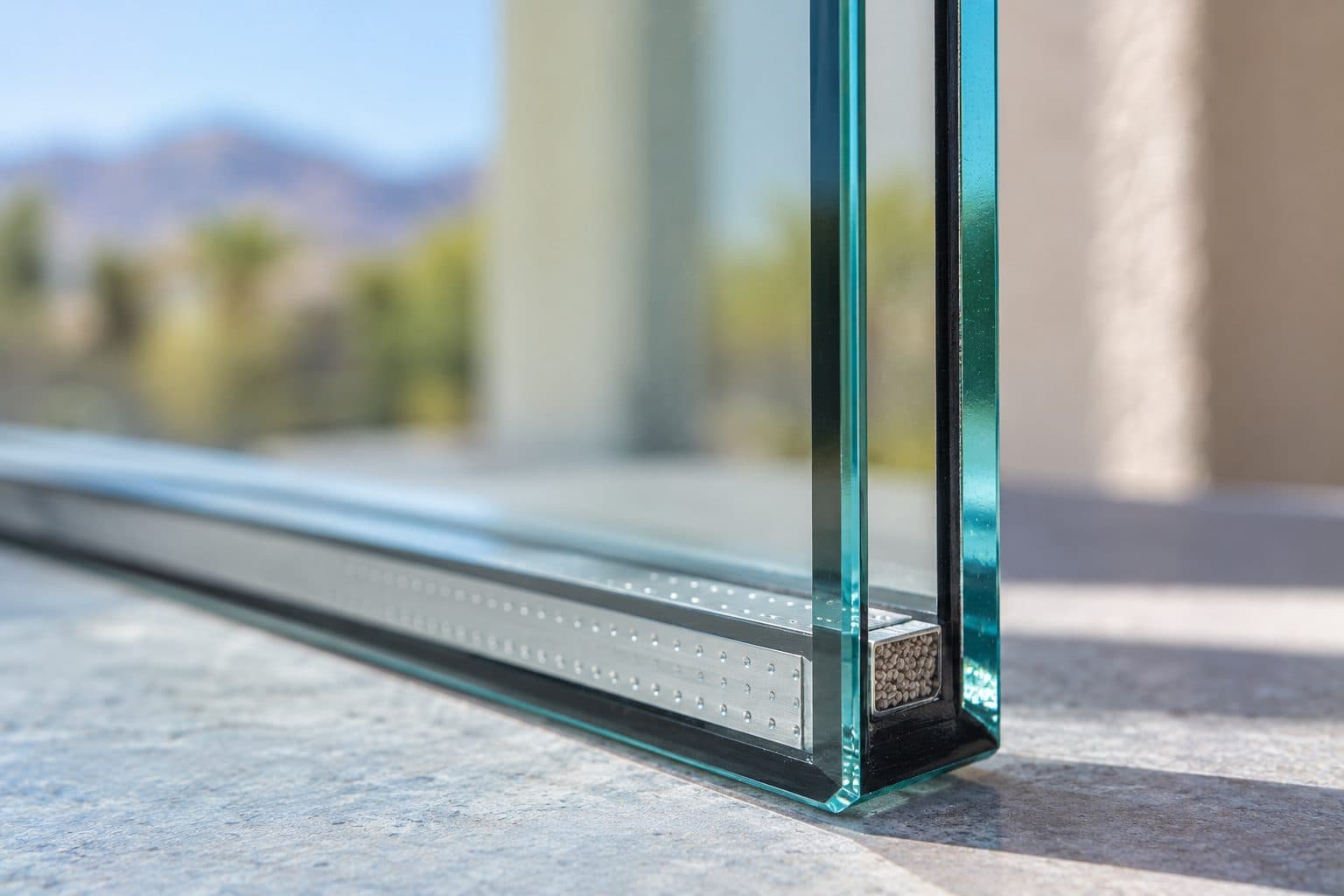
Aluminum is often considered when a homeowner likes contemporary frame proportions, but “slim” is not a dimension. Vinyl designs also vary. Request the visible frame and meeting-rail dimensions for the actual products under consideration rather than comparing unrelated display samples.
Look at the entire window group. A fixed center unit, operable side units and joining members may create different sightlines. Ask how the chosen frame will meet retained windows, especially when replacing only part of a front elevation.
The amount of glass left after replacement also depends on the installation approach. A sample corner shows finish and construction; it does not show the full effect of a new unit placed within an existing frame. A drawing can make that consequence much clearer.
Make a sightline claim measurable
A useful drawing distinguishes overall unit size, frame width, sash width and the meeting rail or joining members. Ask whether the visible dimensions include an old frame retained by the installation. This prevents a slim display sample from being compared with a complete installed assembly of another type.
For a simple geometry example, imagine a rectangular fixed unit 60 by 48 inches with a uniform opaque border. A two-inch border leaves a 56-by-44-inch clear rectangle; a three-inch border leaves 54 by 42 inches. The difference is 196 square inches of visible area. These are illustrative dimensions, not product specifications, and real profiles can be asymmetric or include other obstructions.
The calculation shows why a modest change around every edge can affect the view. It does not prove that aluminum always supplies the narrower border or that the larger area is worth any particular price. Use the actual elevation for each candidate, then decide how much that difference matters from the normal viewing position.
For a grouped window, include all joining members. Comparing one isolated frame corner misses the central lines that may be most noticeable from the room.
how we install
The Part Behind the Glass

Measured before anything is ordered
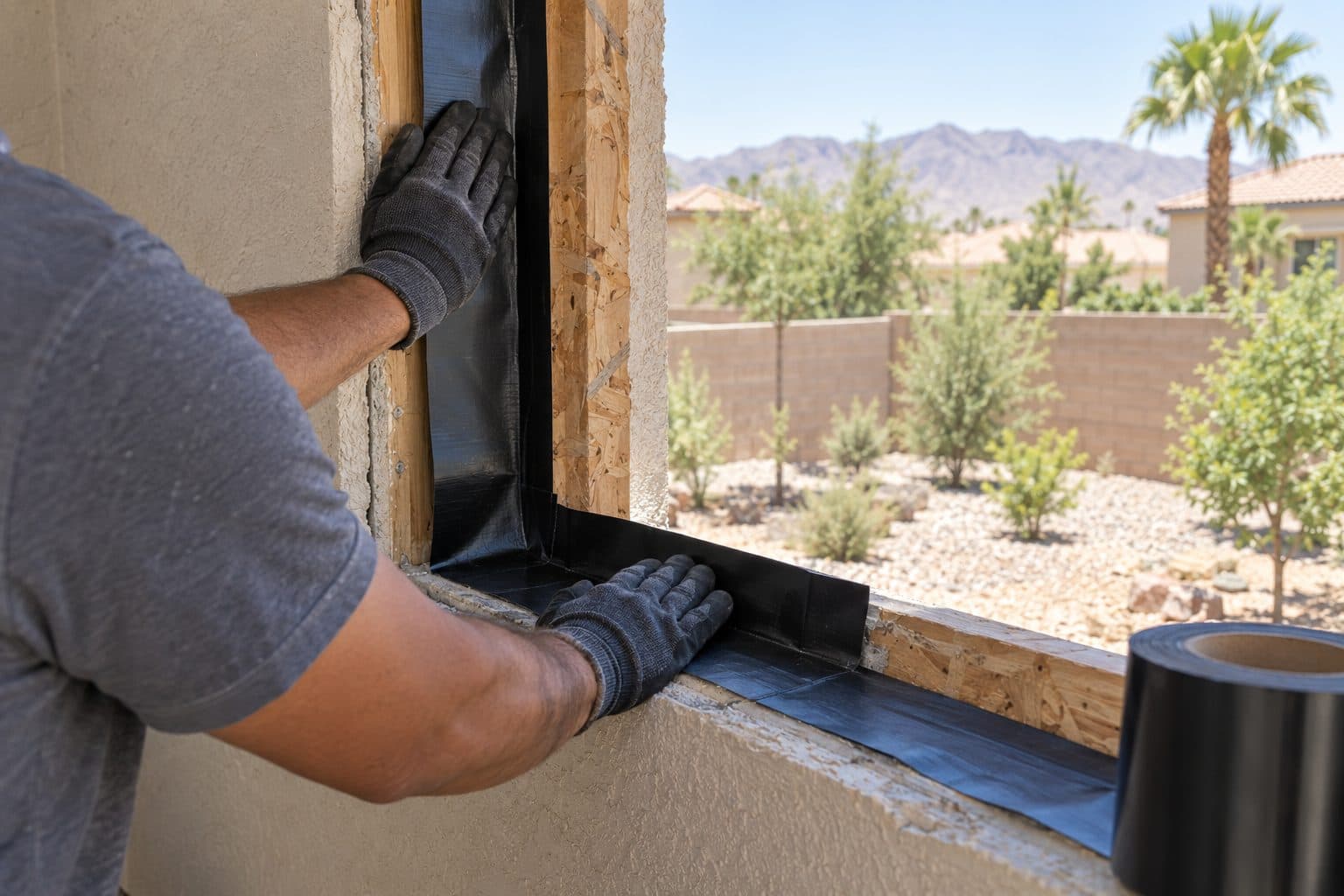
Flashed so water has a way out
Treat color as a product specification
Available colors and finish methods differ by manufacturer and series. Confirm whether the selected color is offered on the exterior, interior or both, and whether associated grids, screens and hardware coordinate. A two-tone design may fit your rooms better than assuming one color must appear everywhere.
For dark finishes in sun-exposed locations (see dark frame considerations in heat), obtain the manufacturer’s suitability and care information for the exact product. Do not infer durability from the frame material alone. Ask about finish coverage separately from glass or hardware coverage.
Avoid planning to repaint a factory-finished window without checking its instructions and warranty terms. Surface preparation, coating compatibility and heat-related limitations can be product specific. A color choice should be settled through an approved option, not a later assumption about paint.
Match operation to the people using it
Compare handles, locks, sash movement and screen access. Material does not tell you how easy a particular window will be to operate. Unit size, configuration and hardware matter, and a large sample may feel different from a smaller display.
Think about reach across a counter, furniture near the opening and the person who will open it regularly. Ask what routine care the operating system needs. Neither vinyl nor aluminum should be sold as requiring no inspection or cleaning forever.
If a preferred style is unavailable in one series at the required size, that may be a more decisive difference than a general material argument. Have those limits established before building a design around a product family.
Read the maintenance and warranty documents
Both materials are commonly described as low maintenance. Translate that phrase into actual instructions: approved cleaners, track and drainage care, hardware attention and finish restrictions. Keep those instructions with the final order record.
Read product and installation coverage separately. Look for exclusions, claim procedures and responsibility for labor or surrounding finish work if a part is replaced. Warranty length alone cannot establish which proposal offers better practical support. Our guide to window warranties explains the terms to check.
If an existing opening has water-related damage or persistent drafts, ask how that condition will be addressed regardless of material. A new frame material does not automatically resolve an unrelated wall problem. The replacement plan needs to match the source of the concern.
Decide with a short priority matrix
| Your priority | What to compare in vinyl and aluminum proposals |
|---|---|
| Thermal comfort | Whole-product energy ratings and actual glazing package |
| Contemporary appearance | Measured sightlines, finish and joining details |
| Daily operation | Suitable sizes, controls and operating effort |
| Future care | Manufacturer cleaning, finish and hardware instructions |
| Budget | Equivalent product, installation and finish scope |
A hypothetical homeowner might choose the product with more favorable thermal ratings even if its frame is more prominent. Another might accept a different balance to achieve a specific view and profile. The responsible choice is the one whose tradeoffs are understood and recorded.
Bring both the desired look and the room concerns to your product discussion. Agave Windows can help connect those priorities with a clearly specified proposal from our replacement window lineup. Ask for the evidence behind the recommendation, including the actual series and configuration, rather than relying on a broad claim about either material.
This guide supports
Replacement Windows →things people ask us
Frequently Asked Questions
Does aluminum always mean poor energy performance?
No. Aluminum systems differ, including whether and how they use thermal breaks. Review the whole-product U-factor and SHGC for the proposed assembly. Comparing a modern thermally designed product with an older unbroken frame solely by material name leaves out important construction differences.
Will vinyl always have wider frames?
Frame proportions vary by series, operating style, size and installation. Ask for visible dimensions and a drawing of the replacement in your opening. A generalized claim about material is less useful than knowing the clear glass area and meeting-rail width you will actually see.
Can I combine vinyl and aluminum on the same house?
It can be a design consideration, but compare profiles, finish tones and glass appearance where the products are visible together. Confirm any applicable design approval requirements and keep a complete opening schedule. Mixed materials should follow a deliberate visual and performance plan rather than happen accidentally.
Which one should I choose for the lowest maintenance?
Read the specific care requirements of the shortlisted products. Both may offer low-maintenance finishes, but tracks, drainage features, seals and hardware still need appropriate attention. Ask what cleaning products are approved and whether the chosen finish creates additional restrictions.
Still have a question about your home?
Ask us directly. A quick description of the opening is enough.
keep going
Related Services and Guides
- Replacement Windows
Replacement windows in Las Vegas, planned room by room. See how to choose glass, frames and installation method, and what a clear estimate should include.
- Vinyl window options
Vinyl windows in Las Vegas need little upkeep and come in many styles. Learn how frame thickness, glass and color options differ before you compare quotes.
- Aluminum window options
Aluminum windows in Las Vegas offer slim, modern frame lines. Learn why a thermal break matters in desert heat and what to compare before you order.
- Window choices for Las Vegas heat
The best windows for Las Vegas heat depend on sun exposure, glass coating and SHGC, not frame material alone. See what to compare room by room.
- Compare window energy ratings
U-factor and SHGC explained in plain terms: what each window energy rating measures, how to read an NFRC label, and which numbers to compare on a quote.
- Dark frame considerations
Thinking about black windows in Las Vegas heat? Learn how dark frame finishes handle sun exposure, what to ask about the finish, and how glass affects heat.
- Single-Hung vs Double-Hung
Single-hung vs double-hung windows: which sashes move, how each is cleaned, how much they open, and when the extra function is worth choosing.
- Sliding vs Casement Windows
Sliding vs casement windows: how each opens, the space each needs outside, which is easier to reach and clean, and how to choose one for each room.
- Fiberglass vs Vinyl Windows
Fiberglass vs vinyl windows: how the two frame materials differ in look, strength, heat performance, upkeep and warranty, and how to compare real quotes.
Sources referenced on this page
Independent references linked in the text above. A manufacturer source explains a product concept; it does not mean Agave Windows supplies that brand.
- DOE's frame guidance (energy.gov)

ready when you are
Have a Question About Your Own Home?
A guide can explain the choice. Your openings decide the answer. Tell us what you are seeing and we will help you work out the next step.
- Photos can follow once we reply; no measurements needed
- A written scope before anything is ordered
- Licensed, insured, and bonded
Request an Estimate